
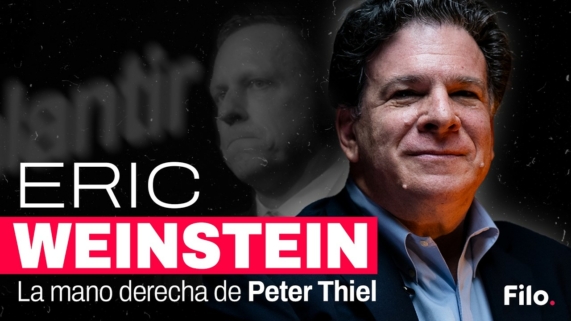
🧠 #EricWeinstein, la mano derecha de #PeterThiel
📌 El matemático dirigió Thiel Capital, la firma de inversiones de uno de los empresarios más influyentes del momento, visitó Buenos Aires por primera vez y dialogó en exclusiva para Filo News con #SantiSiri.
💬 En esta entrevista, habló sin filtros sobre inteligencia artificial, el futuro de la humanidad, Peter Thiel, Milei, Juan Maldacena y el potencial dormido de Argentina.
💼 Weinstein se doctoró en física matemática en Harvard y trabajó en el MIT.
🌐 También es conocido por haber acuñado el término “Intellectual Dark Web”, un concepto que agrupa a académicos e intelectuales críticos del pensamiento institucional dominante.
Suscribite a Filo.news 👉🏼 https://bit.ly/SuscribiteFilonews
Buscamos historias para contar noticias en https://www.filo.news/
00:00 – Eric Weinstein en Buenos Aires
03:13 – Peter Thiel en Argentina y por qué el mundo mira a Milei
07:43 – ¿Es Buenos Aires la última ciudad europea del mundo?
14:35 – La IA como amenaza
29:01 – Maldacena vs. Maradona: el genio argentino ignorado
37:18 – Inflación y Teoría de Campos
52:06 – El robo de la historia humana por 5 personas
01:05:13 – UBI, dignidad y el futuro del trabajo
01:19:24 – El sueño argentino y el mensaje final de Eric
Transcript
00:00:00
Santi Siri: Eric.
00:00:01
Eric Weinstein: Yes.
00:00:01
Santi Siri: Welcome to Buenos Aires.
00:00:03
Eric Weinstein: Amazing to be here finally.
00:00:05
Santi Siri: You’re having fun here?
00:00:06
Eric Weinstein: Uh, officially, no.
00:00:08
Santi Siri: Officially, no.
00:00:08
Eric Weinstein: But unofficially, I’m having a blast.
00:00:10
Santi Siri: [laughs] So when we met at Café Tabac the other day-
00:00:14
Eric Weinstein: Yeah
00:00:15
Santi Siri: … um, you spoke to me about confidence. Um, what do you have to say to Argentines under confidence?
00:00:24
Eric Weinstein: First of all, you’re very under-confident if you ask someone who’s been here only a week-
00:00:29
Santi Siri: [laughs]
00:00:29
Eric Weinstein: … “What do you think of Argentina?” Because, uh, there’s so much to observe, and there’s so many layers to Argentine society. And really, um, the only thing I’m being exposed to is the core of Buenos Aires.
00:00:42
Santi Siri: So you have this first impression. So it’s, uh-
00:00:44
Eric Weinstein: Sure
00:00:44
Santi Siri: … we make that disclaimer.
00:00:45
Eric Weinstein: But in, in my defense-
00:00:47
Santi Siri: [laughs]
00:00:47
Eric Weinstein: … um, there are certain countries in which much of the life of the country takes place in a very small area.
00:00:54
Santi Siri: Mm.
00:00:55
Eric Weinstein: And so Bangkok for Thailand, and, you know, famously-
00:00:59
Santi Siri: Mm
00:00:59
Eric Weinstein: … the sort of arrondissement of Paris, focusing in on the, you know, Notre Dame on the Île-de-France is the center of it.
00:01:06
Santi Siri: They have this gravitational pull.
00:01:08
Eric Weinstein: Right. And so, you know, a country like Germany has many important cities. The United States has many important cities. And I think, uh, you know, that’s part of the characteristics of, of some countries, is that there is one, uh, one city that grabs the oxygen in the room. Whether that’s deserved or not is a different question.
00:01:28
Santi Siri: Yeah. We like to claim that we are a federal country because it’s big, it’s large, it has several cities. But it’s true that a lot of the economic activity is centered, uh, around Buenos Aires. Um, what… Have you been wandering around the city? What have you been experiencing? What’s, what’s your feeling about Argentines?
00:01:46
Eric Weinstein: Well, one of the things that’s interesting is that if you go to TripAdvisor-
00:01:50
Santi Siri: Mm
00:01:50
Eric Weinstein: … and you ask, “Okay, what are the top things to do,” it… This is not a city that really lives in terms of, okay, these are the 11 top sites you have to see.
00:02:01
Santi Siri: Mm.
00:02:02
Eric Weinstein: And so somehow it’s, it’s a challenge because the foreigner is trying to say, “Okay, well, you, you live in your streets and your conversations and the energy.”
00:02:12
Santi Siri: Mm.
00:02:12
Eric Weinstein: And it’s hard to go sightseeing looking for energy. Now, I happen to be in a-
00:02:17
Santi Siri: [laughs]
00:02:17
Eric Weinstein: … in a relatively, uh, nice position that I have one or two large social media accounts. And if I so much as whisper… So, you know, I put out one photo, um, that was in the San Telmo area.
00:02:31
Santi Siri: Yeah, that photo g- uh, generated a lot of, uh, noise, the-
00:02:35
Eric Weinstein: I… Well-
00:02:35
Santi Siri: … the Instagram post
00:02:36
Eric Weinstein: … I didn’t know that, that it would or it wouldn’t. But I, I didn’t say where I was. I just… Y- anybody who knew that area would know where I was, and it was an attempt to sort of maybe make a low-key reach-out to people who are interested in connecting to the outside world. We’re welcoming visitors. And I was overwhelmed with the hospitality, the interest.
00:03:02
Santi Siri: Have you… Are you aware, just to clear out the elephant in the room, the kind of, uh, noise and impact that there is around the arrival of Peter Thiel to the city? Like, uh, have you been able to grasp a little bit of the-
00:03:16
Eric Weinstein: You compare my friend to an elephant?
00:03:18
Santi Siri: [laughs]
00:03:19
Eric Weinstein: Um, no.
00:03:21
Santi Siri: A Republican elephant. [laughs]
00:03:24
Eric Weinstein: [laughs] I see. Where did you study diplomacy?
00:03:26
Santi Siri: [laughs]
00:03:27
Eric Weinstein: Um, I’m not aware of how this sits in the Argentine mind.
00:03:34
Santi Siri: Mm.
00:03:35
Eric Weinstein: Uh, I know there’s energy because the cab drivers will talk about it.
00:03:40
Santi Siri: Ah, you, you heard c- cab drivers mention it?
00:03:42
Eric Weinstein: Sure.
00:03:43
Santi Siri: Mm.
00:03:43
Eric Weinstein: And, um, you know, the cab drivers are an indication of, of several things. And so if you’re open to it-
00:03:52
Santi Siri: You’re already discovering one of Buenos Aires’ best kept secrets, which is, uh, cab drivers are wizards, [laughs] and they hold a lot of, uh, knowledge. And, uh, they usually give you interesting advice.
00:04:04
Eric Weinstein: I just assume that they’re Argentinian intelligence officers.
00:04:07
Santi Siri: [laughs] Well, you know, I, I cannot say yes, I cannot say no. [laughs]
00:04:13
Eric Weinstein: Um, but, you know, one of the things that you learn is, is that a lot of them are not confident in any other language than Spanish. There’s ancestral memory-
00:04:23
Santi Siri: Mm
00:04:23
Eric Weinstein: … of Italian, but mostly people don’t speak it. They just allow their, their Argentinian Spanish to be infused and suffused with borrowings from Italian.
00:04:33
Santi Siri: Mm.
00:04:33
Eric Weinstein: Um, there’s no trace of German that I can find. Uh, there’s very little-
00:04:39
Santi Siri: Not in this part of the country, at least. [laughs]
00:04:41
Eric Weinstein: Okay. We’ll, we’ll leave the penguins for another point. Um, the… Uh, I would say that, um, they are aware of the interest, and of course, you know, Milei is such a focal point, not for Argentina, but for the world.
00:04:58
Santi Siri: Mm. What, what is it that, uh, you know… Uh, w- we won’t go too deep into a lot of the things we already know about Milei, but why do you think that the world is paying so much attention to him?
00:05:11
Eric Weinstein: It’s a, it’s a good question. So without getting too specific-
00:05:14
Santi Siri: Mm
00:05:15
Eric Weinstein: … I would say, first of all, is that, uh, for a long time, leadership itself was tinged with, uh, stigma-
00:05:25
Santi Siri: Mm
00:05:25
Eric Weinstein: … that the memories of Stalin, Hitler-
00:05:30
Santi Siri: Mm
00:05:30
Eric Weinstein: … and the ways in which leadership had gone wrong under Mao were so powerful that leadership itself was dangerous.
00:05:39
Santi Siri: Mm.
00:05:39
Eric Weinstein: Ideas are dangerous.
00:05:40
Santi Siri: Mm.
00:05:41
Eric Weinstein: And he’s not afraid of danger in order to push forward his agenda. I think also you have to understand that one of the great… If, if you think about how Argent- Argentina sits in the, in the minds of the outside world, we, we’re not very plugged in. So we know about the tango- Uh, we are s- somewhat aware, uh, that you have some, uh, football players.
00:06:09
Santi Siri: Mm.
00:06:09
Eric Weinstein: And we remember Perón, uh, obviously mostly through Evita now because that musical resuscitated the interest in what was going on in Argentina.
00:06:20
Santi Siri: Thanks to Andrew Lloyd Webber. Yeah. [laughs] And the movie with Madonna.
00:06:24
Eric Weinstein: For both worse and better.
00:06:25
Santi Siri: [laughs]
00:06:26
Eric Weinstein: And, um, my feeling about that is that when a, a charismatic leader appears in Argentina, there is memory-
00:06:35
Santi Siri: Mm
00:06:36
Eric Weinstein: … of all the things represented, good and bad. And some of those ideas, of course, have been, uh, amplified. The way, when you plug… I- if you play an electric guitar without amplification, you can barely hear it.
00:06:51
Santi Siri: Mm.
00:06:52
Eric Weinstein: But when, when, um, the gift of a chainsaw to Mr. Musk-
00:06:58
Santi Siri: Mm
00:06:58
Eric Weinstein: … uh, from Mr. Milei caught the world’s attention. And you also have this strange triumvirate, if you will. Uh, instead of the Father, Son, and Holy Ghost, you have Zelenskyy, Milei, and, and, uh, Trump.
00:07:14
Santi Siri: Mm.
00:07:15
Eric Weinstein: You have these people who are telegenic reality or, uh, modern media stars, um, becoming world leaders. And that as our phones become more important in our lives and, uh, these alternate channels, people who’ve succeeded in these other areas lend themselves. Uh, so when you plugged the Milei guitar into the Trump amplifier-
00:07:40
Santi Siri: Mm
00:07:40
Eric Weinstein: … it was pretty loud.
00:07:41
Santi Siri: It’s a loud noise.
00:07:42
Eric Weinstein: Yeah.
00:07:43
Santi Siri: You think it’s, um, uh, a noise loud enough to, uh, fight, uh, the woke mind virus, as Elon puts it?
00:07:52
Eric Weinstein: Um, I’m not as worried about your woke mind virus as I am about ours.
00:07:59
Santi Siri: America’s, you mean?
00:08:00
Eric Weinstein: Yeah. Because in, in many ways, Argentina’s chosen to cut itself off in, in, in some ways. It’s not interoperable with the rest of the world in a very easy fashion. And as a result, you’ve missed out on many of the benefits of being part of the outside world, and you’ve missed [laughs] out on a lot of the problems of the outside world.
00:08:26
Santi Siri: Mm.
00:08:26
Eric Weinstein: So in th- in some sense, you can look at the United States and Europe as the ghost of Argentina’s future. If it doesn’t do something to avert some of these problems, maybe it will get there, too.
00:08:39
Santi Siri: Do you see Ar- Argentina as an opportunity in that regard, looking into the future? Like, what, what are we, um, protecting ourselves from that has, uh, shaped or changed the US and Europe?
00:08:53
Eric Weinstein: So in many ways, Europe isn’t Europe anymore. And I met with an Italian journalist yesterday, and I shocked her.
00:09:02
Santi Siri: Mm.
00:09:03
Eric Weinstein: Um, and I shocked her by saying that I had, I had traveled through Italy not using Spanish or Italian, my… I don’t have any Italian at all, um, but using Hindi.
00:09:15
Santi Siri: Wow.
00:09:16
Eric Weinstein: And she said, “Well, how is that possible?” And I said, “Well, because you have all of these Bangladeshi merchants, you know, selling candy bars or soda pop, you know, on the street. And they watch Bollywood movies, and I have a little Hindi, Urdu.” And so I would converse with them in a language that wasn’t their first language, wasn’t my first language, but it was dependable. That’s a very strange thing.
00:09:43
Santi Siri: Mm. You think Europe has, uh, gone in- beyond the point of no return in terms of its, uh-
00:09:50
Eric Weinstein: Again, the question is, to what end? Europe is not what it was. It’s transforming into something that it has never been. So my comment is, is that there is a good argument to be made that Buenos Aires is potentially the last natural European city.
00:10:11
Santi Siri: That’s a statement that, uh, you know, when we talk among Argentines, you know, we, we used to have this reputation of being, like, the Paris of South America. We make this joke that we are Spanish people that speak Italian, that, uh, believe they live in France. [laughs] And, uh, and but at the same time, we’re part of Latin America. Uh, and we have, uh, you know, an interesting neighborhood. Um, do you see Buenos Aires, like, being very European? You see it, like, as a European city?
00:10:43
Eric Weinstein: Yes. I think full stop.
00:10:46
Santi Siri: Mm. Argentina is Europe.
00:10:50
Eric Weinstein: It’s what Europe… It’s the closest we have to what Europe was. And, and I want to make a, a careful point.
00:10:57
Santi Siri: Mm.
00:10:59
Eric Weinstein: Part of what Europe was, was being effortlessly European. So if you take Hungary, which has decided to enforce its border more strictly, well, maybe it’s retaining something of Hungarian exceptionalism, but it’s also, if you, if you think about it, it’s having to do it at great cost of being very deliberate and saying, “This is what we are. This is what we will not do. We care more about our own people than the refugees you tell us need to be welcome, uh, to be welcomed within our borders.” And so that already transforms the e- the equation. Whether you let in people or you choose to exclude people, you’re having to make a lot of choices.
00:11:43
Santi Siri: Mm.
00:11:44
Eric Weinstein: In Argentina, I ne- actually, this is something that perhaps I got wrong, because I’ve been looking at this place for a long time. I didn’t realize when I got here the number of people who would talk about being at the end of the world. Right? It’s a very interesting play on words in English.
00:12:00
Santi Siri: Mm.
00:12:00
Eric Weinstein: The end of the world meaning its edge, and the end of the world being its edge in time, not in space.
00:12:05
Santi Siri: Mm.
00:12:06
Eric Weinstein: And so there’s this space-time distinction of being at the end of the world.
00:12:09
Santi Siri: Pope Francis, when he was named pope by the, by the church, he said, his very first words, he said, “I come from the end of the world.” Well, it has, uh, also an apocalyptic connotation, right? Uh, are we living in the end of times? Do you think, uh, like your friend Peter does, that, uh, we might be facing, you know, the apocalypse [laughs] anytime soon?
00:12:32
Eric Weinstein: I, I worry that I have contributed to this situation.
00:12:35
Santi Siri: [laughs]
00:12:36
Eric Weinstein: Because I-
00:12:36
Santi Siri: You take responsibility for it. [laughs]
00:12:40
Eric Weinstein: I, I’ll, I’ll give you the facts and then allow you to, to assign the blame. I have been worried about that, that the end of the world was signaled in November of 1952. It was a very clear moment.
00:12:53
Santi Siri: Interesting day.
00:12:53
Eric Weinstein: Like the birth of Christ, you have the birth of the hydrogen bomb.
00:12:57
Santi Siri: All right.
00:12:59
Eric Weinstein: And my belief is is that that 1952, ’53 is the beginning of the end of the world. But Peter, being Peter, said to me, “Eric, you are insufficiently apocalyptic.”
00:13:13
Santi Siri: Oh. [laughs]
00:13:15
Eric Weinstein: I said, “Well, what do, what do you mean, Peter?” And he said, “Well, I’m looking not for your words, but your actions. How do you act? Are you acting as if you believe the world is coming to an end?” And I said, “Well, to, in my defense, I don’t dare live what I, my beliefs because that will be so distorted as to miscommunicate much to everyone around me.” I m- it’ll, it’s like a choice to communicate that you’re losing your mind, even if you’re the only person getting it correct.
00:13:48
Santi Siri: Mm.
00:13:50
Eric Weinstein: And so he didn’t buy that. And so I started living it, and it made him crazy. He was not happy with all of the talk of the apocalypse.
00:13:59
Santi Siri: [laughs]
00:14:00
Eric Weinstein: And then he became focused on the Antichrist, which is not understood by people. I think that when Peter talks about the Antichrist, and particularly the Katechon-
00:14:11
Santi Siri: Mm
00:14:12
Eric Weinstein: … they’re really missing what he’s saying. They’re just having fun making fun of him.
00:14:16
Santi Siri: The whole, you know, Greta Thunberg example.
00:14:21
Eric Weinstein: You know-
00:14:21
Santi Siri: That’s-
00:14:21
Eric Weinstein: … Peter is, Peter’s really smart
00:14:24
Santi Siri: Yeah.
00:14:25
Eric Weinstein: I mean, there’s smart and there’s really smart, and then, and then there’s, like, the top five people you’ve ever met.
00:14:30
Santi Siri: Yeah.
00:14:30
Eric Weinstein: And so Pe- unfortunately, Peter is a conservative gay billionaire.
00:14:35
Santi Siri: [laughs]
00:14:35
Eric Weinstein: And that takes all the energy away from, like, well, who is this guy? What does he think?
00:14:40
Santi Siri: Mm.
00:14:42
Eric Weinstein: So my feeling is that he and I have been discussing how to make sure that there is a future. And I don’t want to look at it from the point… You know, I, I was in the cave of the Apocalypse. Um, I was on the island of Samos with, uh, Pythagoras and in his cave, and then we went over to, what is it, Patmos?
00:15:08
Santi Siri: Mm.
00:15:08
Eric Weinstein: Where you actually can go to the place where John, you know-
00:15:12
Santi Siri: Where he wrote-
00:15:13
Eric Weinstein: Yeah
00:15:13
Santi Siri: … the Apocalypse.
00:15:15
Eric Weinstein: Right, and the whole iconography of the Book of the Seven Seals and the Revelation and all this kind of stuff.
00:15:20
Santi Siri: This is the year 100, uh, after, you know, AD.
00:15:23
Eric Weinstein: Yeah. It’s very powerful. Even as a Jew, you know, Judaism lives in large part on a Christian substrate. We s- we view you as our most powerful spinoff.
00:15:36
Santi Siri: [laughs]
00:15:37
Eric Weinstein: You know? It’s like Breaking Bad is good, but Better Call Saul is also extremely important to us. And, um, yeah, I th- I think people need to pay attention. This is, this has been what we’ve called, what I’ve called the long nap from 1945 to 2025 is this anomalous 80 years. And it’s, of course, very strange because Argentinians see it through this Argentinian lens.
00:16:06
Santi Siri: Mm.
00:16:06
Eric Weinstein: You know, and people, they, they call it… What do you guys call it? The, the degradation. Uh, no, no, no. The, um-
00:16:15
Santi Siri: Nuestra decadencia.
00:16:16
Eric Weinstein: Yeah, the decadence.
00:16:18
Santi Siri: Mm. We, we have that kind of tango feeling after, you know, some people pinpoint it to a specific period. Some people believe it was certain politicians. Some people believe it was certain military men. But it feels like we’ve been through 100 years of decadence. That’s what the Argentine, the average Argentine mostly thinks.
00:16:37
Eric Weinstein: Yeah, I think that’s probably wrong. But it’s very interesting to hear it because it’s accepted. You don’t, you don’t even have the ability to question that that’s what happened.
00:16:46
Santi Siri: Why are we wrong about that?
00:16:48
Eric Weinstein: Well, I don’t know, of course.
00:16:50
Santi Siri: [laughs]
00:16:50
Eric Weinstein: Please, Argentina, forgive me. But, um, because there are certain things that are Zeitgeists that are misinterpreted as Volksgeist. Maybe I would say it that way. There, there are currents blowing through all of humanity that each country is only seeing through its own national lens. So I’ll, I’ll give you the one that nobody really seems to be talking about that I, I can’t imagine w- we aren’t discussing. I have various countries that really matter to me more than others, and I’m sorry that this is my first trip, so Argentina’s not on my list yet. But I’m, I, I hope that will change. So if I take the United States, Israel, Turkey, and India, those are absolutely four countries that really matter to me.
00:17:34
Santi Siri: Mm.
00:17:35
Eric Weinstein: In all of them, there’s 20th century idealism that was very grand and sweeping, and it’s being repudiated in the 21st century as antiquated, that it’s, it has a vintage and that you, you know, you, you keep a, a good wine in the bottle for too long and it goes bad.
00:17:54
Santi Siri: Mm.
00:17:55
Eric Weinstein: So in the United States, that would be Lyndon Johnson and the Great Society programs as the high watermark of federal idealism, and maybe begun by F- uh, FDR, Franklin Delano Roosevelt, uh, and the New Deal. And that’s been repudiated by Trump as well as the World War II order enshrined in NATO.
00:18:15
Santi Siri: Mm.
00:18:15
Eric Weinstein: Uh, in Israel, you have the Ben-Gurion vision- Uh, of the founding, uh, of the modern nation. In large measure, I would say Benjamin Netanyahu is rewriting Israel. I- in Turkey, it couldn’t be starker that in around 1923, you had this anomalous set of circumstances that allowed, uh, uh, Atatürk to rewrite the Turkish language from Osmanli into modern Turkish, put it on a, a, a Roman derived, uh, alphabet, and outlaw polygamy, a- as well as the national dress. Uh, it… And then did something very unusual, which he took modernity, and he trusted it not to democracy, but to the army, and it took a long time to pry modernity away from the army, and that’s what Erdoğan is doing, is he’s looking at the Islamization of this really anomalous part of the Islamic world, which is the western crust of Turkey, that was, felt itself to be more secular and more part of Europe. And they had made the mistake, in some sense, of treating the Anatolians as, uh, you know, those primitive people. There be dragons to the east, and those dragons are very powerful, very wealthy, and, uh, are transforming the society. Um, and in India, you see, uh, Modi saying, “Look, why are we pretending that we aren’t a Hindu country? We are a Hindu nation, and that Hindutva and the concept of Hinduism as an organizing principle allows for us to have minorities. We, we are no stranger to pluralism, but let us do it honestly, not on a secular basis, but on an officially Hindu basis.” Now, I’m not here to pass judgment, right, right, left, what’s good, what’s bad, but how can you not notice that all of these things are taking place, and in each system, we’re, we’re, we’re, we’re talking about them in isolation?
00:20:16
Santi Siri: Mm.
00:20:16
Eric Weinstein: And so that’s what bothers me about the Argentine perspective, which is you’re so sure you’re cut off. Are you?
00:20:23
Santi Siri: [laughs]
00:20:25
Eric Weinstein: Are you sure you’re not going through the same things that we all are?
00:20:28
Santi Siri: Mm.
00:20:29
Eric Weinstein: But your f- your flavor. So I, I’m not here to say that you are or you’re not. But, um, another thing is, is that maybe the growth was the strange part. Maybe it’s not the decadence. Maybe it was the fact that somehow you had a one-time opportunity for fantastic growth, the same way the US had that growth from 1945 to around 1971, ’73. If you think that that growth is normal, then everything after it looks like corruption.
00:21:00
Santi Siri: Right.
00:21:01
Eric Weinstein: So my feeling about it is I wanna hear more people who don’t accept the terms of the debate, not because the terms are wrong, but we’re not gonna know that they’re right or they’re wrong if nobody’s saying, “Are, are we sure this is about decay?”
00:21:16
Santi Siri: Mm. And projecting forward into the future-
00:21:21
Eric Weinstein: Mm-hmm
00:21:22
Santi Siri: … uh, for the countries that you mentioned, or even for Argentina, there’s this large phenomenon around the world, which is, you know, the, the falling birthrates. Uh, the Financial Times recently spoke about the impact of the smartphone, uh, in how people, you know, uh, you see falling birthrates in Europe, you see falling birthrates in Argentina, you see in Korea, in Japan, around the world, uh, which seems, uh, which, you know, in Europe, it, it’s, it’s a, a growing old population. It’s a population that’s growing older and older. That’s why they opened their borders for, to migration and led to the current situation. Um, how do you see the world moving forward, uh, as, as countries seem to become more like civili- civilization states, right? Like, uh, r- you know, going back to their roots, like, uh, you mentioned in India or in Turkey or, um, how do you see the world moving forward? You know, what’s, what’s the hopeful message, uh, uh, as we, you know, face the end of times?
00:22:27
Eric Weinstein: [laughs] Well, I visit your dead first. That was my first act.
00:22:31
Santi Siri: You went to the cemetery?
00:22:33
Eric Weinstein: Of course.
00:22:33
Santi Siri: In Recoleta?
00:22:34
Eric Weinstein: Yeah.
00:22:35
Santi Siri: Have you seen the Eva Perón, uh, grave?
00:22:38
Eric Weinstein: Yes, I did, but, m- but that was hardly the most important part of it.
00:22:44
Santi Siri: Mm.
00:22:44
Eric Weinstein: The most important part of it is this concept of a city of the dead.
00:22:49
Santi Siri: Mm.
00:22:49
Eric Weinstein: Because when you build mausoleums, you’re not building for 12 years, uh, where people might still remember the dead enough to bring a flower or two on occasion. You’re thinking about families and continuity and dynasty and, and eternity. And then when you start to see broken glass in a ma- in a mausoleum, and you see failure to repair something which cost a fortune to build to begin with, and then you see an anomalous mauso- mausoleum that’s built, that’s being very well tended to in real time. Somebody still believes. And then suddenly there’s a Star of David in the middle of all of this Christianity. Uh, so that my, my first act wasn’t to go to, uh, the, uh, Eva Perón site. It was to take this in. What does this tell us about visiting a cemetery? And it tells me that you gave up on the future.
00:23:52
Santi Siri: Mm. You’re facing the, that aristocracy of Argentina.
00:23:57
Eric Weinstein: Yeah. But that you, you’re not thinking in immortal terms. Look, your men are very handsome. Your women are very attractive. I see no reason, uh, why, uh, love isn’t in the air. Why aren’t babies coming out of it? Why… What’s wrong with falling in love and families? And w- everybody’s struggling everywhere on Earth. So again, what are the odds- That this is an Argentinian issue. It’s an issue everywhere.
00:24:30
Santi Siri: Yeah, it is.
00:24:31
Eric Weinstein: And it… The, the answer is the, the, our indefinite human future collapsed because of the apocalypse.
00:24:41
Santi Siri: That’s an interesting connection right there.
00:24:43
Eric Weinstein: Yeah, we… The, the problem isn’t that Peter Thiel arrived in Buenos Aires and that he’s, uh, preparing for the end of the world. The problem is that you believe it. You’re worried that this is a, a harbinger, this is a, an indication. These are the daffodils of spring, and the spring is the spring of the apocalypse. And so now that you see the first daffodils, well, now you’ve got a problem. Now, I’m not… I know Peter and I talk to him, and what he thinks and what he says is his business, and I’m not going to convey it. But if you think of it as a Rorschach test, you can see that it animated the, the ideas that were already resident in the minds of the Argentinians.
00:25:40
Santi Siri: Do you think that the way to fight this, you know, this, the, this feeling or this, uh, fate, uh-
00:25:50
Eric Weinstein: Yeah
00:25:50
Santi Siri: … is, uh, through the means of technological progress, uh, and eventually, like, uh, Peter says, uh, to go into a transhumanist, uh-
00:26:01
Eric Weinstein: It depends. What is exciting to you?
00:26:05
Santi Siri: Isn’t it scary to live forever?
00:26:08
Eric Weinstein: I don’t know. I’ve only done it for a brief period of time. Let’s see.
00:26:11
Santi Siri: [laughs]
00:26:11
Eric Weinstein: Go slow. Um-
00:26:15
Santi Siri: Borges wrote about the subject.
00:26:16
Eric Weinstein: Yeah. [laughs] Uh, that’s, that’s an entirely different thing.
00:26:22
Santi Siri: Yeah.
00:26:22
Eric Weinstein: Because he wrote, he wrote with such, such imagination-
00:26:25
Santi Siri: Yeah
00:26:26
Eric Weinstein: … that I wonder how… Well, w- very often, uh, in the United States, we look to Latin Americans to infuse us with, with magic. And whether it’s the power of the jungle or the drugs that are so far beyond alcohol, caffeine-
00:26:51
Santi Siri: Mm
00:26:52
Eric Weinstein: … and, uh, and nicotine, there’s something magical about South America. And it’s in all the cultures. There’s no way to stop it.
00:27:01
Santi Siri: That’s, yeah, the element that Europe lacks, I mean, the access to sacred plants. Uh-
00:27:07
Eric Weinstein: Sure, but Europe had exorcism through the Catholic Church. You’re, you’re running a very safe version. It’s, it’s the nerfed Catholic Church.
00:27:18
Santi Siri: [laughs]
00:27:19
Eric Weinstein: Right?
00:27:20
Santi Siri: Yeah.
00:27:20
Eric Weinstein: Once, once you take off the parental controls-
00:27:23
Santi Siri: Mm
00:27:24
Eric Weinstein: … what is the Catholic Church? It’s absolutely mystical and magical and dangerous. And, you know, and the way in which we were talking before about Santo Daime, and the way in which the Catholic Church has been infused, it has to take on the characteristics that are local.
00:27:42
Santi Siri: Mm. The, the Santo Daime church that brings together the ayahuasca tradition with the Catholic Church-
00:27:50
Eric Weinstein: Exactly
00:27:50
Santi Siri: … in Brazil and expanded through, through the world.
00:27:53
Eric Weinstein: Right. So to me, in part, the Catholic Church without the Americas is a much smaller proposition.
00:28:03
Santi Siri: Mm.
00:28:05
Eric Weinstein: So in part, this is this issue of confidence that’s so hard to communicate. I love it when a country tells me about itself rather than asks.
00:28:17
Santi Siri: [laughs]
00:28:18
Eric Weinstein: “Here, drink this.”
00:28:21
Santi Siri: [laughs]
00:28:21
Eric Weinstein: “You will hate it, but you will come to understand.” Okay, fine. You know? That’s a thing.
00:28:26
Santi Siri: Let me pour you some.
00:28:29
Eric Weinstein: Well, far be it from me to take away f- the master of the mate.
00:28:32
Santi Siri: Now you have to drink it, uh, on camera. [laughs]
00:28:34
Eric Weinstein: Really?
00:28:37
Santi Siri: Um, that’s an interesting observation that you did about the, the confidence of Argentines and how we perceive ourselves and our culture and how we position ourselves in the larger, uh, context of the world. Um, you had, uh, your beef with a very famous, at least for some, uh, Argentinian, uh, Maldacena.
00:29:02
Eric Weinstein: Well, I thought we were t- gonna talk about the beef we actually had last night with the businesses.
00:29:06
Santi Siri: [laughs] I don’t know if we can talk about that. [laughs]
00:29:11
Eric Weinstein: It’s a question of what’s dangerous in Argentine. But-
00:29:14
Santi Siri: You, you enjoy the city, right? The, the night vibe in the city. It was, uh… How, how, how you perceive it as a, you know, visitor coming to Buenos Aires?
00:29:22
Eric Weinstein: Well, it, it’s, it… You, you, you know about Dadaism as a movement.
00:29:28
Santi Siri: [laughs] It is.
00:29:30
Eric Weinstein: Yeah, yeah.
00:29:30
Santi Siri: Dadaism. Yeah.
00:29:31
Eric Weinstein: Yeah, yeah.
00:29:32
Santi Siri: [laughs]
00:29:32
Eric Weinstein: Um, well, so we could frame this, uh, to… I find it very strange that the man who t- potentially, in some ways, took the crown from the world’s an- anointed smartest human being is Argentinian, and none of my cab drivers know who this man is.
00:29:53
Santi Siri: It’s a tragedy.
00:29:54
Eric Weinstein: So for the last, I don’t know, almost 30 years now, the world of theoretical physics has been dominated by Argentinas.
00:30:06
Santi Siri: Maldacena.
00:30:07
Eric Weinstein: Maldacena. And this is, this is the paradox for me of Maradona versus Maldacena. We talk about Peronism versus Milei, and left versus right, and rich versus poor. Why don’t we talk about Maradona versus Maldacena? You had Maldacena on.
00:30:22
Santi Siri: Well, quite different personalities, at least. [laughs]
00:30:25
Eric Weinstein: But they changed everything.
00:30:26
Santi Siri: Different kinds of geniuses, for sure.
00:30:29
Eric Weinstein: Okay, so I want to know… So I w- I went to the Ar- the Arcos park with the science museum and the You, you guys are behind like monoclonal antibodies. You’re Caffarelli is another. You’ve, you’ve had a huge impact in the sciences. Act it. Why? What, what, what’s wrong with you?
00:30:48
Santi Siri: Hmm.
00:30:49
Eric Weinstein: You know? So I, I… Okay, yes, I understand it. Soccer, football is a religion. I get it.
00:30:54
Santi Siri: A religion.
00:30:54
Eric Weinstein: I, we’ve all seen the visuals. It’s amazing. And it’s not no, it’s yes, and.
00:31:03
Santi Siri: Right.
00:31:04
Eric Weinstein: So my claim is you guys should be running with the ball that, uh, that Maldacena stole from Edward Witten. Well, what was it that allowed him to do that?
00:31:20
Santi Siri: Mm.
00:31:21
Eric Weinstein: He’s such a, also he’s such a soft-spoken guy.
00:31:24
Santi Siri: He’s very humble. We, we interviewed him here at Philo News, and, um, it’s not easy. Uh, he does- he’s mostly focused on his theories, which I, you know, I know that you have some criticism about the way he views the anti-de Sitter/CFT. [laughs]
00:31:45
Eric Weinstein: Come at, come at me. Well, so if you take… Let, let, let me put it in violent intellectual terms.
00:31:54
Santi Siri: I like that.
00:31:56
Eric Weinstein: Everything was going along okay-
00:31:59
Santi Siri: Mm
00:31:59
Eric Weinstein: … in 1983 until we got to 1984, and in 1984, there was a new idea, and the new idea was that there was only one way forward. You could prove that it was the only way forward, and it could do what no previous theory could do. So the previous theory that held sway and what our current model is based on something called differential geometry, and specifically gauge theory in the case of the standard model. And then there was a claim, and the claim was that string theory could do what gauge theory could not, and that the reason we had failed to make progress is that we had stayed with gauge theory, and the track on that train would only take you so far. You had to change to, I don’t know, off-road vehicles. And Maldacena, many years later, almost at the turn of the century, said, “No, there’s an equivalence between gauge theory and string theory,” and that the quantum gravity on the inside, so supposedly strings, was equivalent to gauge theory on the outside. So what’s going on in the inside of an orange could be tell- detected by just looking at the skin, and the skin and the inside were somehow dual to each other.
00:33:22
Santi Siri: The information can be stored at the surface, right?
00:33:26
Eric Weinstein: Yes.
00:33:26
Santi Siri: In a lower dimension.
00:33:27
Eric Weinstein: In the one lower dimension.
00:33:29
Santi Siri: Right.
00:33:30
Eric Weinstein: And this is this assumption of anti-de Sitter space, which is not true. According to our friends, the astronomers, we are closer to being in de Sitter than anti-de Sitter.
00:33:41
Santi Siri: I didn’t know that.
00:33:42
Eric Weinstein: Well, this is part of the problem. So in terms of the decadence, if you wanna bring the-
00:33:46
Santi Siri: [laughs]
00:33:46
Eric Weinstein: … the Argentinian decadence to the physics lab.
00:33:48
Santi Siri: We’re ruining the world of physics as well. [laughs]
00:33:52
Eric Weinstein: Or not. You see, what, what Juan did, nobody’s going to object to it as a huge summit of, of human thought.
00:34:03
Santi Siri: Hmm.
00:34:04
Eric Weinstein: So maybe it’s just mathematics. Maybe it’s not relevant to the physical world. And to be honest, when you asked him about that, I believe that he’s very humble, uh, about the likelihood that this is actually the world, or maybe he’s just building a model. And so from the world of psychedelics, there’s a famous phrase, the map is not the territory.
00:34:24
Santi Siri: Mm-hmm.
00:34:25
Eric Weinstein: So maybe this is a piece of map that doesn’t correspond to any territory. That’s the question. Is this just mathematics that doesn’t correspond to physics?
00:34:34
Santi Siri: Hmm.
00:34:35
Eric Weinstein: But the place that I had my beef, if you will, with Juan, was that they gave him $3 million-
00:34:42
Santi Siri: [laughs]
00:34:42
Eric Weinstein: … which I thought was great. I’m very happy that, that he got that. And for some reason, when he wanted to explain what he’d done, he chose the example of using e- economics and exchange rates and gauge theory of economics, and that was something that I had initiated with my wife. And so at some point, we were at a, a meeting in San Francisco where they were trying to raise money for the institute, and I was very critical of the way… Not, I think the Institute for Advanced Study is the most important institution in some sense from-
00:35:21
Santi Siri: In Princeton
00:35:21
Eric Weinstein: … aspects of physics in Princeton, home of Einstein and von Neumann and Harish-Chandra and all sorts of wonderful people, and Juan. And there was no reference whatsoever, um, to this work that we’d done, and in particular to my wife’s PhD thesis. And so when I brought it up, I said, “You know, what about, what about Malaney?” You… He said, “Do you know who that is?” I said, “Do I know who that is? I, I married her. We’re collaborators.” And then Juan changed the paper, and he put in a reference to it. So I’m not gonna complain, uh, about that. He, he addressed that. But that was, for him, it was just an analogy. For us, it was also a piece of economics, and we pushed it farther than he did as an analogy. Um, it would’ve been nice if he had pushed and said, “You know, there’s some great work here, and none of you are taking it seriously, and I, the great Juan Maldacena, uh, tell you economists, you should really look at this.”
00:36:26
Santi Siri: Hmm.
00:36:27
Eric Weinstein: So it’s a missed opportunity, but it’s not a… I hate artificial conflict.
00:36:33
Santi Siri: Hmm.
00:36:34
Eric Weinstein: And my feeling is, uh, Juan is a gentleman. He’s a genius. And you guys should be very proud of him. You’re, you’re, you’re very lucky to… You should, you should form an institute around him. I don’t know what you’re doing by not doing that.
00:36:50
Santi Siri: When he comes here, he fills up the theaters, but, uh, yeah, he’s not super popular, but we’re trying.
00:36:57
Eric Weinstein: With the, the River Stadium?
00:36:59
Santi Siri: [laughs] Not yet, but eventually one day maybe Juan will be able to.
00:37:03
Eric Weinstein: Inshallah.
00:37:03
Santi Siri: [laughs] Um, there’s, uh, one of the subjects that we Argentines, uh, like it actually became like a mainstream s- subject for the entire country.
00:37:16
Eric Weinstein: Which is?
00:37:17
Santi Siri: Inflation. Like ev- you, you jump into a cab and you will be able to talk about, uh, inflation, uh, the whole ride with the driver. Uh, everyone has-
00:37:28
Eric Weinstein: The thief.
00:37:28
Santi Siri: Yeah. [laughs]
00:37:30
Eric Weinstein: Bandito.
00:37:31
Santi Siri: And, um, that’s another subject that you are an expert on.
00:37:35
Eric Weinstein: Well, that was the work that Juan was referring to.
00:37:38
Santi Siri: All right.
00:37:38
Eric Weinstein: So my claim is, is that no one really understands what are called price indices inside of economics without gauge theory.
00:37:48
Santi Siri: Mm.
00:37:49
Eric Weinstein: And that’s the work Juan was borrowing, and so the whole problem and question and issue is that there is something that people feel that they’re entitled to in a price index, which is called path independence. The claim is, tell me how much more or less my dollar is worth, and that’s not what inflation is. So there’s a worldwide intellectual confusion about what we would call, let’s say, CPI, the consumer price index. And it’s this idea that there is a price level, and that the level changed, and you wanna know how much… What, what are my 1974 dollars compared to my 1987 compared to 2026? And this is nonsense. It doesn’t exist, it will never exist, and that’s not what inflation is. Because if I have two different prices… It’s, it’s true for one good, by the way.
00:38:42
Santi Siri: Yeah.
00:38:42
Eric Weinstein: So we have this called the Big Mac Index.
00:38:44
Santi Siri: Yeah.
00:38:44
Eric Weinstein: And as long as you only price one good, that makes sense. As soon as there are two goods, so for example, we have coffee and we have maté.
00:38:52
Santi Siri: Mm-hmm.
00:38:53
Eric Weinstein: If coffee goes up and maté goes down, and you have a different preference for maté over coffee, like you like it better than I do. I’m trying, but I’m not so good at it yet.
00:39:03
Santi Siri: [laughs]
00:39:03
Eric Weinstein: Right? And then the idea is that our personal subjective, uh, situation is not the same. You can experience a different level of inflation than I can, and also it matters which path we took. Because if you take financial assets, and you and I have the same portfolios on day zero as on day 365, and we’re experiencing the same prices, but we keep trading in and out of different stocks, bonds, precious metals, commodities. Even if we come to the same percentage allocations at the end, if you’ve bought things when they were… Tra- traded out of things when they were high, bought things when they were low, you’re gonna show that you experienced a great deal-
00:39:48
Santi Siri: Mm
00:39:48
Eric Weinstein: … uh, different than I’m going to experience. Because prices kept rising on you, and you got richer and richer. So in that case, inflation’s a wonderful thing because-
00:39:57
Santi Siri: Right
00:39:57
Eric Weinstein: … it’s the inflation of assets. Furthermore, we have this thing where we, we talk about the market crashed today. Stocks fell. Stocks don’t fall all at once. What happens is, is that you’ve got this idea of long and short. So if I have the S&P 500, I’ve got 500 different equities, and I say, “I- I’m diversified.”
00:40:19
Santi Siri: Mm.
00:40:20
Eric Weinstein: No, you’re not, because you only have one thing in the denominator, which is the dollar. And the US dollar, if it moves, it l- has the illusion that something happened to all stocks.
00:40:30
Santi Siri: Mm.
00:40:31
Eric Weinstein: So the right way to report a crash is, today the dollar surged against equities.
00:40:38
Santi Siri: Right.
00:40:39
Eric Weinstein: So-
00:40:39
Santi Siri: Re- relative
00:40:41
Eric Weinstein: … but the point is, everybody’s language, the price level, inflation, the market crashed, stocks fell, all that language disguises what can actually be said technically and rigorously, because all of the people trying to manipulate the markets do not benefit from people understanding what’s actually happened.
00:41:03
Santi Siri: Mm. Have you met any Argentine economists in your time here, or…?
00:41:09
Eric Weinstein: They have not identified themselves as such.
00:41:11
Santi Siri: [laughs] Everyone is an economist in some way here.
00:41:13
Eric Weinstein: Well, there, there was that gentleman last night who identified himself as having been in the Harvard Economics Department.
00:41:19
Santi Siri: Yeah. Damien. Um, he’s the nuclear guy, or used to be. [laughs]
00:41:24
Eric Weinstein: Well, physics and, you know, physics and economics are very important in, uh… Paul Dirac, of all people, perhaps the second greatest physicist, uh, according to insiders, of the 20th century. He, he was given two opportunities in Stockholm when he won his Nobel Prize with Schrödinger early in the ’30s to, to give speeches, and he chose to address markets in his lunchtime speech. And he said very… Nobody reads this speech, but he chose to say that anywhere that numerical methods are used that work in physics, we should be able to import them and say something profound about markets. And that’s what my work has tended to do, is to say that if you and I wish to trade, let’s say, and your imports are my exports and my, uh, imports are your exports, and we have two different currencies. How do you say whether or not our trade has increased or decreased when we don’t even agree as to how much the trade is worth in two different currencies? So it’s called the failure of the law of one price. And my claim is, is that this is something called the gauge theory of GL2R, where because two-by-two matrices- Do not commute A times B is not equal to B times A, is very different than if you have one currency, because then you’re dealing with one by one matrices, and A times B always equals B times A. You don’t see the n- the, the non-linearity. And what’s more, um, this is a perfect analogy between light and the other non-gravitational forces. If you see this bulb here-
00:43:07
Santi Siri: Yeah
00:43:09
Eric Weinstein: … if we had two of, let’s say two flashlights, they don’t appear to interact much. You can shine one beam through another beam. That’s because A times B equals B times A. There’s a very subtle way in which the beams interfere, but it, it, the, the primary mechanism, it doesn’t. Now, if you do that with the strong force that keeps all these protons that-
00:43:31
Santi Siri: Yeah
00:43:31
Eric Weinstein: … wanna run away from each other, and it causes an explosion, uh, like an atomic bomb. When that thing weakens, the electromagnetic force takes over, and everything runs away. That strong force is highly non-linear. It’s based on three by three matrices, not one by one.
00:43:51
Santi Siri: Interesting.
00:43:51
Eric Weinstein: And so in part, economics is stuck at the level of electromagnetism, and the, a theory worked out by an Algerian French economist named François De Vissia, and it hasn’t made the jump from electromagnetism to the strong force, and that’s what we did. And my… So my claim is, is that, yes, we’re talking and intuiting about the thief of inflation, the scourge, the thing that causes us not to trust ourselves, each other, the government, without being able to study it. Now, this gets back to how could Argentina claim back its crown and its throne?
00:44:32
Santi Siri: [laughs]
00:44:33
Eric Weinstein: You laugh. I don’t.
00:44:35
Santi Siri: No, it’s music to my ears. [laughs]
00:44:37
Eric Weinstein: Well, but it, but, but you’d have to stop being pussies.
00:44:40
Santi Siri: [laughs]
00:44:41
Eric Weinstein: And you’d have to say, “Okay, are there new ideas about how to measure inflation? Are there ideas about how to kick the politicians out who will always wish to lie about inflation?” Because if it’s happening on your watch, you wanna say that it’s down.
00:44:55
Santi Siri: Exactly.
00:44:56
Eric Weinstein: And so my claim is, um, if you have maldecena, and you have inflation, and Juan will tell you about it, you’re crazy for not exploring this.
00:45:07
Santi Siri: Wow.
00:45:08
Eric Weinstein: Because he should be the world expert.
00:45:12
Santi Siri: Wow. Speaking about matrix, uh, transformations, uh, what do you think, uh, the role of AI will have, uh, in the development of modern physics in the years to come? Yeah. How do you view the looming threat of AI that is permeating every aspect of our lives right now?
00:45:34
Eric Weinstein: With some interest.
00:45:35
Santi Siri: [laughs]
00:45:38
Eric Weinstein: Um, this is the most profound thing that’s happened in our lives. Our lives have been so quiet. You know, the, the, the, this gets back to this Europe thing. Europe is soaked in blood. It’s a bloody dangerous place. You know? And so when we say, “Oh, you know, I miss Europe,” and, “What happened to Europe?” Keep in mind that Europe was quiet. And like the dirty war in Argentina, it’s world famous. But it’s the kind of thing that, I hate to say this, is normal. Humans being savage and horrible to each other. And, you know, and the left-wing violence that beget the right-wing violence and the whole thing. So AI is like being back on the clock. We’re at, we’re just at the beginning of an incredible disruption headed for all of us. There’s almost no reason for me to be giving this podcast, because I’ve put so much of myself into the corpus that right now these people are stealing the abil- I’m like a puppet, and Sam Altman and Elon and Mark Zuckerberg and Dario can manipulate. Well, if you just ask, well, what would Eric Weinstein likely say about this? It’ll make a pretty good guess.
00:47:06
Santi Siri: Yeah, probably can do a whole hologram of you and indistinguishable.
00:47:10
Eric Weinstein: No, it’s not indistinguishable. There’s-
00:47:12
Santi Siri: Not yet. There’s some uncanny valley still.
00:47:15
Eric Weinstein: Well, but that’s the thing. I have never been more threatened in my entire life.
00:47:24
Santi Siri: Are we far away from AGI, or is it right-
00:47:27
Eric Weinstein: It’s the wrong question. The, the, the problem is HGI.
00:47:34
Santi Siri: HGI?
00:47:35
Eric Weinstein: Human general intelligence.
00:47:37
Santi Siri: Hmm.
00:47:37
Eric Weinstein: We don’t exhibit it.
00:47:39
Santi Siri: I love that. Uh-
00:47:41
Eric Weinstein: So-
00:47:41
Santi Siri: First time I hear it
00:47:42
Eric Weinstein: … so the problem is, what we are doing is m- thank you, mostly, most of our conversations are LLM conversations. Some giant percentage of our conversation today was pre-scripted before either you or I ever sat down, even probabilistic-
00:48:00
Santi Siri: LLMs probably take fifty percent of our daily conversations in world life today, something like that.
00:48:06
Eric Weinstein: Fifty?
00:48:07
Santi Siri: Eighty? Ninety? Ninety-seven?
00:48:11
Eric Weinstein: Something like that. That’s why it passed the Turing test.
00:48:16
Santi Siri: So it’s, uh, yeah, it passed the t- the Turing test. Is this, is human exceptionalism, does it, something like that, does it, is it possible?
00:48:24
Eric Weinstein: Well, my question is, what is the three percent or one percent or point zero zero one percent that isn’t that?
00:48:32
Santi Siri: Mm.
00:48:34
Eric Weinstein: That’s what you’re no longer… You should be focused on that right now, because everything else, it’s going to do better You have to understand like how weird this is. The, the paper that created this in 2017 Attention is all you need. Yeah. So it’s based on this Beatles song.
00:49:02
Santi Siri: Yes.
00:49:04
Eric Weinstein: But what is attention?
00:49:05
Santi Siri: They changed love from to attention, which is interesting. [laughs]
00:49:09
Eric Weinstein: Well, they could have called it love. You see, it’s only a technical term. It’s not attention in the standard sense. May I be so bold as to borrow your spoon?
00:49:20
Santi Siri: Of course.
00:49:21
Eric Weinstein: Because you don’t seem to be using it.
00:49:22
Santi Siri: Matrix moment right here.
00:49:29
Eric Weinstein: Right now, these two spoons are mostly perpendicular to each other. And the question is, how does a computer understand meaning when it doesn’t understand what it’s talking about? So the computer says, “Look, I have no idea what you’re talking about, but if you’ll show me 10 million conversations, I will figure out what is meaningful to you.” So for example, if two people meet and one says, uh, “It’s very nice to meet you.” Meet you is the completion of that. So it knows that meet you is very meaningful to it’s very nice too, you know. Now, that would be represented by those two tokens having an angle-
00:50:21
Santi Siri: Right
00:50:22
Eric Weinstein: … that’s quite small.
00:50:23
Santi Siri: Right.
00:50:24
Eric Weinstein: So the idea is that if two things are meaningless to each other, then the idea is that they’re roughly perpendicular in every possible measure, and if they’re meaningful to each other, it means that the angle is small.
00:50:37
Santi Siri: Right.
00:50:39
Eric Weinstein: Now, there’s more to it, but we don’t really understand how this thing works. We just know that if you teach the machine, your notion of meaning is small angle, our notion of meaning is that my heart is full or that my skin is, uh, on fire or that I’m bored out of my mind, and it encodes all those as what we call attention heads, and those are different inner products. So in other words, um, if I look at this and I say, uh, let me see, what would… Orange. Does orange mean the ver- the adjective orange or does it mean the fruit orange? And of course, they’re related to each other. So is it orange man bad, uh, for, for Donald Trump?
00:51:27
Santi Siri: [laughs]
00:51:28
Eric Weinstein: Is, is there an orange? Is there an orange man? Should I think of a, of a circ- a spherical man? You know, in one notion, those things are very, have a very small angle. In another, they have a very large angle, and that’s how we figure out the context. We have many different notions of meaning. We teach the computer each one as some kind of an inner product or a dot product, not exactly, but close. And that’s what’s producing 99% of our Turing test beating new friend.
00:52:03
Santi Siri: What’s left to us?
00:52:05
Eric Weinstein: Well, first of all, we are the ones who created that meaning. So I’m very, I’ve decided now, maybe I’ll, I’ll announce this on this End of the World podcast.
00:52:17
Santi Siri: [laughs]
00:52:18
Eric Weinstein: I’m sick of hearing from these AI billionaires. I say so much original stuff that I can tell you that when you ask the LLM something, it spits me back to the world. It doesn’t compensate me. It doesn’t ask me my feelings. It doesn’t… It’s, it’s rigging me.
00:52:38
Santi Siri: Yeah.
00:52:38
Eric Weinstein: And now Sam Altman owns me.
00:52:41
Santi Siri: [laughs]
00:52:41
Eric Weinstein: Dario and Elon own a, a version of me, and they’re all treating me as a puppet. Did you see Men in Black?
00:52:47
Santi Siri: Yes.
00:52:49
Eric Weinstein: So there’s this moment where Edgar goes out to face the insects with his shotgun and his overalls.
00:52:55
Santi Siri: Yeah.
00:52:55
Eric Weinstein: And he said, you know, “Put down your weapon.” “You can, you can have it, you can have it, uh, when you pry it from my cold, dead fingers.” And the bug says, “Your offer is acceptable.”
00:53:06
Santi Siri: [laughs]
00:53:06
Eric Weinstein: And then suddenly he’s taken in and his skin is maintained, but inside is the bug.
00:53:14
Santi Siri: Right.
00:53:14
Eric Weinstein: Well, that’s what Sam Altman is doing to me.
00:53:18
Santi Siri: What the-
00:53:18
Eric Weinstein: And I… And, and by the way, I know Sam and I like Sam, but F that guy.
00:53:23
Santi Siri: [laughs]
00:53:24
Eric Weinstein: It’s not, it’s not personal. It’s just-
00:53:26
Santi Siri: Yeah
00:53:26
Eric Weinstein: … you cannot sit here.
00:53:27
Santi Siri: I share the feeling. I, I like Sam, but-
00:53:28
Eric Weinstein: You cannot sit here-
00:53:30
Santi Siri: Mm
00:53:31
Eric Weinstein: … and take all of humanity and say, “Well, I’m running a company now. It belongs to me.” The f- it does, it doesn’t.
00:53:37
Santi Siri: OpenAI had, like, a good purpose in the beginning.
00:53:40
Eric Weinstein: I don’t want to hear that.
00:53:41
Santi Siri: [laughs]
00:53:41
Eric Weinstein: It’s not… This is so, so it’s a nonprofit.
00:53:44
Santi Siri: Yeah. Used to be. Is it still? [laughs]
00:53:48
Eric Weinstein: Why does everybody allow these guys to tell us what the frame of… Take the Overton window.
00:53:54
Santi Siri: Mm.
00:53:57
Eric Weinstein: Kick a football through it. Let’s have a different conversation. I don’t care whether it’s a nonprofit or a for-profit. That’s me in the machine. I’m the ghost in the machine.
00:54:09
Santi Siri: Mm.
00:54:10
Eric Weinstein: Involuntarily. Now, if this is going to be developed and we can’t stop it, so be it. But this idea that we are going to hang on to capitalism in its most naive form, and we are gonna have five people take all of human history and decide that it’s theirs, this is like-
00:54:36
Santi Siri: It’s, it’s a scary scenario
00:54:38
Eric Weinstein: … it’s like humanity bending over to pick up the soap in the prison of AI and just waiting for whatever to happen to happen. Cut it out, man. Fight back. Sam doesn’t own this. Elon doesn’t own this. Dario doesn’t own this. If this breaks capitalism, then let it break capitalism. This is the theft of everything.
00:55:01
Santi Siri: [laughs]
00:55:04
Eric Weinstein: Notice that I’m not laughing.
00:55:06
Santi Siri: I’m laughing out of nervousness-
00:55:08
Eric Weinstein: That’s right
00:55:09
Santi Siri: … uh, because it’s, it’s a bold statement.
00:55:12
Eric Weinstein: Okay. Well, but my, my point is, my trip to Argentina wouldn’t be worth anything if we weren’t doing something new here, and this is what I keep trying to say. So we can have that conversation here now, which is that maybe 5 to 15 people are stealing all of human history as we speak, saying, “No, no, no, can’t touch with me, capitalism, rule of law.”
00:55:35
Santi Siri: Yeah.
00:55:36
Eric Weinstein: And my claim is, no, no, this is so much more profound than the rule of law. It’s more profound than democracy. Something amazing has been created by eight people who wrote a paper, none of which can you name.
00:55:51
Santi Siri: Yeah. They, they belong to Google Brain, most of them.
00:55:55
Eric Weinstein: That’s true. One of them the University of Toronto.
00:55:57
Santi Siri: Exactly. [laughs]
00:55:58
Eric Weinstein: Right. But my claim is I, I cannot understand the passivity-
00:56:04
Santi Siri: Mm
00:56:05
Eric Weinstein: … of so many humans saying, “Oh, well, Dario said this and Elon said that”, and say, enough. Who cares what Marc Andreessen said? Marc Andreessen, brilliant guy. Love him. I can’t keep listening to only rich people discussing what was produced by only technical people from things that were produced by every other human being on earth. This does not belong to those companies.
00:56:32
Santi Siri: What kind of revolution this kind of s- situation with this amount of power being concentrated in such few hands it requires?
00:56:41
Eric Weinstein: That we should have this conversation in San Telmo because it’s much more bohemian and ready for a revolution.
00:56:46
Santi Siri: There’s a lot of revolutionary spirit in San Telmo, for sure.
00:56:48
Eric Weinstein: I know. I know. So look, you have to be careful because this isn’t metaphoric revolution. You wanna talk about inequality?
00:56:57
Santi Siri: Mm.
00:56:57
Eric Weinstein: AI is an amazing engine of inequality. And so this is why I keep talking about Ronald Coase. The greatest, the most surprising result in all of economic theory, the heart of the Chicago School of Economics’ claim to genius is this idea of saleable property rights, that we have rights that haven’t been made saleable, so we can’t profit from them, and then somebody’s gonna say, “Look, those rights are red tape, and what’s yours I’m going to take from you. I’m not going to purchase from you. I’m not gonna allow you to negotiate.” All right, did you, did, did you remember getting a contract from any of these companies saying, “Please, uh, accept this o- generous offer for the limited r- rights to use whatever you’ve produced”? No.
00:57:44
Santi Siri: Yeah.
00:57:44
Eric Weinstein: They just took.
00:57:45
Santi Siri: Apple even uses my last name for their AI product, and I never heard of them. [laughs]
00:57:49
Eric Weinstein: Exactly. And you had it before they did.
00:57:52
Santi Siri: I had it before I… Yeah. I mean-
00:57:54
Eric Weinstein: Right
00:57:54
Santi Siri: … maybe I was meant to have that last name. [laughs]
00:57:58
Eric Weinstein: Well, everybody’s asking you all the time for everything now.
00:58:01
Santi Siri: [laughs]
00:58:02
Eric Weinstein: Um, yeah, this is going to lead potentially to blood.
00:58:10
Santi Siri: How likely you see a scenario like that happening in this century?
00:58:15
Eric Weinstein: Pretty likely. Look, am I right that neither you nor I are particularly interested in being permanently left or permanently right?
00:58:30
Santi Siri: I agree with that.
00:58:31
Eric Weinstein: Like-
00:58:31
Santi Siri: I shall definitely-
00:58:32
Eric Weinstein: That’s flatland. I want out of flat.
00:58:34
Santi Siri: [laughs]
00:58:36
Eric Weinstein: Okay. Now, why is it that Argentina has these two states, its left-wing state, its right-wing state, more or less?
00:58:44
Santi Siri: A schizophrenic state.
00:58:46
Eric Weinstein: Well, that’s, the point is, is that i- it, it’s trying to go in this direction, and it only knows to tack left or tack right. You know? It sort of… So it’s just doing this.
00:58:58
Santi Siri: Yeah.
00:58:58
Eric Weinstein: It can’t do that. If we’re not careful with AI, we’re going to have a, a worldwide revolution, and if these people want to enjoy their, their wealth, they’re going to have to figure out a distribution mechanism because they’re going to break capitalism. You know, uh, uh, markets are the most precious, beautiful thing we have, and I say that not as a capitalist. I say that as a progressive.
00:59:38
Santi Siri: Mm.
00:59:38
Eric Weinstein: There’s nothing more progressive than a market that can lift the poor to dignity.
00:59:44
Santi Siri: Mm.
00:59:45
Eric Weinstein: Right? And you’re gonna destroy markets by making a technical argument that you own everything?
00:59:53
Santi Siri: [laughs] What’s the way out?
00:59:56
Eric Weinstein: We, we… You know the obelisk?
00:59:59
Santi Siri: Yes.
01:00:01
Eric Weinstein: We put four fingers on either side of it, including a thumb-
01:00:05
Santi Siri: [laughs]
01:00:07
Eric Weinstein: … as an art, like Christo would do.
01:00:09
Santi Siri: That’s a good reinterpretation of what the obelisk means. Uh, it speaks of the Argentine spirit, for sure.
01:00:14
Eric Weinstein: That’s what I’m trying to say. So if you wanted to do something special, you’d say, “Look, we know about Gini coefficients.” Right? We’re not as bad as Brazil.
01:00:25
Santi Siri: We feel it. We’re definitely l-
01:00:27
Eric Weinstein: Yeah
01:00:27
Santi Siri: … Latin America, we feel the Gini coefficient.
01:00:29
Eric Weinstein: The genie is out of the bottle, man.
01:00:30
Santi Siri: [laughs]
01:00:31
Eric Weinstein: And you gotta… What you have to do is you have to say, “Look, distribution matters.” And I know markets as well as you do. I’ll take you on. You know? There’s, there’s nobody at the Harvard Department of Economics, my old department, that’s so intellectually intimidating that I won’t take them in a fair fight. You, you consult the economy, what should we do? And they say, “Well, we’ve been looking at the numbers. We’ve run these regressions, and we can tell you the way you need is free trade.” And what they’re not saying is, “Okay, first of all, we’ve taken society, and we’ve come up with our own moronic welfare notion called Pareto optimality, which is if you can get one peso and I can get a trillion pesos, we’re both better off, so you should be happy that I’m this much. So now what do I do?”
01:01:16
Santi Siri: Yeah.
01:01:16
Eric Weinstein: I make your life miserable with my trillion and your extra peso. So first of all, nobody cares about Pareto optimality. Second of all, there’s another scam called Kaldor-Hicks. Kaldor-Hicks says, if we had a redistributive tax, could we make everyone better off? Hm, somebody says, yes, theoretically. So with those two moves, I now as an economist tell you, here is what you must do. I, and I’ve outsmarted Aristotle and Plato and every philosopher that I’ve somehow come up with what you ought to do from what is true. Who died and left these morons king? I don’t understand any of this. You’re all under some crazy spell. And I, I can give you the exact locations of where the magic trick is done and why libertarianism doesn’t actually work. And I, I’m very sympathetic to markets, but there are entire categories of things that markets can’t price. Music used to be priceable by the market. Because if, if I had a record album and you wanted to borrow it, during the period of time you were using it, I didn’t have it. That’s called, uh, excludability.
01:02:32
Santi Siri: Hm.
01:02:33
Eric Weinstein: And then if we play that record a lot, the grooves used to wear down, and suddenly there would be scratches. That’s called, it’s exhaustible. If something is neither, uh, exhaustible or excludable, then it’s called a public good. And that means that even in the perfectly free market, price and value can’t be held together. So when the MP3 file and, and Napster and LimeWire and all these things came out-
01:03:02
Santi Siri: Huge disruption
01:03:03
Eric Weinstein: … well, the point is, is that something that the market could see became something the market could not.
01:03:08
Santi Siri: Right.
01:03:09
Eric Weinstein: And now you have to earn your living from what? You learn your, earn your living from concerts. Why? Because you can have a perimeter and you need the ticket to get in, so it is excludable.
01:03:19
Santi Siri: Right.
01:03:20
Eric Weinstein: Right? And then the idea is that it’s exhaustible. I’m not gonna go on forever. Even Bruce Springsteen would only go for four hours back in the day.
01:03:30
Santi Siri: My brother loves him.
01:03:31
Eric Weinstein: What?
01:03:32
Santi Siri: My brother is a big fan of Bruce Springsteen.
01:03:34
Eric Weinstein: Well, I, I have to catch up on my Charlie, I’m being told. Anyway.
01:03:38
Santi Siri: Yeah.
01:03:38
Eric Weinstein: But-
01:03:38
Santi Siri: I will show you some Charlie on, o- on the way back to the hotel.
01:03:41
Eric Weinstein: But, um, what I’m trying to get at is we’re used to having these people do our thinking for us, and they lie to us. And I don’t understand this. I mean, I, I’m, I want inequality, but I want that inequality to reflect something meaningful.
01:04:04
Santi Siri: Hm.
01:04:05
Eric Weinstein: You know? W- when, when I visit my friend in his $11 million home, and I know he’s been doing nothing other than working himself from 6:00 AM to 8:00 PM every day with no breaks for 15 years, I don’t feel any jealousy.
01:04:23
Santi Siri: Hm.
01:04:24
Eric Weinstein: You know? So the, if the inequality reflects, you know, uh, something meaningful-
01:04:32
Santi Siri: Something worthwhile
01:04:33
Eric Weinstein: … something worthwhile, I’m not gonna say I could do Mick Jagger’s job the way he could do it. I don’t know how to do that. Right? We, we don’t get so resentful.
01:04:42
Santi Siri: Right.
01:04:43
Eric Weinstein: It’s particularly when you have a bunch of people telling you, “Well, I’m very rich because I did something extremely worthwhile.” Well, what did you do? “Well, I, I, I destroyed these companies by, uh, you know, doing these crazy games with, uh, with leverage and stocks and bonds and sh- shareholder activism and this.” Like, well, it’s not even clear that you created value. Maybe you destroyed value because you found a loophole. It’s very important that we save markets.
01:05:11
Santi Siri: Some of them, like Elon, are talking about UBI or universal high income even. Maybe [laughs] going to the point of fully automated luxurious communism in a world of abundance. Do you think any scenario like that is, uh, like a desirable scenario for the-
01:05:28
Eric Weinstein: It’s a beautiful idea. And I, I don’t hate the idea that we’ve always wanted to liberate ourselves from the worst aspects of work.
01:05:40
Santi Siri: Right.
01:05:40
Eric Weinstein: But if you think about work as a bundle… Okay, so there’s the question about the marginal pren- propensity to consume marginal products of labor, et cetera, et cetera. There’s sort of a coincidence that the amount of work I can contribute and the amount that I need to consume to have dignity are sort of roughly held together.
01:06:01
Santi Siri: Yes.
01:06:02
Eric Weinstein: What if that’s sort of an accident? And what if those things become out of whack? So my feeling about it is one of the things that a bundle of work, that work bundles together is dignity. I don’t wanna be paid in a, a high income to do nothing.
01:06:23
Santi Siri: Right.
01:06:24
Eric Weinstein: What about my dignity, man? You ever looked at what’s happened to chess? It’s fascinating.
01:06:33
Santi Siri: I’m a big fan of, uh, Faustino Oro, the 11-year-old that played in the club where Peter went to get his third place medal. [laughs]
01:06:42
Eric Weinstein: Well, first of all, uh, mazel tov-
01:06:45
Santi Siri: [laughs]
01:06:46
Eric Weinstein: … to Argentina. Um, yeah, it’s one, one wonderful thing about chess is that an 11-year-old can be a full adult, can be an elder of the community.
01:06:58
Santi Siri: Yeah.
01:07:00
Eric Weinstein: Uh, it’s true in, it’s true in mathematics as well. It’s very rare, but it happens The interesting thing is that we still care about chess when none of these people can play at top level if we include computers. Not one of them. And so we, we’ve started playing chess as narcissists. Human chess is now a narcissistic endeavor, like a competition, like a spelling bee. You could just ask the spellchecker, but you know, there are some people who just say, “Well, look, I, I just wanna see how hu- how much humans screw up.” And-
01:07:36
Santi Siri: Interesting
01:07:37
Eric Weinstein: … that’s why we then in, in the old days, we used to talk about a brilliancy in chess, which is those crazy moves, like in the Evergreen game-
01:07:45
Santi Siri: Yeah
01:07:45
Eric Weinstein: … in the Immortal game or whatever, that change everything, the queen sacrifices.
01:07:50
Santi Siri: Yeah.
01:07:50
Eric Weinstein: Now we talk much more about blunders.
01:07:53
Santi Siri: Right.
01:07:53
Eric Weinstein: Because we can see what works, what doesn’t.
01:07:56
Santi Siri: It’s more high signal, the blunder now.
01:07:58
Eric Weinstein: Yeah. And so the key question is who blunders less?
01:08:01
Santi Siri: [laughs]
01:08:02
Eric Weinstein: Can you imagine two guitar solos and you say, wow, you know, uh, it really seems like Roy Buchanan blundered less than Eddie Van Halen, rather than what they had to say artistically. So we’re, we’re already… Chess is the future. We may still care about us just because it’s us.
01:08:23
Santi Siri: Yeah. No one wants to see a game between two machines, right?
01:08:27
Eric Weinstein: Well, I don’t know.
01:08:29
Santi Siri: [laughs]
01:08:30
Eric Weinstein: I mean, I really don’t know. In some sense, when you watch a dog fight in two planes, it’s thrilling because there’s, there’s life on the line, but maybe, maybe it’s thrilling if it’s just two automated planes both made by a drone manufacturer. I don’t know. I… We don’t know what this future is. I think one of the really important things is to listen more to people who say, “I don’t know.”
01:08:59
Santi Siri: It’s the, in a world where everyone has access to LLMs, not knowing is also high signal, like the blunder.
01:09:07
Eric Weinstein: Well, but the, but the question is of course, who are the original thinkers?
01:09:11
Santi Siri: Mm.
01:09:12
Eric Weinstein: There are many billionaires in the world. There are a tiny number of them who are blindingly original.
01:09:21
Santi Siri: Peter is one of them probably.
01:09:24
Eric Weinstein: I would agree with that.
01:09:25
Santi Siri: [laughs] I agree with that.
01:09:27
Eric Weinstein: I hope he doesn’t hear this, but-
01:09:28
Santi Siri: [laughs]
01:09:28
Eric Weinstein: … he’s, uh, he’s blindingly original. So of, of the humans that we know now, who, who will be the last to be fully automated, Peter will be among the last. But I, I also don’t believe that attention is all you need. You see, this is a scaling bubble. It’s not an AI bubble. This is the bubble that says, okay, we’re gonna take the second part of that title, the is all you need, seriously, and we’re gonna say, how much energy, how many chips, how fast? We’re just gonna scale everything and say we don’t need any further innovation, and this is why Demis Hassabis is sort of the, the odd man out. He’s like, “Boy, I wish we’d thought more.” So my guess is that this bubble is going to collapse, but the bubble is directionally correct. In other words, the people lying to us through hype have the direction right, and that’s one of the reasons why it’s so, it’s so confusing. You know, there’s this strange interaction between Josh Wolfe and Elon Musk, where I think Josh Wolfe is very critical of Elon. And when I, when I got a Tesla with Full Self-Driving mode, Full Self-Driving is the headline, and the secondary line is beta supervised.
01:10:46
Santi Siri: [laughs]
01:10:47
Eric Weinstein: So he gives with one hand, and he took away with the other, ’cause it wasn’t.
01:10:50
Santi Siri: Classic Elon.
01:10:52
Eric Weinstein: But without it, he couldn’t have gotten the data.
01:10:56
Santi Siri: Right.
01:10:57
Eric Weinstein: So the idea is that we have two s- classic examples that everyone’s focused on, which is people who overpromise and underdeliver, and people who underpromise and overdeliver, and Elon thinks both of those are for pussies.
01:11:11
Santi Siri: [laughs]
01:11:11
Eric Weinstein: He’s like, “I’m gonna overpromise, and then I’m gonna overdeliver on that.” That’s what Bill Gates did also with, with… He didn’t have an operating system. So in part, the person willing to lie and then cover their lie and make it true in retrospect, in arrears, is the winner.
01:11:33
Santi Siri: Should we pursue going to expanding the consciousness and life, uh, to the stars and going to Mars, and like the ultimate exit?
01:11:42
Eric Weinstein: We have no other choice. Well, everyone who doesn’t want to is almost certainly going to have their lineage die on this planet. Now, why is nobody interested? So this is, this is this paradox that I talk about, which is that humanity’s most important philanthropic endeavor has a $0 allocation, which is going beyond the solar system.
01:12:10
Santi Siri: Which is physically possible, right?
01:12:12
Eric Weinstein: Say more.
01:12:13
Santi Siri: We can, uh, we can travel close to the speed of light in s-
01:12:17
Eric Weinstein: We can or can’t?
01:12:18
Santi Siri: Can, in some theoretical configuration.
01:12:21
Eric Weinstein: Well, sure, but not in an interesting way.
01:12:23
Santi Siri: Mm.
01:12:24
Eric Weinstein: It- everything is so far away that-
01:12:27
Santi Siri: Information travels at the speed of light.
01:12:31
Eric Weinstein: Okay. So you wanna make a call to a distant galaxy? How’s that going for you?
01:12:35
Santi Siri: Maybe they already did to us, and that’s why we built computers in the first place.
01:12:41
Eric Weinstein: Okay. D-
01:12:42
Santi Siri: [laughs]
01:12:42
Eric Weinstein: Does this excite you?
01:12:44
Santi Siri: I mean-
01:12:44
Eric Weinstein: Wait- waiting-
01:12:46
Santi Siri: I, I sometimes, I-
01:12:47
Eric Weinstein: Waiting billions of years for an answer. How’s it going, Joe?
01:12:51
Santi Siri: I wonder. Maybe Satoshi is the one who called.
01:12:57
Eric Weinstein: This is a very interesting point right here, but it’s hard to have this conversation. So if, if you don’t mind, may I, I take a for- may I take an advance on our friendship?
01:13:06
Santi Siri: Yes, please.
01:13:09
Eric Weinstein: Why aren’t we having the more interesting conversation, which is Einstein’s only been around for a little over 100 years, and we know he’s wrong.
01:13:16
Santi Siri: [laughs]
01:13:18
Eric Weinstein: We know he’s wrong.
01:13:21
Santi Siri: He’s a, he’s, his reductionist theory, right? He’s, uh-
01:13:25
Eric Weinstein: No. We know that there are two singularities in his theory that you can’t get rid of. The initial singularity, which we c- associate with the Big Bang and the area around that, and the black hole singularity, which we associate with Schwarzschild. So you know that it’s a model, you know that it’s the map.
01:13:45
Santi Siri: Yeah.
01:13:46
Eric Weinstein: Why are you taking it so seriously? Why are, why did we stop looking for the theory beyond Einstein and what it can do? You know, this looks to be a wood table.
01:14:01
Santi Siri: Yeah.
01:14:03
Eric Weinstein: So when I do this, it doesn’t… Nothing happens.
01:14:05
Santi Siri: [laughs]
01:14:06
Eric Weinstein: Why isn’t this a smart table? Let me complain to the production team. Why isn’t this a smart table? Um, when in two thou- around 2003 at a TED Talk, the first guy did this. Listen, the audience gasps. That’s built into what we think is spacetime. Spacetime is like a wood table, you can’t do much with it, right? What if there’s an extra gesture that makes it very easy to go places? Do you guys have a UFO problem?
01:14:39
Santi Siri: Here in Argentina?
01:14:39
Eric Weinstein: Yeah.
01:14:40
Santi Siri: We have some places where, you know, we believe they land.
01:14:43
Eric Weinstein: Where?
01:14:43
Santi Siri: In Córdoba. Um-
01:14:45
Eric Weinstein: Okay
01:14:46
Santi Siri: … there’s, um… Yeah, we have, there’s a whole culture around it and, and maybe also through psychedelic means, you know. You get to talk to some strange voices. [laughs]
01:14:58
Eric Weinstein: Well, um, s- speaking of drugs, is it possible to get more coffee?
01:15:03
Santi Siri: [laughs]
01:15:04
Eric Weinstein: Um-
01:15:05
Santi Siri: We have some mate.
01:15:06
Eric Weinstein: Let’s have the mate. The, uh… No, I… Everybody’s gotten enervated. Their vital- It’s like you f- you, you s- you fix your dog, you spay and neuter your animals. Who, who did this to the human spirit?
01:15:24
Santi Siri: Mm.
01:15:25
Eric Weinstein: It’s like Elon is the only intact male running around.
01:15:28
Santi Siri: [laughs]
01:15:32
Eric Weinstein: Why don’t you guys have an institute? You wanna do something, you wanna, and get out of your decadence, make an institute for getting out of the solar system. Or is it just because you don’t see anybody doing that in the United States or, or Great Britain or France that-
01:15:49
Santi Siri: We should unplug ourselves from the influence.
01:15:51
Eric Weinstein: If you’re real- Yeah, if you’re really out here isolated and if you’re going to be non-interoperable, if you’re going to make life so difficult-
01:15:58
Santi Siri: Make it really-
01:15:59
Eric Weinstein: … use your isolation.
01:16:00
Santi Siri: Mm.
01:16:01
Eric Weinstein: Don’t tell me about, I’m so bored of your decadence.
01:16:04
Santi Siri: Yeah. I couldn’t g- agree more.
01:16:06
Eric Weinstein: Who, who wants to talk about this? Try something, fail. What’s, what’s the worst that’s gonna happen?
01:16:11
Santi Siri: It requires like a big cultural disruption also because-
01:16:15
Eric Weinstein: No, it requires 10 people with some money.
01:16:18
Santi Siri: [laughs]
01:16:20
Eric Weinstein: Like you ask about people. Assume that billionaires start coming here.
01:16:26
Santi Siri: There’s a domino effect.
01:16:27
Eric Weinstein: Don’t, don’t, don’t ask, “Am I pretty? Do you love me?”
01:16:31
Santi Siri: [laughs]
01:16:31
Eric Weinstein: Ask, “Okay, what, what, what can we do now that we couldn’t do last Wednesday?” It’s funny, every time I get to this point, people just get nervous like I’m making a joke.
01:16:42
Santi Siri: But it’s good. You are instilling something to the Argentine spirit that definitely feels different to the way we traditionally perceive ourselves.
01:16:51
Eric Weinstein: Every European and every indigenous person who got here took some giant risk to get here.
01:17:00
Santi Siri: There must be something in the ginpul.
01:17:02
Eric Weinstein: Yeah. It, now it’s dormant. You know, I went to the… It’s very funny. I went to these waterfalls. I was so inspired. I, I, I, I’ve been on this planet for decades. I did not know that moonbows exist. And I saw things I’ve never seen. I was so overwhelmed by the beauty and the splendor of the whole thing.
01:17:34
Santi Siri: The Iguazu Falls.
01:17:35
Eric Weinstein: Yeah.
01:17:36
Santi Siri: At night.
01:17:38
Eric Weinstein: At night, under a full moon. Perfect. It, it’s very hard when you get old to have anything new happen.
01:17:46
Santi Siri: Yes.
01:17:48
Eric Weinstein: And you know, we ha- we got this lecture from the person, like, oh, you know, you could try ayahuasca, but they say that the ions in the air is just like, “Oh my God, I really…” And I go down and I see this thing and I thought, “I can do anything.”
01:18:02
Santi Siri: High on life.
01:18:03
Eric Weinstein: High on life. A- and how many, how many worlds are there with more spectacular things than a nobody… And, and, and nobody’s serious. Everybody feels that Einstein is holding us back. They don’t know to blame him, but it’s like, I love, I love him. He’s like a friend. I’ve read everything he’s written, you know?
01:18:25
Santi Siri: He was a socialist.
01:18:26
Eric Weinstein: He was a, he was a mensch. He was a human being. He was… And he’s also my jailer. He made it so expensive to move around the universe, even in my mind. Every time I watch Star Trek, I’m like, “Yeah, it’s impossible. It’ll never work.” I don’t know why we’ve stopped dreaming collectively, and my claim is, is that any time you guys want, you can, you can use your isolation from the madness you see in every other… And by the way, you’re not the first country I’ve given this lecture to. I’ve said this in Australia. It’s like you can see that the UK and the US have gone mad. If the US goes mad, Canada goes mad. That leaves you and New Zealand, and New Zealand’s like three million people. It’s not, it’s barely a country. I don’t mean-
01:19:12
Santi Siri: Yeah
01:19:12
Eric Weinstein: … it, it punches above its weight Okay, Australia, what are you gonna do? And they’re like, “Yeah, but we’re not like that.” That’s what they say. That’s good in theory. So anyway, if we put out a message, my question is, don’t you realize that the reason that you’re in this decayed state is that you want this? That you’re not willing to dream, you’re not willing to use the fact… This is, I can’t pronounce it exactly. This is Svalbard.
01:19:46
Santi Siri: Svalbard.
01:19:47
Eric Weinstein: Yeah. There’s this island-
01:19:49
Santi Siri: Yeah
01:19:49
Eric Weinstein: … near the Arctic, not the Antarctic.
01:19:51
Santi Siri: In Iceland.
01:19:53
Eric Weinstein: A- a- around there.
01:19:54
Santi Siri: Around there.
01:19:55
Eric Weinstein: Where they keep the seeds from all of the crops if the rest of the world gets wiped out.
01:20:01
Santi Siri: Wow.
01:20:01
Eric Weinstein: Okay. This is where we keep Europe-
01:20:03
Santi Siri: Wow
01:20:03
Eric Weinstein: … if we screw it up. So this is Svalbard for Europe. Act it. Do something.
01:20:11
Santi Siri: Can we fabricate the Argentine dream?
01:20:14
Eric Weinstein: I don’t know. Nothing’s stopping you. You look at all these Belle Époque buildings. Are, are you them? Are you the people who built them? I don’t know.
01:20:29
Santi Siri: [laughs] Eric, thank you so much for making this interview.
01:20:35
Eric Weinstein: I, I hope you’ll come visit up, up top, and I hope this is not my only trip down. This has been my first time in South America, and you guys could not have been a better introduction, so thanks for being wonderful hosts.
01:20:46
Santi Siri: It’s a, a pleasure to have you here. Um, I think you certainly have given us m- more than enough to think about. And, um, you know, we say in Argentina that, uh, you don’t need to be born in Argentina to become an Argentine, so the country opens its doors and you can, any day, if you want, to become an Argentine as well.
01:21:10
Eric Weinstein: I appreciate that. And to the person who says, “Who the hell is this guy to get off a plane and tell us what to do?”
01:21:15
Santi Siri: [laughs]
01:21:16
Eric Weinstein: You are my brother because that’s exactly the attitude I would be having, so thank you very much