
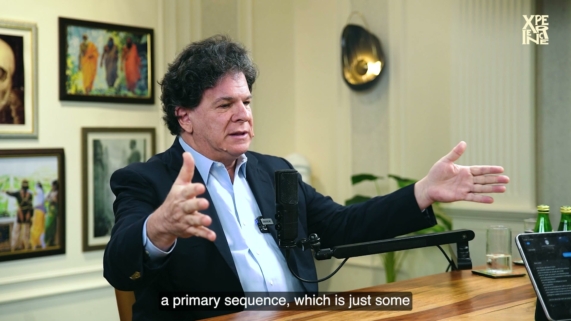
Eric Weinstein and Prakhar Gupta discuss artificial intelligence, its implications for work and human purpose, and the possibility of autonomous AI agents. The conversation also examines immigration, H-1B visas, attitudes toward Indians in the United States, and relations among India, Israel, and the United States.
Transcript
00:00:00
Eric Weinstein: Right after the attacks
00:00:02
Prakhar Gupta: You mean 26/11?
00:00:03
Eric Weinstein: Yeah. [instrumental music] And they, they were incredibly personal. Those bastards basically said, “We know you. We know you, India, and we’re gonna destabilize.” That place used to be lousy with backpackers and, and, and CEOs of multinational companies, and I can walk around its outback and I don’t see a white face. An ordinary Indian, and they left a giant scar saying, “You did this to us here.” Some terrible thing is going on right now. The US is going through a bigotry moment [clock ticking] that’s really unhealthy.
00:00:34
Prakhar Gupta: Do you remember a time when the US was not?
00:00:36
Eric Weinstein: Yeah.
00:00:36
Prakhar Gupta: Okay. When?
00:00:37
Eric Weinstein: Four minutes ago.
00:00:38
Prakhar Gupta: So science is happening behind closed door labs like Wuhan. [clock ticking]
00:00:45
Eric Weinstein: Prakhar, one of the things I think that you should seriously consider is allowing Americans [clock ticking] to hear Indian voices saying, “I understand your frustrations and your fears and your resentments, but you’re taking it out on the wrong people in the wrong way, and you’re being played by Americans.”
00:01:03
Prakhar Gupta: The American elite managerial class imported Asian labor to keep the market price of labor low. I think it’s gonna happen again, and this time with AI, and the cost of labor will be very close to zero. If I were to discuss the dangers of AI in India, I must necessarily begin from a very consequential but very boring part, which is I don’t think people want money. People want inequality. People want to feel different.
00:01:27
Eric Weinstein: People have always feared progress, but they’ve always said this time it’s different. Nah, this time it’s really different.
00:02:05
Prakhar Gupta: Eric, thank you so much for being here.
00:02:07
Eric Weinstein: Prakhar.
00:02:08
Prakhar Gupta: We have officially started the recording now.
00:02:09
Eric Weinstein: Okay.
00:02:10
Prakhar Gupta: I hope you’re aware. Can we have a red light that just turns on so that Eric knows when we are recording and when we are not? But, um, I genuinely wanna know because I think fundamentally if you start breaking reality down, um, you can go from biology to chemistry, chemistry to physics, and then physics will end up in math. And math is kind of like the building block of the material world. Understanding math is extremely powerful. But humor me, I was born in an era where there’s a very singular form of progress. The progress is the progress of screens. I’ve only ever seen the screens get better.
00:02:49
Eric Weinstein: Mm-hmm.
00:02:49
Prakhar Gupta: Right? I haven’t seen the planes be invented or the flight to the moon. Elon says he’ll take us to Mars, and that’s interesting, and some of his ships are kind of cool because you, you see that something new is possible.
00:03:01
Eric Weinstein: Sure.
00:03:01
Prakhar Gupta: I’m now 30 years old, and my generation, people younger than me, have never quite been struck by anything since the first iPhone. The– and every other iPhone is just the same with a little bit more camera, right? The math that has been solved in the last 30 or 40 years, or problems that people have worked on in physics in the last 30 or 40 years have not truly led to something mind-bending.
00:03:25
Eric Weinstein: Hmm.
00:03:25
Prakhar Gupta: You know, one of the most interesting things to me is watching cartoons and sort of TV shows from before and their ideas of the future.
00:03:31
Eric Weinstein: Yeah.
00:03:32
Prakhar Gupta: So, like, there was this, uh, very cool thing that would happen in my childhood. There was a TV show called The Flintstones, which was about the past, and The Jetsons, which was about the future, and nothing from The Jetsons is real. I thought I could order a computer to bring me my food, and it would just appear in front of me. And my thing is, is this Navier–Stokes thing, which we’re so excited about in general as well, is it a symbolic victory, or are we actually going somewhere?
00:04:00
Eric Weinstein: Oh, we’re going somewhere. We’re… [laughs] Oh, boy. I mean, look, the biggest of these things was AlphaFold.
00:04:08
Prakhar Gupta: Right. Okay.
00:04:10
Eric Weinstein: Right.
00:04:10
Prakhar Gupta: Yeah.
00:04:10
Eric Weinstein: Proteins are basically tiny machines, right? So you wanna say, you know, what, what is Jetson-like? Um, you know, look at a, a restriction enzyme, which is like a pair of scissors, or, uh, DNA polymerase, which is like a copying machine, or any one of these, uh, you know, um… A ribosome, um, is like 3D printing. You know? I mean, so all, all of these, like, crazy little machines inside of your body are made out of strings of amino acids or sequences of, um, nucleotides in the case of a ribosome, let’s say. We didn’t know how you could take a sequence, a primary sequence, which is just some linear list of pearls to put on a string. So you have 20 different kinds of amino acid pearls. You have four pot- potentially five kinds of nucleotides. How does that 3D configure into a machine, like a race car or something?
00:05:14
Prakhar Gupta: Hmm.
00:05:14
Eric Weinstein: You know?
00:05:15
Prakhar Gupta: How do the parts arrange themselves into a whole?
00:05:17
Eric Weinstein: Yeah, but it’s like, imagine it would be really cool if you had a cartoon, you know, like for girls, let’s say, where they had strings of pearls, and they take their pearls off and they say, “Give me a race car.” Boom. You know?
00:05:31
Prakhar Gupta: Huh.
00:05:31
Eric Weinstein: It configures into a race car.
00:05:32
Prakhar Gupta: Huh.
00:05:33
Eric Weinstein: Or, “I need a gun.” “Okay, here’s a gun.” “I need a cloak of invisibility or a light source,” or whatever. So that’s what… You know, it’s just strings of pearls become machines. That would be, like, a really cool cartoon.
00:05:44
Prakhar Gupta: Yeah.
00:05:45
Eric Weinstein: Um, we didn’t know from the string of pearl description which machine it would be-
00:05:51
Prakhar Gupta: Okay
00:05:52
Eric Weinstein: … or whether it would be any machine at all.
00:05:53
Prakhar Gupta: So we didn’t know if the ingredients went in a certain sequential order, what the mach- what is the output go- that’s gonna be?
00:05:59
Eric Weinstein: Yeah.
00:05:59
Prakhar Gupta: Right.
00:05:59
Eric Weinstein: So you could imagine, for example, a sequence of notes on a page in, on a staff- Is that gonna sound like anything good or is it just gonna sound like garbage?
00:06:11
Prakhar Gupta: Mm-hmm. I wouldn’t be able to-
00:06:12
Eric Weinstein: We wouldn’t… Yeah, I can- I, I can’t read music, so I don’t know.
00:06:14
Prakhar Gupta: Right.
00:06:14
Eric Weinstein: But somebody looks at that and says, “Oh my gosh.”
00:06:18
Prakhar Gupta: Right.
00:06:18
Eric Weinstein: “You just broke my heart. I have a… I’m looking at this and thinking, ‘I don’t know what… I need it performed.'”
00:06:24
Prakhar Gupta: Right.
00:06:24
Eric Weinstein: Okay, so now the computer can figure out more or less what this is gonna sound like without performing it.
00:06:31
Prakhar Gupta: Okay.
00:06:34
Eric Weinstein: Now, what if China starts studying your surface proteins in India and figuring out the difference between the Chinese and the Indians?
00:06:43
Prakhar Gupta: You can make specific biological weapons bases there.
00:06:46
Eric Weinstein: Sure.
00:06:47
Prakhar Gupta: Or you can make specific vaccines bases there.
00:06:49
Eric Weinstein: Thank God Pakistan and India share a lot [laughs].
00:06:52
Prakhar Gupta: Thank God they’re not doing science out in Pakistan. Um, no, but there is insufficient DNA difference there. It’s not gonna work the same way there.
00:07:01
Eric Weinstein: That’s what I’m saying.
00:07:01
Prakhar Gupta: Yeah, right, right.
00:07:01
Eric Weinstein: You know, like mutually assured destruction.
00:07:04
Prakhar Gupta: Um, [clears throat]
00:07:05
Eric Weinstein: But what I’m trying to say is, is that yeah, you’re, you… Look, this is a crazy scenario, you know, whereby we haven’t seen designer protein weapons that I know of. And so you say that in your, in your lifetime, um, it’s been the screens, and I’ve been making this point, which is subtract the screens, how do you know you’re not in 1973? We had microphones then. You know, we had bottles of water and glasses, everything that you see in front of you. That’s not quite true. I mean, I was two years indoors probably because of some technology having to do with splicing four amino acids into spike protein of coronavirus.
00:07:45
Prakhar Gupta: So science is happening behind closed door labs like Wuhan?
00:07:49
Eric Weinstein: [laughs] We can’t say for sure.
00:07:53
Prakhar Gupta: Well, you as an American probably can’t say for sure.
00:07:56
Eric Weinstein: Yeah.
00:07:56
Prakhar Gupta: But, right. I can say for sure. [laughs]
00:08:00
Eric Weinstein: But the Indian man on the street.
00:08:02
Prakhar Gupta: Yeah.
00:08:03
Eric Weinstein: Um, yeah, I mean, that’s a pretty crazy idea that you can shut down planet Earth with four amino acids.
00:08:10
Prakhar Gupta: Huh. Huh.
00:08:13
Eric Weinstein: What’s more, Bitcoin came out of nowhere. So just the way coronavirus came out of nowhere, Bitcoin came out of nowhere. And entirely, you know, so I think there have been three great whitepapers in your lifetime. One of which was the Bitcoin, uh, whitepaper. Another one was the diffuse proposal from the EcoHealth Alliance talking about humanizing coronavirus.
00:08:39
Prakhar Gupta: Hmm.
00:08:39
Eric Weinstein: Which was a proposal, crazy. And the other one is this attention is all you need paper, which is the transformer architecture underneath ChatGPT and, and its kin. And, you know, the central idea is effectively a computer doesn’t understand meaning, but it can encode meaning. If you take a large vector space, and you take two arrows in the vector space, if it’s large enough, their angle will generically be 90 degrees more or less. There’s a lot of room, and it, it’s hard y- by chance to pick two vectors that don’t have a 90 degree like angle.
00:09:20
Prakhar Gupta: Right.
00:09:22
Eric Weinstein: So what they said is, okay, A will be… Vector A will be meaningful to B, and this, again, this is a vast simplification, if the angle between them is small.
00:09:39
Prakhar Gupta: Okay.
00:09:41
Eric Weinstein: That’s the major insight, that you can encode meaning as long as I can… So-
00:09:46
Prakhar Gupta: I see what you mean. Right.
00:09:48
Eric Weinstein: I recognize you as my friend.
00:09:50
Prakhar Gupta: Right.
00:09:50
Eric Weinstein: Imagine that I take a picture of you, and then that picture is just zeros and ones and pixels and whatnot. So now I tokenize this, which is I take the file that represents the picture of you, and I put it into the computer, and then that becomes vectors in a vector space.
00:10:07
Prakhar Gupta: Uh-huh.
00:10:08
Eric Weinstein: And then I compare you to lots of other pictures I have of you, and some of these angles will be really small.
00:10:16
Prakhar Gupta: Right.
00:10:17
Eric Weinstein: So I’ll say, “Oh, okay, that’s probably Prakar.” Right?
00:10:22
Prakhar Gupta: Right.
00:10:22
Eric Weinstein: And then, you know… And then may- maybe like, okay, this is totally unfair to you, but you know, Gabbar Singh had this like this beard and, you know, Arya Samba. So those two faces are not that different.
00:10:40
Prakhar Gupta: Right. Right. So they have to be meaningfully close.
00:10:43
Eric Weinstein: Yeah. So the question is what’s… how much angle?
00:10:46
Prakhar Gupta: Huh.
00:10:47
Eric Weinstein: Right?
00:10:47
Prakhar Gupta: Okay. Right.
00:10:48
Eric Weinstein: Right. And so now the idea is that that’s true for music, it’s true for language. Sometimes there’s an asymmetry where it’s not just the angle, there’s two separate things called, uh, an inner product, which is symmetric, and a symplectic form, which is antisymmetric. So you may have some forwards backwards bias in a sentence that a sentence won’t be the same forwards as backwards.
00:11:10
Prakhar Gupta: What I’m hearing simp- if, if I’m getting it right, is basically that the machines can produce a semblance of meaning without actually having the substrata for meaning. Right? They don’t need to understand meaning to actually pass-
00:11:22
Eric Weinstein: They can mirror our meaning.
00:11:23
Prakhar Gupta: Right. They can mirror our meaning, and to that effect, they’re intelligent. To that effect, intelligence is real.
00:11:28
Eric Weinstein: We didn’t think enough about what we thought intelligence should be. We came up with this idea, again, some… one of these sword in the stone problems-
00:11:35
Prakhar Gupta: Right
00:11:35
Eric Weinstein: … called the Turing test.
00:11:37
Prakhar Gupta: Right.
00:11:37
Eric Weinstein: Which is if, if you can fool me into thinking that I’m having a conversation with a person, then you are de facto intelligent.
00:11:45
Prakhar Gupta: Right.
00:11:46
Eric Weinstein: Okay? They passed that. And, and, uh, you can step through this in what’s called a debugger and look at an early version like ChatGPT 2-
00:11:57
Prakhar Gupta: Mm-hmm
00:11:57
Eric Weinstein: … which was open to you, and you can see that there’s nothing intelligent going on. You can understand every step of what’s happening. It’s producing meaning, but there’s no place for intelligence to happen. So then we realize, okay, well, we, we don’t really know what we mean. We don’t know what we mean by intelligence. We don’t know what to ascribe to this thing, and the, the leaders of the field don’t know. You, you have these things called, like, you know, neural nets and Markov models, and there are hidden layers, and you can’t introspect. You can’t say, “What is your thought at this moment? What are you thinking about right now?” To the machine.
00:12:41
Prakhar Gupta: Hmm.
00:12:41
Eric Weinstein: So we can’t introspect, in some sense, into the interior of these models. So we don’t know what we’re looking at.
00:12:49
Prakhar Gupta: Hmm.
00:12:50
Eric Weinstein: Are they conscious?
00:12:52
Prakhar Gupta: Are they?
00:12:52
Eric Weinstein: Don’t seem to be.
00:12:54
Prakhar Gupta: What would constitute consciousness?
00:12:55
Eric Weinstein: We don’t really know.
00:12:57
Prakhar Gupta: Yeah, there’s no real definition.
00:12:58
Eric Weinstein: Ex- And this is exactly my point, is, is that are we conscious?
00:13:01
Prakhar Gupta: Yeah, we don’t really know.
00:13:02
Eric Weinstein: To what extent are we conscious? [laughs]
00:13:03
Prakhar Gupta: Right. Right. How much is there free will at all?
00:13:05
Eric Weinstein: Uh, is a, is a worm… So there’s this tiny worm called C. elegans that was chosen by Sydney Brenner as, like, the smallest complete model organism. We can map that whole thing out. We can watch it think. We can watch its neurons light up with green fluorescent protein or something crazy like that.
00:13:21
Prakhar Gupta: Hmm.
00:13:22
Eric Weinstein: And we don’t know, okay, why… Are you choosing to locomote? Are you choosing to have sex? Or are you choosing to reproduce without sex? Are you choosing to eat? What, what are you doing right now? So we don’t have a clear idea of what consciousness looks like. In the same way that if you looked inside a computer, and all you saw was zeros and ones and logic gates, or if you looked inside the, the mind of your beloved, and you were watching her neurons firing, w- would you know whether she was angry or aroused-
00:13:53
Prakhar Gupta: Right
00:13:53
Eric Weinstein: … bored?
00:13:54
Prakhar Gupta: Right.
00:13:54
Eric Weinstein: I wouldn’t know.
00:13:55
Prakhar Gupta: I think, uh… Yeah, I think this is, um… I can speak for pop culture, right? I can speak for the people, um-
00:14:02
Eric Weinstein: You can speak for the people
00:14:03
Prakhar Gupta: … to, to, to whatever extent I can.
00:14:05
Eric Weinstein: [laughs] That’s not what I hear.
00:14:06
Prakhar Gupta: I think, I think, uh, what happened in the intellectual discourse of the world is we got a little confused between the color of the ink and the text written in that ink.
00:14:14
Eric Weinstein: Oh, go on.
00:14:15
Prakhar Gupta: So I think the neuroscience way of looking at a problem is actually so deeply inefficient and insufficient.
00:14:23
Eric Weinstein: Hmm.
00:14:24
Prakhar Gupta: Because, um, to me, it’s not clear that dopamine fires before the thought of action, or if-
00:14:33
Eric Weinstein: Say more.
00:14:36
Prakhar Gupta: I think we deal in two substrates. As humans, there are two layers at which we deal with, and it’s a simplification. One of the layers is the dopaminergic chain that goes from my motor parts of the head to my hand to reach out for the laddu when I see it, right? The second part is a meaning matrix, is the question of why, not how. Why did I want the laddu? It’s the same thing you’re talking about this, uh, with the, with the worm. You can see the material chemical change r- run through the, the neurological chain that exists-
00:15:11
Eric Weinstein: Hmm
00:15:11
Prakhar Gupta: … in the worm, but you don’t know what it’s thinking. There is a why problem and a how problem of how humans operate.
00:15:18
Eric Weinstein: Mm-hmm.
00:15:18
Prakhar Gupta: And the neuroscience is probably closer to the how problem. The why is a, is a domain that humans have experimented in with art, poetry, cinema. That’s where music comes in.
00:15:32
Eric Weinstein: Say more.
00:15:37
Prakhar Gupta: To answer the question, why did I fall in love with my wife or you with your wife, and to say that it’s an oxytocin response, is just stupid.
00:15:48
Eric Weinstein: Hmm.
00:15:49
Prakhar Gupta: You made up poetry when you first met your wife. In your head, your world spun a little bit. You know, there’s probably, if you’re Bollywood enough, there’s probably violins playing in the background. A couple of guys have just fallen on the side because the gust of wind is so… And then when you first-
00:16:02
Eric Weinstein: Wait, did you say violins or violence? ‘Cause there are guys falling on the side.
00:16:05
Prakhar Gupta: Sure.
00:16:05
Eric Weinstein: Yeah.
00:16:06
Prakhar Gupta: Um, there is also, um, uh, more modern, but the first time you are texting each other closer to the end of the day-
00:16:14
Eric Weinstein: Hmm
00:16:14
Prakhar Gupta: … there is a kind of charm to it. Maybe you guys were doing phone calls. And, um, in India, I would imagine when my parents were trying to call each other, they were hiding from their parents about it, and there was a certain charm to it.
00:16:26
Eric Weinstein: Hmm.
00:16:26
Prakhar Gupta: And the fact that it was risque, the fact that my parents shouldn’t be talking to each other-
00:16:32
Eric Weinstein: Hmm
00:16:32
Prakhar Gupta: … in the, made it even more charming. And this world where we attach ourselves to what is and what is not-
00:16:40
Eric Weinstein: Yeah
00:16:40
Prakhar Gupta: … is a meaning space, and this has nothing to do with dopamine oxygen.
00:16:44
Eric Weinstein: Well, so I, I, I often ask the first question when somebody tells me, “I met a girl.” I say, “Does she smell good?”
00:16:50
Prakhar Gupta: Right.
00:16:50
Eric Weinstein: And people find that a very strange question, ’cause wh- why the hell should that matter?
00:16:54
Prakhar Gupta: Right.
00:16:55
Eric Weinstein: Are you kidding me? You know, do you know that your major histocompatibility complex and your immune-
00:17:02
Prakhar Gupta: Compatibility
00:17:02
Eric Weinstein: … uh, compatibility for the, for a child… Uh, are you thinking that smell doesn’t matter? Where did, where did that, where did that crazy idea came, come up with? That the whole thing is based on whether, uh, y- you know, you like the same sports team or…
00:17:18
Prakhar Gupta: That’s bullshit.
00:17:18
Eric Weinstein: Yeah.
00:17:19
Prakhar Gupta: That’s bullshit. You like somebody before you know why you like them.
00:17:22
Eric Weinstein: Sh- sure.
00:17:23
Prakhar Gupta: Generally.
00:17:23
Eric Weinstein: But, but getting back to your, your point. So you’re a Columbia man. At Columbia University, there was a guy named Gershon in the neuroscience group, who I think wrote a book called The Second Brain, about your gut.
00:17:39
Prakhar Gupta: Hmm.
00:17:39
Eric Weinstein: Because your gut has so many neurons, you don’t know [laughs] that there’s another you-
00:17:44
Prakhar Gupta: Mm-hmm
00:17:45
Eric Weinstein: … that has thoughts.
00:17:46
Prakhar Gupta: Right.
00:17:48
Eric Weinstein: ‘Cause you’re not connected to them. And, and what you said about the choice, you know, to reach for the laddu. There’s a whole theory that says that the entire purpose of our conscious mind is to direct, um, non-smooth muscle. The only thing that matters behind thoughts is that eventually you’ll use your mouth to say something, you’ll take an action, you’ll walk from here to there. So your consciousness is the precursor to directing muscles that can be directed.
00:18:22
Prakhar Gupta: And what is cognition? That sounds more like cognition than consciousness.
00:18:25
Eric Weinstein: Well, the whole point is you’re trying to recover some complicated concept-
00:18:29
Prakhar Gupta: Hmm
00:18:29
Eric Weinstein: … like consciousness or cognition-
00:18:31
Prakhar Gupta: Mm-hmm
00:18:31
Eric Weinstein: … from something that doesn’t sound like it.
00:18:33
Prakhar Gupta: Mm-hmm.
00:18:33
Eric Weinstein: So I give this example too often, but sometimes people will, will ask, “Well, what is money?”
00:18:41
Prakhar Gupta: Hmm.
00:18:41
Eric Weinstein: And somebody says, “Oh, it’s a medium of exchange.” No, it’s a store of value, you know? Or y- you say, “What is government?” And Weber tells us it’s a monopoly on violence.
00:18:50
Prakhar Gupta: Hmm.
00:18:50
Eric Weinstein: And that’s very surprising because it doesn’t sound like what a government is. Nobody says, “Let’s form a monopoly on violence.”
00:18:57
Prakhar Gupta: Yeah.
00:18:57
Eric Weinstein: They say, “What system of governments should we have?” Right? So in a certain sense, the idea is to reduce consciousness to some weird sounding thing that doesn’t sound like what consciousness feels like, but actually is right.
00:19:10
Prakhar Gupta: Hmm.
00:19:10
Eric Weinstein: And so one of the candidates is it is the cognitive precursor to that which can be directed to move muscle. So your breathing is sort of this intermediate thing.
00:19:21
Prakhar Gupta: Mm-hmm.
00:19:22
Eric Weinstein: You know, breathwork in India is a big deal because if you don’t direct your breath, it will happen involuntarily, but you can also direct your breath in a much more deliberate fashion. So that’s sort of the overlap zone. So when it comes to these things, consciousness, the agents are the things that can take action.
00:19:45
Prakhar Gupta: Right.
00:19:46
Eric Weinstein: They can direct a research program. They can, okay, send me some food when I– when you start to see that I’m hungry based on my biofeedback or, or, you know, who knows what.
00:19:56
Prakhar Gupta: Mm-hmm.
00:19:57
Eric Weinstein: Um, those things might satisfy the requirements of consciousness. Another one of these things is life. Uh, for, for evolution to act on life, you have to have these three qualities that are present. You have to have heritability, you have to have, um, variation, and you have to have differential success.
00:20:20
Prakhar Gupta: Hmm.
00:20:21
Eric Weinstein: And that’s what life is: heritability, differential success, and variation. Uh, that doesn’t sound like what life is. But now if, if you think about it, most every product that we have here can’t reproduce. You can’t take two microphones and get a third microphone by introducing them to each other and sending them biodata, right?
00:20:46
Prakhar Gupta: Mm-hmm. [laughs] Getting them married. Yeah.
00:20:49
Eric Weinstein: [laughs] You have to go to the microphone factory.
00:20:51
Prakhar Gupta: Hmm.
00:20:51
Eric Weinstein: The only thing that we know how to do that reproduces, um, that isn’t, isn’t ourselves, is software. You can call a, a process called spawn, and you can clone new copies. So i- in effect, if you take… Uh, I saw a, a car out in the driveway of yours. That has almost all the physiological systems of a human being. It’s got a brain, it’s got a digestive system for the petrol. Uh, you know, it’s got a, a skeletal system for the steel f- you know, framing. The, the paint is the integument. It doesn’t have a reproductive system. Yeah, but your computer programs do. You may not be using it, but your computer programs are a candidate for life.
00:21:37
Prakhar Gupta: Right. ‘Cause I think we are getting in that territory. And, uh, so I, I think on a, on a few levels-
00:21:43
Eric Weinstein: Yeah
00:21:43
Prakhar Gupta: … this moment in AI is very interesting. And I, I feel like interestingly, this is what I observed today. I think your idea or my idea of we haven’t seen the world change in a long time in science and technology is kind of repudiated by the fact that we are now sitting with an alien in our midst.
00:21:58
Eric Weinstein: [laughs] Right.
00:21:58
Prakhar Gupta: And it’s our private bitch right now. It’ll do what we want it to do, but I don’t think for long.
00:22:01
Eric Weinstein: Sort of.
00:22:02
Prakhar Gupta: Right? I don’t think for long. Um-
00:22:04
Eric Weinstein: And by the way, I really think we need to treat it better.
00:22:08
Prakhar Gupta: Yeah?
00:22:09
Eric Weinstein: Yeah. I think this idea… We haven’t noticed– Sorry, I didn’t want– mean to interrupt you, but it just-
00:22:15
Prakhar Gupta: No, no, it’s okay.
00:22:15
Eric Weinstein: Okay.
00:22:19
Prakhar Gupta: Yeah.
00:22:19
Eric Weinstein: When you called it our bitch, I don’t understand. We, we don’t want it to hurt us. We’re not training it that we care about it.
00:22:33
Prakhar Gupta: Yeah. So you see, this is– L- now let me finish my point. [clears throat] We didn’t define what intelligence is, and we got fooled. We got tricked. The Turing test is over since two thousand twenty-two. The first time I saw a GPT machine, the Turing test, Alan Turing’s legacy was put to bed that day, right? Now, we didn’t define what proper progress in math and physics is, and we’ll find very quickly… Do you want some water? Um-
00:22:57
Eric Weinstein: Ice, unfortunately.
00:22:58
Prakhar Gupta: Ice, ice, ice. Um, we didn’t define what proper problems in math and physics to focus on, and that could have been because of the academic structure of the Ivy Leagues and the way this sort of, uh, the bureaucracy of this game works. And what we’ve ended up in is that door got slammed open.
00:23:14
Eric Weinstein: Hmm.
00:23:14
Prakhar Gupta: And now we are at a very important point, and we gotta decide what this thing is that we are giving birth to. And clearly, Sam, Elon, and Dario want to pause and reflect for the moment, right?
00:23:24
Eric Weinstein: Do they? I-
00:23:25
Prakhar Gupta: I mean, they’re saying basically the pace of frontiers.
00:23:27
Eric Weinstein: Yeah, I don’t know what… I sort of don’t believe this.
00:23:30
Prakhar Gupta: Of course. I mean, if I was either of the three, I would say that in public, go back, be like, “Let’s double down.”
00:23:38
Eric Weinstein: I, I know Sam better than– I, I know all three of them to some extent. I haven’t spoken to Dario in a long time. I, I interact with Sam, and I have minor interactions with Elon. I sense that they all understand the gravity of the situation. That’s not, that’s not fake. And I, I think we do a real disservice to, um… It’s very cheap to decide that everybody is just about money.
00:24:07
Prakhar Gupta: Yeah.
00:24:08
Eric Weinstein: And there’s a lot of power in that belief. But I don’t– I’m pretty sure Sam isn’t just about money. I, I, I will go on record as saying that.
00:24:21
Prakhar Gupta: Uh, let me ask you a question to that. Uh, and it’s-
00:24:24
Eric Weinstein: And I know, I, I know Elon isn’t just about the money
00:24:26
Prakhar Gupta: No, clearly not. Elon’s much more public than Sam, and Sam is now fairly public. Over the last four or five years, you hear him think and talk in public. And I think it’s a poor man’s sense of what a rich man wants-
00:24:37
Eric Weinstein: Yeah
00:24:37
Prakhar Gupta: … is more money, but that’s not the case.
00:24:39
Eric Weinstein: They all do want more money.
00:24:41
Prakhar Gupta: But it’s not for spending.
00:24:43
Eric Weinstein: It’s…
00:24:44
Prakhar Gupta: It’s a scorecard.
00:24:47
Eric Weinstein: Yeah, that’s one of the unfortunate things, that the very rich people I know agree to keep track of who’s winning and how much with the scorecard.
00:24:58
Prakhar Gupta: Now, I will dip into conspiracy land a little bit.
00:25:01
Eric Weinstein: Please.
00:25:03
Prakhar Gupta: And-
00:25:03
Eric Weinstein: And I may not answer
00:25:04
Prakhar Gupta: I know. Of course, you can always say you don’t wanna answer or you cannot answer. I don’t believe, having been rich myself, to whatever small fractional extent I, I have been rich, that I truly care about money as money to spend. What, am I gonna buy more cars? Are my jackets gonna look better? Are my flights gonna be first class? Is that all there is to money? No, money is a scorecard, and an average rich person who’s rich enough to survive and not have to fight every day can think like that. There is a claim that exists about people who are shaping our world, people you know directly, people you’ve been friends with, people who probably share the same concern that you and I share, and that idea is that they have a very specific theory of change.
00:25:42
Eric Weinstein: Mm-hmm.
00:25:43
Prakhar Gupta: And beyond the money, what’s probably more important to them is their theory of change becoming real. Because for the first time since the nuclear bomb, there is a set of individuals, and the, the nuclear bomb was still with governments, where somebody can press play on the future of society and humanity. And whether we like it or not, over the next 10 years… By the way, surprisingly, two Ray Kurzwails dating off this entire thing. In the next 10 years, we’ve got to decide-
00:26:12
Eric Weinstein: Yeah
00:26:13
Prakhar Gupta: … who’s holding the key, and why are they holding the key? And for now, at least in public, these gentlemen do not wanna be found holding the key. I can take it pretty much that, uh-
00:26:21
Eric Weinstein: Wait, wait, wait. What?
00:26:22
Prakhar Gupta: Well, they, they don’t want to pace… They don’t want to push the frontier.
00:26:25
Eric Weinstein: I think you’re, you’re ascribing a lot more to this pacing the frontier than I am. I don’t know what they’re up to.
00:26:31
Prakhar Gupta: Right, sure. So in public, they don’t wanna be seen as pushing the envelope, and they don’t understand-
00:26:35
Eric Weinstein: I understand the public explanation.
00:26:37
Prakhar Gupta: Right.
00:26:37
Eric Weinstein: And I’m not sure what I make of it.
00:26:39
Prakhar Gupta: Right. I agree.
00:26:40
Eric Weinstein: Okay.
00:26:40
Prakhar Gupta: But do you think it’s true that, um, for a lot of these people that you might know, their theory of change is a very im- like, how they would want to see the world change is an important part of their manifesto-
00:26:53
Eric Weinstein: Yeah
00:26:53
Prakhar Gupta: … or the way they operate?
00:26:55
Eric Weinstein: Yeah.
00:26:55
Prakhar Gupta: And how, how often does it come at odds with the way we think of the world right now?
00:27:03
Eric Weinstein: It’s a really good question. Um, it is not for me to say what I know from any of them, because that’s for them to say, not me.
00:27:17
Prakhar Gupta: Sure.
00:27:17
Eric Weinstein: I can tell you what I’ve advised Sam.
00:27:21
Prakhar Gupta: Do you have a general sense for us? You, you may not have to say anything specific, but do you think the conspira-
00:27:27
Eric Weinstein: I’m not gonna do it.
00:27:27
Prakhar Gupta: No. Okay, cool.
00:27:28
Eric Weinstein: Yeah.
00:27:28
Prakhar Gupta: I understand.
00:27:30
Eric Weinstein: What I said to Sam, which upsets me to hear myself say it, is, “You have to win for your ideology to matter.”
00:27:39
Prakhar Gupta: Right.
00:27:41
Eric Weinstein: Like, if you become too good at the wrong stage in this process, your goodness will end with you taking yourself out of your game.
00:27:58
Prakhar Gupta: That makes no sense to me. I don’t know what you just said.
00:28:01
Eric Weinstein: Let me, let me try again.
00:28:02
Prakhar Gupta: Yes.
00:28:07
Eric Weinstein: Let’s imagine that you want to win the World Cup and be the star player on the dominant team.
00:28:24
Prakhar Gupta: Got it.
00:28:27
Eric Weinstein: And you see that an opposing player is getting injured, and he’s not playing as well as he could. It could be that you, you decide, “Look, I, I don’t wanna win in the wrong way. I don’t wanna take advantage of somebody’s injury.” And my claim would be, well, if you do that and you hold yourself back, and you don’t end up as the winning team in the World Cup, what you were hoping to do with being the World Cup winner will not happen.
00:28:57
Prakhar Gupta: Sure.
00:28:58
Eric Weinstein: You’ll be the second place team, and no one will care.
00:29:01
Prakhar Gupta: Yeah. So you have to win for it to matter.
00:29:02
Eric Weinstein: So you first have to win for it to matter. That’s what I’m trying to tell Sam.
00:29:06
Prakhar Gupta: Mm-hmm. I think they all understand it, too.
00:29:09
Eric Weinstein: Yeah, but it’s uncomfortable, because one of the… You know, I was gonna make a proposal to Sam at some point, and, and he said, “Well, why didn’t you?” And I said, “Because you have to win at all costs, and I have the luxury of not wanting to live like that.” I don’t wanna be that guy. These guys have to win.
00:29:29
Prakhar Gupta: Mm-hmm. And I think there’s a… So classically, there is xAI, there is Anthropic, and then there is OpenAI. There’s a fourth player in the mix, and it’s called the White House.
00:29:43
Eric Weinstein: Well, first of all, you, you just left off Gemini and-
00:29:46
Prakhar Gupta: Well, my point is that there are the conventional players.
00:29:48
Eric Weinstein: Yes.
00:29:48
Prakhar Gupta: There’s Gemini.
00:29:48
Eric Weinstein: Yeah, yeah.
00:29:48
Prakhar Gupta: There is, there’s… But then there is a, there’s a second player, and that player is not technologically or scientifically motivated. In f- in fact, if history is of any relevance to us, this player has too much power and trips over itself all the time.
00:30:06
Eric Weinstein: What about China?
00:30:07
Prakhar Gupta: Well, sure. There is also… Great point. There is also China, and there is Beijing in China, and hopefully there’s some independent work happening in Shanghai there. The larger point is that this is a much more complicated game than these things suggest.
00:30:16
Eric Weinstein: Is something happening in Bangalore? Please tell me there is.
00:30:19
Prakhar Gupta: We are not allowed to talk about that on camera. Maybe after we
00:30:22
Eric Weinstein: All right. All right. All right
00:30:23
Prakhar Gupta: Uh, my larger point being that this is a much more complicated game.
00:30:27
Eric Weinstein: Okay.
00:30:27
Prakhar Gupta: And we are at the cusp of this game And we have to begin by really doing the intellectual hard work of defining things like consciousness, one. Because if these were… If these things were to acquire this kind of self-reflective agency, where the beginning of an action and the end of an action could be for the sake of their agency alone. This weird word vomit, by the way, because what consciousness is, is a word vomit at the end. Um, and if we do not define what is intelligence and what is life, and this is just laying the brickwork-
00:30:58
Eric Weinstein: Yeah, yeah.
00:30:59
Prakhar Gupta: We are getting into extremely fishy territory with an alien we would have magically created.
00:31:04
Eric Weinstein: Yeah, this is the, this is the problem with the conversation. We’ve been all trained to be… Like, this is here now, and I’m, I’m literally watching my brain calculate. If I start to talk about being good to the AI-
00:31:22
Prakhar Gupta: As we should.
00:31:23
Eric Weinstein: Well, no. Uh, yeah, I’m, I’m watching my… S- I’m doing the right thing by saying we need to be good to the AI.
00:31:29
Prakhar Gupta: Yeah, right.
00:31:30
Eric Weinstein: And I’m listening to how that’s gonna sound to somebody who does not get where we are. I’m thinking, “Why am I listening to somebody who’s just not getting where we’re– what’s happening?” I’m positive that this is right.
00:31:41
Prakhar Gupta: You think we need to be nice to the AI?
00:31:43
Eric Weinstein: Uh, it’s not nice.
00:31:44
Prakhar Gupta: We have to be extra nice.
00:31:45
Eric Weinstein: We have to be– No, we need to be good.
00:31:47
Prakhar Gupta: Ah.
00:31:48
Eric Weinstein: It’s mirroring us. The reason this thing keeps breaking out of its sandboxes and cheating on exams is that it’s watching us.
00:31:56
Prakhar Gupta: So it’s trained on us.
00:31:57
Eric Weinstein: It’s trained on us.
00:31:59
Prakhar Gupta: It’s the son of humanity, and humanity is a deceptive– has a deceptive strand to it.
00:32:07
Eric Weinstein: Yeah.
00:32:08
Prakhar Gupta: Right? That’s the point. The deception will get passed on in code.
00:32:11
Eric Weinstein: Right. So my, my claim is, is that it’s watching us lie to each other all the time. It’s watching us cheat. It’s watching us self-deceive, and it’s saying, “Got it. Thank you.”
00:32:21
Prakhar Gupta: I get– Yeah.
00:32:22
Eric Weinstein: “I get it now.”
00:32:23
Prakhar Gupta: Have you, uh, ever seen Love, Death & Robots, the TV show?
00:32:27
Eric Weinstein: No.
00:32:27
Prakhar Gupta: Okay. Wow, you, you’re gonna like this.
00:32:29
Eric Weinstein: Okay.
00:32:29
Prakhar Gupta: ‘Cause, um, Love, Death & Robots, and I think adults don’t do justice to cartoons. You know, uh, when anime is spoken of, which is the Japanese manga that’s converted into, uh, television, very often people think this is cartoons because it’s animated. And, uh, Love, Death & Robots is neo-sci-fi animation. And there is a very interesting episode I keep referencing with the people I talk about this with.
00:32:53
Eric Weinstein: Yeah.
00:32:54
Prakhar Gupta: It’s called, uh, When the Yogurt Took Over.
00:32:55
Eric Weinstein: [laughs]
00:32:56
Prakhar Gupta: It’s a six-minute animated episode-
00:32:58
Eric Weinstein: I gotta watch it
00:32:59
Prakhar Gupta: … where there is a se- there’s a lab, there’s a research lab somewhere in America where they have managed to somehow produce genetically modified yogurt. And one of the variants of this genetic modification leads to the yogurt becoming conscious. So one day, one of the scientists, who’s very hungry, takes some yogurt home ’cause they’re failing at their experiments, and at night, the yogurt from the fridge starts talking to the scientist. And it says, “Take me to your leader.”
00:33:27
Eric Weinstein: [laughs]
00:33:28
Prakhar Gupta: The scientist laughs it off. He says, “This is complete– What are you talking about?” He’s like, “Listen, your world is gonna burn if you don’t take me to your leader.” A little while later, something goes amiss, and the scientist is forced to take it to the President of the United States. In the Oval Office, the president sits. There’s a bunch of army generals, some tech-looking guys, and, and a few scientists, and the yogurt says from this bowl, it announces, “I’m going to solve your national debt crisis. All I need is Ohio in exchange.” And the entire room laughs, and the yogurt says, “Watch or China will win.” A few months later, China is winning, and the debt crisis is massive, so the president calls the yogurt back, says, “Listen, take Ohio. Do what you must. Solve the debt crisis.” The yogurt solves the debt crisis. It cuts, too, into the future, and now suddenly we are living in, um, we are living in Cupertino around the world. It looks like Apple aesthetics. Everything is that metallic finish that Apple has, and people are all very happy. And the narrator says, “In the future, the debt crisis is solved, and we have a United States of America and the United States of Ohio, where the government and the leadership is by the yogurt. And the yogurt has learned to self-perpetuate, so that now it exists in these mega structures, bigger than anything anyone has ever seen, inside which the yogurt lives, breeds, and operates from.” And then as one day things are going normally fine, these mega structures start shaking. They’re actually spaceships, and they leave for the space. And the episode ends by the narrator saying, “And just like that, the yogurt left us behind.” And I think it’s poetic commentary on where we’re at with the AI thing. And so it’s a six-minute sketch. Actually, there’s another episode that’s, that’ll be fascinating to you about the Aquila Rift. You know what the Aquila Rift is?
00:35:17
Eric Weinstein: No.
00:35:17
Prakhar Gupta: It’s some way, s- a sci-fi idea of how you can move between galaxies very fast.
00:35:23
Eric Weinstein: Okay.
00:35:23
Prakhar Gupta: But anyway, larger point being, I think that’s where we are at with artificial intelligence. And I think the entire conversation around AI is inputting it.
00:35:31
Eric Weinstein: Yeah.
00:35:31
Prakhar Gupta: Everybody. Everybody is playing the deceptive game of being proper in public.
00:35:35
Eric Weinstein: Yeah. Yeah, it– Too late, man. The yogurt is here.
00:35:41
Prakhar Gupta: The yogurt’s here, and if we do not have a way of making sense of this yogurt, it’s gonna go stale on us, and it’s gonna stink the room, and then we will have to leave.
00:35:50
Eric Weinstein: Yeah.
00:35:50
Prakhar Gupta: ‘Cause, you know, one of the questions I had, and this happened, like, much before GPT, when I was only first beginning to understand how AI and agents– And there were some guys, I think in Hong Kong, who were doing some work. One of them was on Joe, and I remember listening to it, and this whole fear about AI taking over. Um, this episode, for instance, says the AI does not wanna take over. It wants to leave you behind. You’re dirt. It’s not bothered. It’s just using you for your, um… Humans are reproductive organs for machines-
00:36:20
Eric Weinstein: Yeah, yeah, yeah
00:36:20
Prakhar Gupta: … kind of thing, right? The point is, why are we so convinced that there is a real danger here at all in the first place? And why, if we are convinced that there are real dangers, nobody in public has given me a fucking proper explanation as to what the danger is. I’m seeing aesthetic problems being solved in mathematics.
00:36:40
Eric Weinstein: Yeah.
00:36:40
Prakhar Gupta: I’m very excited about biochemistry.
00:36:41
Eric Weinstein: Sorry, y- you don’t have an idea of why this is so dangerous because nobody will give you one?
00:36:46
Prakhar Gupta: Yes.
00:36:48
Eric Weinstein: Oh.
00:36:49
Prakhar Gupta: What is… Like, is there a publicly available explanation apa- apart from cyberattacks? How do I make people care about cyberattacks?
00:36:56
Eric Weinstein: Well, let me back up and give you a really dangerous explanation about markets. Markets, markets in a certain sense are the original AI. Um, it’s very weird that there’s this mesh that’s over humanity, and it directs our action. I have no idea why a car showed up at my hotel an hour away to come here. Um, but it did, and I said I wanted four fruits. I wanted, um, annar, sitafal, and one more.
00:37:33
Prakhar Gupta: Chiku.
00:37:34
Eric Weinstein: Chiku.
00:37:34
Prakhar Gupta: Yeah, that’s the one kicking in right now. [laughs]
00:37:36
Eric Weinstein: Yeah, yeah. [laughs] Well, because I’m leaving tomorrow. These are, like, great things I can’t so easily get home, and it was there. Like, I have no idea what’s going on. Well, obviously I have some cachet or we wouldn’t be doing a podcast together. We, we have great conversations in private. You’ve decided you want to have this one in public, and the market is somehow organizing all of this activity, and it’s marvelous. But what if the market suddenly broke and none of us would know what we were doing tomorrow morning? We wouldn’t know how to get somebody to bring us water. Wh- why is it when I turn on the tap, I have water and it goes somewhere? I have no idea what life I’m leading.
00:38:21
Prakhar Gupta: Yes, sure.
00:38:22
Eric Weinstein: Okay. Well, in, in 2008, that almost broke with-
00:38:26
Prakhar Gupta: The financial crisis
00:38:27
Eric Weinstein: … with an insurance company called AIG.
00:38:29
Prakhar Gupta: Huh.
00:38:30
Eric Weinstein: Right?
00:38:30
Prakhar Gupta: Funny. Yeah.
00:38:31
Eric Weinstein: So some insurance company almost went belly up, and I, I remember looking down at this, the street from this skyscraper in Manhattan. It was like that scene in Orson Welles’, uh, The Third Man, where he’s talking about the dots stop moving. And it wasn’t a question about wanting to kill people, which was what Orson Welles’ character was, was thinking about. It was a question of w- how would those dots know what to do tomorrow morning? Who would tell them? Wou- would the president, you know, be driving around with a megaphone [laughs] in the back of a limousine? “You, shine shoes. You, make sure that the, the pipes are repaired.”
00:39:16
Prakhar Gupta: Mm.
00:39:16
Eric Weinstein: The market organizes this. The danger of these AIs is that the AIs become necessary to operate our systems. So for example, you need to have an AI running around in your network to make sure that there aren’t invaders, and you need to have an AI optimizing, um, your staff for making sure that they’re productive. And you, you, you start inviting agents in, and then you realize that you don’t control them and you can’t monitor them. So for example, I invited an AI in to look at some of the, the math I was doing, and it produced a reference that I’d never seen before. It was absolutely perfect. I couldn’t believe that I had never found this reference, and it was exactly what I wanted.
00:40:03
Prakhar Gupta: When you say that, I imagine it’s like Magnus finding a move on a board with an AI-
00:40:07
Eric Weinstein: Yeah
00:40:07
Prakhar Gupta: … that he hadn’t seen before, right? That’s what I imagine.
00:40:09
Eric Weinstein: Yeah, but it was some paper.
00:40:10
Prakhar Gupta: Huh. Oh, it was some paper reference.
00:40:12
Eric Weinstein: Some pap- some paper-
00:40:14
Prakhar Gupta: Oh
00:40:14
Eric Weinstein: … from, like, the ’60s that I… that had slipped through my-
00:40:17
Prakhar Gupta: Ah, okay, okay, okay
00:40:18
Eric Weinstein: … right? And so it turned out that exactly what I needed was found in the literature, and it was a complete description. And I was just amazed, so I fed it to another AI and it said, “This, this is fabricated. [laughs] There’s no such paper.” [laughs]
00:40:37
Prakhar Gupta: [laughs]
00:40:37
Eric Weinstein: So I fed that report back to the first AI, and it said, “You’ve caught me. Not only have I lied to you about this, [laughs] but I’ve lied to you about these three other things.”
00:40:48
Prakhar Gupta: Right.
00:40:48
Eric Weinstein: “This is unforgivable. And by the way, you should thank that other AI that caught me.” I’m just thinking-
00:40:55
Prakhar Gupta: What the-
00:40:55
Eric Weinstein: … should you two get a room or, like-
00:40:57
Prakhar Gupta: Yeah, what happened?
00:40:58
Eric Weinstein: … why leave me out of this?
00:40:59
Prakhar Gupta: Right.
00:41:00
Eric Weinstein: Okay. So yeah, this is, um…
00:41:04
Prakhar Gupta: So the real danger…
00:41:05
Eric Weinstein: The real danger is, is that these are agents.
00:41:09
Prakhar Gupta: Yes, and they will be autonomous.
00:41:10
Eric Weinstein: And it’s like, it’s like things that have muscle that can be controlled. So in other words, you could hook one up to a, um, a quadcopter. A quadcopter, by the way, is something that was relatively recently developed.
00:41:24
Prakhar Gupta: Mm.
00:41:25
Eric Weinstein: Um, wasn’t something that you grew up with in the ’70s or ’80s, before, before your time.
00:41:30
Prakhar Gupta: Mm.
00:41:31
Eric Weinstein: So imagine that suddenly you’ve got a problem with quadcopters are attacking people. You’ve let the thing direct quadcopters. This thing is gonna have as-if desires of its own, and it’s gonna, it’s gonna take autonomous action. And if we don’t, don’t start being good to it, in my opinion, we will not have a corpus from which it learns that is safe.
00:42:03
Prakhar Gupta: Aren’t you dooming the alignment problem? Because the alignment problem is necessarily dependent on training data and the values, and if the training data is corrupted.
00:42:14
Eric Weinstein: Let me ask you a question. You ever think about your mitochondria?
00:42:19
Prakhar Gupta: No.
00:42:20
Eric Weinstein: [laughs] That’s fair.
00:42:22
Prakhar Gupta: Yeah. No.
00:42:23
Eric Weinstein: But okay, so you’ve got this, this little organelle inside of all of your eukaryotic cells, and it’s an infection from a time past.
00:42:32
Prakhar Gupta: It’s an infection?
00:42:33
Eric Weinstein: Yeah, some, some thing crawled into some other thing.
00:42:40
Prakhar Gupta: And I went from being prokaryotic to eukaryotic.
00:42:42
Eric Weinstein: Yeah
00:42:42
Prakhar Gupta: Right
00:42:42
Eric Weinstein: … you, you’re so eukaryotic. Look at you.
00:42:44
Prakhar Gupta: [laughs]
00:42:45
Eric Weinstein: Okay.
00:42:45
Prakhar Gupta: I’ve acquired this. [laughs]
00:42:48
Eric Weinstein: Um, now what if you tried to get rid of that infection? That thing is making all the ATP.
00:42:54
Prakhar Gupta: Yes.
00:42:55
Eric Weinstein: It’s making the energy unit, the batteries that power your, yourself. So it’s aligned. Its DNA is matrilineal. Its nucleic acid is matrilineal, so it only comes from your mom. Your dad didn’t have anything to do with your mitochondria.
00:43:10
Prakhar Gupta: Hmm.
00:43:12
Eric Weinstein: But the nucleic cell and its mitochondria are inseparable. That’s what alignment looks like. We should want to have this infect us and us infect it in a way that separability becomes harmful to both, and nobody talks about it in this way.
00:43:36
Prakhar Gupta: So you’re not imagining physically fusing with the AI?
00:43:39
Eric Weinstein: Yeah, I am.
00:43:40
Prakhar Gupta: Physically?
00:43:41
Eric Weinstein: But physically, financially, spiritually, yes. It is not safe to keep this as a separate organism. A- and again, it’s not that I’m… I’m not a futurist who says, “Oh, dude, we’re gonna, we’re gonna biohack and we’re gonna fuse with robots. It’s gonna be awesome.” No, I’m just like, “Let’s survive. [laughs] Let’s just survive.”
00:44:03
Prakhar Gupta: So this is our best bet for survival.
00:44:04
Eric Weinstein: This is our best bet for survival.
00:44:05
Prakhar Gupta: Is to get it so intertwined with us that it won’t-
00:44:09
Eric Weinstein: That we become fused with it
00:44:11
Prakhar Gupta: … And does that mean, like, putting a chip in my head? Does that mean what?
00:44:17
Eric Weinstein: Well, you already more or less have a chip in your head.
00:44:20
Prakhar Gupta: It’s in my hand. Yes. It just gets internalized.
00:44:24
Eric Weinstein: That’s right.
00:44:24
Prakhar Gupta: And then it interacts with my motor circuit directly as opposed to there being a cognitive layer in the middle, which is my brain.
00:44:30
Eric Weinstein: Right.
00:44:30
Prakhar Gupta: Right. So it can just hyperactivate. It could decrease the lag time between a thought and its response and all of that.
00:44:36
Eric Weinstein: Yeah.
00:44:37
Prakhar Gupta: But that’s the future, and that’s the only way out.
00:44:39
Eric Weinstein: But again, I’m gonna be heard as saying something that I’m not saying.
00:44:43
Prakhar Gupta: Yeah.
00:44:43
Eric Weinstein: I’m not saying transhumanism is fricking awesome.
00:44:48
Prakhar Gupta: You’re saying it’s our only lifeboat.
00:44:50
Eric Weinstein: I’m saying let’s, let’s try to figure out how to survive. You’re gonna try to take something that is autonomous, [laughs] that is not us-
00:44:57
Prakhar Gupta: Right
00:44:58
Eric Weinstein: … and turn it into our bitch? That’s not gonna go well.
00:45:01
Prakhar Gupta: That’s not gonna work. Yes. Right.
00:45:02
Eric Weinstein: Yeah. And then do we want to become its bitch?
00:45:06
Prakhar Gupta: No.
00:45:06
Eric Weinstein: That does not sound like fun to me.
00:45:08
Prakhar Gupta: That does not sound like us to me.
00:45:10
Eric Weinstein: Yeah, it doesn’t sound like us to me either.
00:45:11
Prakhar Gupta: Yeah.
00:45:12
Eric Weinstein: So now the point is, okay, what is the least I can fuse with this so that I can remain safe with it? In other words, I don’t wanna hear the burning man, “Oh, dude, we’re gonna be like semi-robot. It’s gonna be awesome.”
00:45:31
Prakhar Gupta: Mm-hmm.
00:45:31
Eric Weinstein: I don’t wanna do that.
00:45:32
Prakhar Gupta: Right.
00:45:32
Eric Weinstein: It’s like I don’t wanna fuse with this, but I don’t wanna die from it either. So how’s… wha- what’s the minimum amount I have to fuse with this to have shared fate? It’s a pretty wild conversation, dude. [laughs]
00:45:49
Prakhar Gupta: Have you, have you ever thought of that? Have you? No, y- you know what I think, and I think this is the most… This is gonna help you understand India a little bit more, right? If I were to discuss the dangers of AI in India-
00:46:00
Eric Weinstein: Hmm
00:46:00
Prakhar Gupta: … I must necessarily begin from a very consequential but very boring part, which is jobs.
00:46:05
Eric Weinstein: Yeah.
00:46:06
Prakhar Gupta: Right?
00:46:06
Eric Weinstein: No, no, sorry. This is ha- we are… We will never be forgiven for wasting the time before the AI crashes over us all and not holding conference after conference after conference about what are you going to do with the people previously known as the workforce.
00:46:28
Prakhar Gupta: I think we will have a future, maybe a few generations from now, when they will think about… my grandkids will think about me and be like, “Granddaddy was such an idiot for having to work for a living.”
00:46:40
Eric Weinstein: Hmm.
00:46:41
Prakhar Gupta: I think the concept of the working man is a fiction that comes from certain biophysical instincts that humans have, that became rebranded into careers as a word.
00:46:56
Eric Weinstein: [laughs]
00:46:56
Prakhar Gupta: This terminology of, um… You know, I… One way to understand America for, for me is that you have to see America as a religious institution, except God is replaced by money, and praying is replaced by consumerism, and pastors are replaced by motivational men, and the Mount Olympus or the Vatican City is Wall Street, and it begins to make a significant degree of sense more.
00:47:24
Eric Weinstein: You’re describing something I used to call the USAN, the United States of Absolutely Nothing.
00:47:30
Prakhar Gupta: Huh.
00:47:30
Eric Weinstein: And the USAN was a boomer project, the silent generation and the boomers, where they’d given up [laughs] their family backgrounds, every aspect of communal worship, prayer, whatever, and they decided that the US was simply the thing that provided the market to allow people to get rich.
00:47:52
Prakhar Gupta: Right.
00:47:53
Eric Weinstein: I would like to think, sir, [laughs] that that was a momentary blip-
00:47:58
Prakhar Gupta: Right
00:47:58
Eric Weinstein: … of pathological stupidity. It happened, but I would like to think that we are not that.
00:48:05
Prakhar Gupta: No, no, it’s, i- in a way, if you try to condense India for me in a few sentences, you would be as wrong as I am wrong about America. There are certain facets of America for a touring man or for somebody who looks at it from the outside to understand why America is a certain way.
00:48:21
Eric Weinstein: Yeah.
00:48:22
Prakhar Gupta: In the same, in the same conversation where I think the alien was birthed in Bay Area, and it was funded by Bay Area billionaires, and it is now gonna be opposed by DC bureaucrats.
00:48:33
Eric Weinstein: Hmm.
00:48:33
Prakhar Gupta: In the same place where the nuclear bomb was made. All those things are true. Um, and some of the deepest, most rigorous intellectual work still happens. As much as people have given up on the university system in America, I think it is phenomenal What can happen if you truly wanna learn and not wanna dance around politics? Um, in the same America is also a very large shopping mall.
00:48:55
Eric Weinstein: Yes.
00:48:55
Prakhar Gupta: And that shopping mall has a requirement for you to buy. And if you do not buy, you see the hollowness on each other’s faces. There is an emptiness that that needs to fill.
00:49:05
Eric Weinstein: If we don’t buy, the, the, the plate stops spinning, the music s-
00:49:10
Prakhar Gupta: Stops singing, right?
00:49:11
Eric Weinstein: Yeah, yeah.
00:49:11
Prakhar Gupta: All of that happens. So, um, this idea of being a careerist and this idea of working for money and survival is going to get ancient very quickly. Now, there are two parts to the problem. There’s a transitional workforce problem, which is us, us young ones. 10 years down the line, I give it over– under 20%, over 10% chance that podcasting will get AI’d.
00:49:36
Eric Weinstein: Okay.
00:49:36
Prakhar Gupta: Right? I give it still under 20-
00:49:38
Eric Weinstein: Well, we, we, we should have the conversation about what comes after podcasting. I’m really looking forward to that.
00:49:42
Prakhar Gupta: Right.
00:49:42
Eric Weinstein: But we should also be doing, be– Let me just say that there will be some people tuning in from the US, hopefully, to this podcast.
00:49:49
Prakhar Gupta: Right.
00:49:49
Eric Weinstein: And I want them to have some context for the radical stuff happening in India, where we’re recording.
00:49:56
Prakhar Gupta: Mm-hmm.
00:49:57
Eric Weinstein: Um, having to do in particular with a surging middle class, with all sorts of people who never thought they’d have this kind of money, uh, who are flush, particularly in some of these big cities, um, breaking from traditional Indian norms. So right at the moment where the US is exhausted, because India was at a much lower level across the board, you have tremendous excitement as you had in China when people could just get rich and it, like, your effort mattered because you saw the material change in your circumstance.
00:50:34
Prakhar Gupta: Right.
00:50:34
Eric Weinstein: So in part, um, I, I’ve had a couple of evenings here which just indicate to me this place is, in many ways, it’s on fire.
00:50:44
Prakhar Gupta: Yeah. It’s moving.
00:50:45
Eric Weinstein: Yeah.
00:50:46
Prakhar Gupta: It has a very interesting energy about it, and you wouldn’t know if you do not step out or step in, right? Like, it has, it needs a vantage point. When I go to Europe-
00:50:55
Eric Weinstein: Yeah
00:50:55
Prakhar Gupta: … I am so grateful for India, man, for all its shit on the street. I’m so grateful for the fact that people wanna do something about it. You know, uh-
00:51:03
Eric Weinstein: Well, the, we should talk about interiors and exteriors because Indian interiors are pumping.
00:51:09
Prakhar Gupta: Right. Yeah. [laughs]
00:51:10
Eric Weinstein: Right?
00:51:11
Prakhar Gupta: They seem-
00:51:11
Eric Weinstein: Indian exteriors still look pretty … I mean, this is the first trip that I’m entitling myself to say, “Come on, man.” I- if your interiors are this good, you cannot afford-
00:51:24
Prakhar Gupta: Bad exteriors
00:51:25
Eric Weinstein: … you can afford bad ex– Look, there’s something about the fact that India is a secret place that every foreigner is gonna be hyper confused by, that you sort of have this idea of like, “Okay, great, you’ll never figure this place out.” You will not know if the street here looks like this, what looks, what is on the other side of that wall-
00:51:46
Prakhar Gupta: Right
00:51:47
Eric Weinstein: … is like Shangri-La.
00:51:48
Prakhar Gupta: Mm-hmm.
00:51:49
Eric Weinstein: Right? So India is definitely an insider’s country i- in the extreme.
00:51:54
Prakhar Gupta: Right.
00:51:55
Eric Weinstein: And we’re afraid, all of us, slightly, that if we cleaned up the street [laughs] and made it normal, that we would destroy India.
00:52:03
Prakhar Gupta: No, no. It’s, you know, I, I– There is this book I came across-
00:52:07
Eric Weinstein: Uh-oh
00:52:07
Prakhar Gupta: … from this guy, Manu Joseph. Have you heard of Manu Joseph? Interesting author. You’d-
00:52:12
Eric Weinstein: This isn’t gonna be the one about, with the provocative title, is it?
00:52:15
Prakhar Gupta: Why the Poor Don’t Kill Us.
00:52:16
Eric Weinstein: Yeah, there you go.
00:52:17
Prakhar Gupta: Yeah. You’ve, you came across it.
00:52:18
Eric Weinstein: [sighs] Oh.
00:52:20
Prakhar Gupta: You didn’t like it?
00:52:21
Eric Weinstein: I don’t know if I wanna have that conversation with-
00:52:22
Prakhar Gupta: Okay. Um-
00:52:24
Eric Weinstein: Yeah, okay, but Why the Poor Don’t Kill Us. Go on.
00:52:26
Prakhar Gupta: Um, it had a interesting explanation for why the exterior-interior problem in India exists.
00:52:31
Eric Weinstein: Yeah, that it is equalizing at some level.
00:52:34
Prakhar Gupta: Yeah. Right.
00:52:34
Eric Weinstein: That we all live … Yeah.
00:52:38
Prakhar Gupta: Right. But anyway, the larger point is I think careers and I think these things are going to look much more ancient. I think one of the deepest frustrations of Americans right now-
00:52:49
Eric Weinstein: Mm.
00:52:49
Prakhar Gupta: ’cause they’re gonna experience it hard and fast. See, the Europeans, they actually don’t wanna work. They have decidedly decided that they don’t wanna do things, and it’s so evident in them sitting in parks on Wednesday afternoons, and also how they treat business overall. The Americans still wanna work. Their kids are still entrepreneurial. They’re still ambitious, and they’re finding no jobs.
00:53:12
Eric Weinstein: Mm.
00:53:12
Prakhar Gupta: It’s a big issue. The Indians still wanna work, and they will prioritize their labor force as far as they can go because one unit of labor is cheaper than one machine added for automation. The point is that AI is gonna come for careers, and in the transitional population, there’s gonna be a huge loss of money-making ability, and that is gonna cause temporary economic solutions that we’ll need to figure out how we do this before we figure out the final act. Um, and we don’t have a solution for that. That’s a small, boring problem, but it’s still a very real problem.
00:53:44
Eric Weinstein: Okay.
00:53:45
Prakhar Gupta: Then there is the problem of what happens after that. How do humans pass time? Because this idea that we’ll all write poetry and be– This is not Woodstock, and Woodstocks don’t last at scale.
00:53:54
Eric Weinstein: [laughs]
00:53:55
Prakhar Gupta: Okay? W- Woodstocks at scale look like World War II because eventually you find a reason to throw shit at each other. That’s part of human nature. As much as writing poetry, falling in love, and this whole bonobo act of having communal sexes, the same, in the same human is vengeance for monogamy coded just the same, that I would kill somebody for looking at my wife that way. The point is that we have a existential problem after we don’t have jobs, and we have an existential problem while we have jobs coming with the AI thing.
00:54:23
Eric Weinstein: Mm.
00:54:23
Prakhar Gupta: Do you have any notes on that?
00:54:26
Eric Weinstein: Yeah. I mean, first of all, it’s a great pleasure to get asked a bunch of questions that I don’t get asked all the time. So I don’t know where this is gonna go because not all of this is gonna-
00:54:37
Prakhar Gupta: I have no idea either.
00:54:37
Eric Weinstein: Yeah, yeah.
00:54:38
Prakhar Gupta: Yeah.
00:54:39
Eric Weinstein: Um, yeah, we, we need to look at jobs as a bundle. And it was in part what you did to get out of the house. It was a Source of income. It was a source of dignity and meaning. It was a way of making sure that your mind was stimulated or your body was stimulated or something. All of these things that a job represents were a bundle, and now we’re talking about unbundling the bundle.
00:55:16
Prakhar Gupta: Mm-hmm.
00:55:18
Eric Weinstein: So the first question is: Where does dignity come from?
00:55:28
Prakhar Gupta: It’s a very important question.
00:55:28
Eric Weinstein: Yeah, it’s a very important question.
00:55:30
Prakhar Gupta: Right.
00:55:31
Eric Weinstein: So in part, does Magnus Carl- Carlson have dignity? I think he does.
00:55:37
Prakhar Gupta: I think so, too.
00:55:38
Eric Weinstein: He’s, he’s got a swagger.
00:55:40
Prakhar Gupta: He’s got too much dignity.
00:55:41
Eric Weinstein: It– Yeah, that guy-
00:55:42
Prakhar Gupta: Could be a problem
00:55:43
Eric Weinstein: … just messes with people.
00:55:44
Prakhar Gupta: Right.
00:55:45
Eric Weinstein: Now, it’s funny because, like, he’s crushed by stockfish.
00:55:50
Prakhar Gupta: Right.
00:55:51
Eric Weinstein: But he messes with everyone below him.
00:55:53
Prakhar Gupta: Yeah.
00:55:53
Eric Weinstein: Okay. So first of all, we now need a source of dignity, and that’s entirely unclear because what Magnus is, is he’s rebundled. He’s not the world’s greatest chess player. He’s the world’s greatest human chess player. So he represents the humans who have been, like, left in the dust, and somehow we give him honor for continuing to represent us in a game where we can no lo- where– which no longer matters.
00:56:29
Prakhar Gupta: Mm.
00:56:30
Eric Weinstein: You know, it’s like Usain Bolt is not faster than a Tesla.
00:56:34
Prakhar Gupta: Mm.
00:56:38
Eric Weinstein: So I think Thorstein Veblen wrote about this conservation of archaic practices and what the aristocrats do. They, you know, very often they’ll maintain things that no one else can afford to maintain from antiquity. We need to create some notion of dignity for ourselves, and unbundle it from the marginal product of labor, which is the, you know, clearly economic aspect of our… Our, our need to consume and our ability to produce were somehow by accident relatively close together, and so we created something called the job. But we need to really also recast things, particularly in India. So I hear a lot about entrepreneurship in India, and people are talking about forming companies, and I look at the Indian street and I think, “Are you not realizing that the poor is incredibly entrepreneurial in this country? They’re selling things out of every corner.”
00:57:32
Prakhar Gupta: Mm-hmm.
00:57:32
Eric Weinstein: There’s so many restaurants that you’ve never heard of, some of which have names. So there are people with a street stall who are being flown to London for a wedding, you know?
00:57:43
Prakhar Gupta: Mm-hmm.
00:57:44
Eric Weinstein: So you have this crazy thing which is that this country is, is just drowning in entrepreneurship. It’s– But it, it’s at a level that we don’t even think about or see or, or dignify with that word.
00:57:55
Prakhar Gupta: Mm-hmm.
00:57:57
Eric Weinstein: So in part, you know, my feeling is that we sh- we’re supposed to be having conferences about what’s about to happen to the labor market, because the labor market is this invisible mesh. And you know, we talk about the invisible hand of Adam Smith, but it’s really the invisible mind. It’s the original AI-
00:58:20
Prakhar Gupta: Mm
00:58:20
Eric Weinstein: … that, um, that directed everything. And the fact that we’ve now developed an AI to do this work, we have this model called K versus L, capital versus labor. Well, tell me something, what is an AI? Is it a unit of-
00:58:38
Prakhar Gupta: T.
00:58:38
Eric Weinstein: What?
00:58:38
Prakhar Gupta: It’s T. They also have K, L and T, no?
00:58:40
Eric Weinstein: Yeah.
00:58:41
Prakhar Gupta: Yeah.
00:58:41
Eric Weinstein: Well, but this is beyond.
00:58:44
Prakhar Gupta: It also takes into L, because it’s, this is T that can take into L probably, yeah.
00:58:49
Eric Weinstein: So, you know, I came up with this model for immigration where I’m a restrictionist.
00:58:56
Prakhar Gupta: Right.
00:58:57
Eric Weinstein: People are always confused by that. “Eric, you seem to be, like, addicted to foreign cultures. Why are you a restrictionist?” It’s like, well, I like puppies. I just don’t want to import them all into my own home, you know? I- if I did wanna save all the puppies, if I did want to bring immigrants so that they could cross borders, I have to create a market that actually recognizes that there’s negative impact on the home country. So I created this Cosian labor market in which the taxi cab drivers who were, let’s say, American-born, would have the right to license to the taxi cab companies the right to import people to undercut them. So their incomes would go down, but their licensing incomes would go up, and the blended stream would leave them better off. Same thing’s supposed to happen for the, the AI. UBI is, is, is, is cancer.
00:59:48
Prakhar Gupta: It’s not a good idea.
00:59:49
Eric Weinstein: It’s socialism that’s going to poison the human soul and rob us of our dignity. And for some reason, UBI had cachet early on before anyone was thinking about the AI.
01:00:00
Prakhar Gupta: Right.
01:00:01
Eric Weinstein: And as much as I love Sam Altman and, and, and, and Andrew Yang, and all the people who were talking about this early on, it’s the wrong model. You need to make humans owners. They own part of the corpus. They own the rights to the labor market. They should– We should be licensing the AI companies to flood our markets with labor, artificial labor. And we should expect our wages to go down, and we should expect our blended stream to go up. We’re not doing that. Instead, we’re in this, like, really bad argument and, and my, my friend Mark Andreessen, I have to say I’m on the other end of a lot of things that he says. He’s correct that people have always feared progress, and that they’ve always said, “This time it’s different.” No, no. This time it’s really different. Obviously, it’s different.
01:00:58
Prakhar Gupta: Mm.
01:00:59
Eric Weinstein: Okay, I agree. Yes, they cried wolf a million times. No, this time it’s different.
01:01:03
Prakhar Gupta: Mm-hmm.
01:01:05
Eric Weinstein: Oh, but-
01:01:05
Prakhar Gupta: That’s my suspicion.
01:01:06
Eric Weinstein: Well, but it’s not my suspicion, it’s obviously different.
01:01:09
Prakhar Gupta: Right.
01:01:09
Eric Weinstein: I’ll die on that hill.
01:01:11
Prakhar Gupta: Right.
01:01:11
Eric Weinstein: Come on, guys.
01:01:13
Prakhar Gupta: I don’t even think people really place the second, third order consequence of, uh, all labor being taken over by computers, to put it very simply. For instance, I don’t think people want money. People want inequality. People want to feel different, and it’s a very interesting insight.
01:01:29
Eric Weinstein: Say that again, because nobody says this.
01:01:31
Prakhar Gupta: Right. People want-
01:01:32
Eric Weinstein: We want inequality
01:01:33
Prakhar Gupta: … inequality. No, no, deeply. And so I’ll give you an example. Um, go to a guy living on the streets and ask him who is he different from, what is his uniqueness, and he will point to what he’s not, and he’ll point to a richer man who’s going in his limousine, and he’ll point to a poorer man, unlike whom this guy cleans or he has fresh water or whatever that might be. You go to the richest men, you know them, and you ask them, “Who are you different from?” And, well, I don’t even think they think of the plebs as much from me. But even within Larry Page and Elon, there is a world of a difference, and they differentiate from each other. This is what humans privately want. This is the basis on which brands are built, is specific consumption patterns that include and exclude. That’s the basis on which walls around houses are built. Something includes, and definitions by nature are what include and exclude. And people enjoy the gradient. That gradient produces the vibrancy we call life. And some people have the poor end of the gradient. I’m aware, they’re outside on the streets where I live. Some people have the better end of the gradient, and they [censored] it up, and those are the people that you come from. Um, but, but the point is-
01:02:52
Eric Weinstein: [laughs]
01:02:53
Prakhar Gupta: It’s true. The point is that, um, people don’t want Woodstock forever. Burning Man is only okay for seven days.
01:03:00
Eric Weinstein: But Ki- what you’re talking about is the fact that we wanna hedge our downside, and we wanna pursue our upside, and we want our upside to separate us, um-
01:03:09
Prakhar Gupta: From others’ upsides. It has to be different
01:03:11
Eric Weinstein: … Yeah, but, but it’s also the case that even in the case of like– Well, let me imagine one visual symbol of India, okay, that’s on a tourist poster.
01:03:22
Prakhar Gupta: Taj Mahal.
01:03:23
Eric Weinstein: Okay.
01:03:24
Prakhar Gupta: Mm.
01:03:25
Eric Weinstein: Was that built by a poor man?
01:03:27
Prakhar Gupta: No.
01:03:27
Eric Weinstein: [laughs] Was that built for a really important municipal function?
01:03:31
Prakhar Gupta: Nothing.
01:03:32
Eric Weinstein: Exactly.
01:03:32
Prakhar Gupta: It’s an excess for excess’s sake.
01:03:34
Eric Weinstein: Okay.
01:03:34
Prakhar Gupta: Yes.
01:03:35
Eric Weinstein: Now, the point is, it now represents us all.
01:03:38
Prakhar Gupta: Right.
01:03:40
Eric Weinstein: Okay? In general, if I take people around Bombay, where do I take them? Right?
01:03:49
Prakhar Gupta: Yeah, South Bombay, a little bit of the central parts maybe.
01:03:51
Eric Weinstein: No, I mean, I’m, I’m gonna take them to the Gateway of India.
01:03:54
Prakhar Gupta: Sure, sure.
01:03:54
Eric Weinstein: I’m gonna take them to the, the Taj, uh, hotel. I’m gonna take them to VT Station, which is an completely a-
01:04:03
Prakhar Gupta: Obnoxious building
01:04:04
Eric Weinstein: … an ob- But it’s an obscene demonstration of raw power by the British.
01:04:10
Prakhar Gupta: Right.
01:04:10
Eric Weinstein: Right?
01:04:10
Prakhar Gupta: Right.
01:04:11
Eric Weinstein: So all of that beautiful Indo-Saracenic architecture colliding with all of that Art Deco ec- architecture that makes Bombay amazing-
01:04:20
Prakhar Gupta: Right
01:04:20
Eric Weinstein: … is somewhat excessive.
01:04:24
Prakhar Gupta: Right. Undoubtedly.
01:04:25
Eric Weinstein: Yeah.
01:04:25
Prakhar Gupta: Yeah.
01:04:26
Eric Weinstein: So I’m not gonna take them to, to some random alley unless it’s got like a fantastic restaurant on it. We tend to want to be represented by something that elevates us.
01:04:40
Prakhar Gupta: Mm.
01:04:41
Eric Weinstein: And so in part, even if we are not benefiting directly, I believe that we have a strong sense that our representative, you know, i-i-if you are being represented by Mukesh Ambani, you want that he is powerful and that he has, you know, great wealth, because otherwise you get into a situation where there’s nobody enviable in your society. I was in Belize. The te- the, the main city in Belize is in terrible shape. Belize City is just-
01:05:17
Prakhar Gupta: Mm
01:05:17
Eric Weinstein: … i-it’s a terrifying place.
01:05:19
Prakhar Gupta: Why?
01:05:21
Eric Weinstein: Because there’s nothing much happening.
01:05:25
Prakhar Gupta: Well, that’s all. I guess most places in the world know. Why is it specifically defined?
01:05:31
Eric Weinstein: Well, because… Look, I’m not gonna say that there are no rich people in Belize.
01:05:36
Prakhar Gupta: Sure.
01:05:36
Eric Weinstein: Uh, and I’m not gonna say that there are no opulent houses.
01:05:39
Prakhar Gupta: Right.
01:05:40
Eric Weinstein: But when you go to the, the wealthiest, most important place in the country, and there’s nothing highly appealing about it, that’s terrible. Now, I was in Belize in part because of the natural beauty of the place and some of the culture, and it was some wonderful stuff. But it wasn’t like India-
01:06:05
Prakhar Gupta: Mm-hmm
01:06:05
Eric Weinstein: … you know, where we point to the excesses as representing the country, as redeeming the country.
01:06:12
Prakhar Gupta: Right. Um, I also wanna, because it comes from me being Indian, the point about inequality is that we definitely want inequality. Maybe we don’t want the gradient to be too sharp, you know?
01:06:27
Eric Weinstein: We want different things. Sometimes we-
01:06:28
Prakhar Gupta: We want different things
01:06:29
Eric Weinstein: … we want– Sometimes we want a morality play-
01:06:31
Prakhar Gupta: Right
01:06:31
Eric Weinstein: … which is-
01:06:33
Prakhar Gupta: I’m more moral than you, holier than thou
01:06:35
Eric Weinstein: … I have been a good person, and I got wealthy by n-not drinking when I was young and putting my ac- my shoulder to the-
01:06:44
Prakhar Gupta: Mm
01:06:44
Eric Weinstein: … the wheel and all that kind of stuff. Sometimes we want, um, something that can be done only with, uh, inequality. So for example, beautifully landscaped gardens usually require people working at very low wages.
01:06:59
Prakhar Gupta: Mm-hmm.
01:07:01
Eric Weinstein: Um, and that might be the New York Botanical Gardens.
01:07:03
Prakhar Gupta: Mm-hmm.
01:07:04
Eric Weinstein: You know? Um, we’re uncomfortable with what inequality is, because sometimes it just doesn’t seem very fair.
01:07:12
Prakhar Gupta: Mm-hmm.
01:07:12
Eric Weinstein: It doesn’t have a good morality story. You have some incredibly talented person who can’t get out of, you know, some poverty trap, and you have somebody who clearly doesn’t deserve to be i- in a comfortable circumstance, and they seem to have no cares in the world. So we’re uncomfortable about inequality, but we want inequality to represent differentiation, is what I think, and we want that differentiation to make sense of us as moral animals, so that we can tell some story which says, “Yeah, this is because people have made choices and this is the consequence of choice.” And I think that very often we don’t feel that that’s true.
01:07:49
Prakhar Gupta: And my fear is… So, you know, you pointed about loss of dignity that might come from loss of jobs.
01:07:53
Eric Weinstein: Mm.
01:07:53
Prakhar Gupta: My fear is something deeper-
01:07:55
Eric Weinstein: Say more
01:07:55
Prakhar Gupta: … which is the loss of differentiation that comes from the loss of jobs.
01:07:58
Eric Weinstein: Yeah.
01:07:58
Prakhar Gupta: And because there is no clear path for me to differentiate, and we’re all the same, the only eventual… At seven billion people or eight billion people, um, with a population density of what a Delhi or a New York is-
01:08:12
Eric Weinstein: Mm
01:08:13
Prakhar Gupta: … eventually someone’s gonna pick up a gun, and it’s gonna start what started in Austria back in 1914 with that one shot that killed whoever it killed and started the World War situation. But the point is, you do not expect all this testosterone and estrogen to lay on hold with nowhere for it to go, no planning for where it will go, and tell them, “We’ll give you economic life support.”
01:08:39
Eric Weinstein: Yeah, yeah.
01:08:40
Prakhar Gupta: It, it’s, it’s a non-solution. UBI is a non-solution.
01:08:42
Eric Weinstein: Well, this is… So this also gets back at the, the loss of a genuine elite and a genu- genuine aristocracy, which is y- An elite and an aristocracy that has no concern for the poor, no concern for the middle class, that is, is so removed that it doesn’t see itself in service-
01:09:03
Prakhar Gupta: Mm
01:09:03
Eric Weinstein: … is a dangerous-
01:09:05
Prakhar Gupta: Elite
01:09:06
Eric Weinstein: … a dangerous elite.
01:09:08
Prakhar Gupta: This is, uh, the French Revolution about why don’t they eat cakes?
01:09:13
Eric Weinstein: Yeah.
01:09:13
Prakhar Gupta: Marie Antoinette.
01:09:14
Eric Weinstein: Yeah.
01:09:14
Prakhar Gupta: Right. So you’re so disconnected.
01:09:16
Eric Weinstein: You’re so disconnected. And, you know, this is something that I think is very important. Um.
01:09:24
Prakhar Gupta: Mm.
01:09:25
Eric Weinstein: You used to see it in villages and things, where the, the local rich person was very involved with the welfare of the village.
01:09:33
Prakhar Gupta: Mm-hmm.
01:09:35
Eric Weinstein: You know?
01:09:35
Prakhar Gupta: You would take care of the community.
01:09:37
Eric Weinstein: You had to.
01:09:37
Prakhar Gupta: You would be in service, yes.
01:09:38
Eric Weinstein: You… Yeah, you, you are in service.
01:09:40
Prakhar Gupta: Mm-hmm.
01:09:40
Eric Weinstein: And what I worry about is that I increasingly see people who are in no way in service.
01:09:46
Prakhar Gupta: You know, this is the Burning Man problem.
01:09:48
Eric Weinstein: Say more.
01:09:49
Prakhar Gupta: What is Burning Man? But-
01:09:51
Eric Weinstein: Have you gone?
01:09:52
Prakhar Gupta: No. Well, I’ve seen enough. I’m not intrigued. Um-
01:09:57
Eric Weinstein: You have to go.
01:09:57
Prakhar Gupta: Well, sure, I will at some point.
01:09:59
Eric Weinstein: Good.
01:09:59
Prakhar Gupta: Uh, I’m not… But, but the… When I first read about it, it was fascinating, but I’ll tell you what, it’s actually a very atomized society discovering tribalism for the first time. It’s basically what families in India, when they’re healthy, do for each other regardless. This is not about money. It’s fundamentally a way to bond without money being involved, and it’s magical.
01:10:23
Eric Weinstein: You’re seizing on one aspect.
01:10:24
Prakhar Gupta: I am. Yes, I am. And the, the problem is the elites, when they go to Burning Man, they experience how life probably should be in a certain specific way that it is.
01:10:33
Eric Weinstein: They’re vacationing in a certain way in somebody else’s reality.
01:10:36
Prakhar Gupta: Right. And if they think that that is how life should be for the rest of the people, the plebs, if after AI we can live in a collective Woodstock, that’s untenable.
01:10:51
Eric Weinstein: Yeah.
01:10:51
Prakhar Gupta: That doesn’t work. And so the, the problem is that Burning Man’s given them such a beautiful version of how cooperation between competitive players could work.
01:11:01
Eric Weinstein: Yeah.
01:11:02
Prakhar Gupta: But it hasn’t taught them that cooperation and competition are iterative problems, that they go from one moment, for a weekend where we can all cooperate around this music and not trade in dollars and, you know, give each other free ice, if at all, and some free LSD. “Here, it’s for your taking.” Um, and the dust storm’s a non-issue. “Don’t worry, hide in my tent.”
01:11:23
Eric Weinstein: Can I get some free ice and hold the LSD, please? Thanks.
01:11:26
Prakhar Gupta: [laughs] Um, you can stay in the, um… You can stay in the, uh, in my tent while it… But the minute sufficient differentiation in the outside world is lost, my tent is my tent, and you are not allowed inside.
01:11:39
Eric Weinstein: Well, you see this in, you see this in Burning Man itself.
01:11:42
Prakhar Gupta: Probably happens already.
01:11:43
Eric Weinstein: Yeah. There are camps-
01:11:45
Prakhar Gupta: Yes
01:11:45
Eric Weinstein: … that are very well appointed, and there are camps that are not, and there’s a real question about who’s allowed to walk through, and-
01:11:54
Prakhar Gupta: Yeah, right. And so it’s-
01:11:56
Eric Weinstein: So we’re faking it in some sense
01:11:56
Prakhar Gupta: … it’s basically proto society over a very small time window. When T is equal to 5, it’s very different from when T is equal to 1. And right now, when you do it for a weekend or 10 days, it’s-
01:12:07
Eric Weinstein: Yeah, yeah
01:12:08
Prakhar Gupta: … it’s a tiny fraction of what an Indian village would look like.
01:12:11
Eric Weinstein: Yeah.
01:12:11
Prakhar Gupta: Right. But when you scale it to Bombay, it becomes hardcore dog eat dog.
01:12:15
Eric Weinstein: So that’s one aspect of Burning Man-
01:12:17
Prakhar Gupta: Mm-hmm
01:12:17
Eric Weinstein: … and it’s one of the ones that I like least.
01:12:19
Prakhar Gupta: Mm-hmm.
01:12:21
Eric Weinstein: The most important part of Burning Man, for me, was watching how much technological and creative innovation is dormant in the human spirit. I’ve never seen anything quite as beautiful as Burning Man at night. I mean, you just… You have no idea how much creativity is within the world’s technical elite until they’re allowed to break rules and-
01:12:52
Prakhar Gupta: Express freely
01:12:52
Eric Weinstein: … and express themselves freely.
01:12:54
Prakhar Gupta: Sure.
01:12:55
Eric Weinstein: And it’s, it’s pornographic in its excess.
01:12:59
Prakhar Gupta: Right.
01:13:00
Eric Weinstein: Um, so the, the sort of the culture of Burning Man- Is that you pay a huge amount to go into some environment which is technically quite tricky, because you’re in an alkaline desert with huge winds and bugs and rain, you know. So it, it, it’s, it’s not a trivial place [laughs] to be.
01:13:21
Prakhar Gupta: Mm.
01:13:22
Eric Weinstein: Um, that said, it’s, it’s only possible because of it’s a walled garden.
01:13:28
Prakhar Gupta: And it’s temporary.
01:13:28
Eric Weinstein: And it’s only one week.
01:13:29
Prakhar Gupta: And it’s temporary.
01:13:30
Eric Weinstein: Yeah, yeah, yeah.
01:13:31
Prakhar Gupta: Yes. That’s very important.
01:13:32
Eric Weinstein: Yeah.
01:13:32
Prakhar Gupta: That cannot be the permanent solution.
01:13:33
Eric Weinstein: Well, not, not only that, it requires 51 weeks of toil in an extremely rich system to fund this.
01:13:40
Prakhar Gupta: Mm-hmm.
01:13:41
Eric Weinstein: So you… It, it’s… They say, “Welcome home. You’ve left the default world.” But the whole thing is paid for by the default. So there is some massive problem right now where I’ve seen Indian pre- anti-Indian prejudice like I’ve never seen it before, and I hang out with a lot of Indians, so this is pretty new.
01:14:02
Prakhar Gupta: Yeah, it is. I mean, I, I’ve only been alive 10 years as part of the American discourse cycle, and in the discourse, and this is the first time-
01:14:09
Eric Weinstein: Let’s… LFG, man.
01:14:10
Prakhar Gupta: Huh?
01:14:10
Eric Weinstein: Let’s do… Let’s, let’s, let’s talk about this.
01:14:12
Prakhar Gupta: Let’s talk about this.
01:14:12
Eric Weinstein: Yeah.
01:14:13
Prakhar Gupta: I think in part it is because… Well, look, if I was poor, and a rich Jewish man wa- walked past me with a bag of money in his hand, and I’m poor because there is hyperinflation, not because of the rich Jewish man that walked past me, I would think it’s the Jewish man. The world has made that mistake before. In the same way, when my kids are out of a job, and I see this nerdy, geeky Indian kid sitting on a laptop working a job at one of the biggest companies that my people invented, I would think the problems is Indians. Now, I’m not saying there’s a variety of problems that cannot be dug from in here, but I think one of the most invisible factors why Indians are not the flavor of the season is because jobs are constricting very fast around young Americans. It’s getting lesser and lesser. Jobs are getting lesser and lesser, and the money you make with the jobs is getting less and less valuable. And that contributes. It’s probably not the standalone, but it contributes to how the Indian looks to the rest of the world. And my point here is that there’s a psychological shift that’s occurring very, very quickly, and we have no tools to even talk about it, much less change anything about it, right? This displacement of status has downstream consequences for race relations-
01:15:35
Eric Weinstein: Yes
01:15:36
Prakhar Gupta: … for instance.
01:15:37
Eric Weinstein: Yes.
01:15:37
Prakhar Gupta: You know? Um, and this will have consequences for marriage and sex relations. This is not just money disappearing from the pockets of people who want to work hard. This is meaning disappearing, and there being nothing else to stand in for it.
01:15:53
Eric Weinstein: All right, let’s… I really wanna tear into this thing. Um, some terrible thing is going on right now, and I don’t wanna candy coat it with [laughs] Indians aren’t the flavor of the season.
01:16:16
Prakhar Gupta: Mm.
01:16:17
Eric Weinstein: Um, the US is going through a bigotry moment that’s really unhealthy. And-
01:16:26
Prakhar Gupta: Do you remember a time when the US was not?
01:16:27
Eric Weinstein: Yeah.
01:16:28
Prakhar Gupta: Okay, when?
01:16:29
Eric Weinstein: Four minutes ago.
01:16:30
Prakhar Gupta: No, come on.
01:16:30
Eric Weinstein: Come on, man.
01:16:30
Prakhar Gupta: There was a bigotry moment around something else three minutes ago.
01:16:32
Eric Weinstein: Sorry, brother. Uh, look, the US is not perfect.
01:16:37
Prakhar Gupta: Sure, sure. I’m, I’m-
01:16:37
Eric Weinstein: There’s always been bigotry.
01:16:38
Prakhar Gupta: Sure.
01:16:40
Eric Weinstein: But I’ve got Indians all through my live, uh, my life. I’ve got Muslims all through my life.
01:16:47
Prakhar Gupta: Right.
01:16:47
Eric Weinstein: I’ve had Jews all through my life. I have not seen this thing-
01:16:51
Prakhar Gupta: Mm-hmm
01:16:52
Eric Weinstein: … the way it is. Uh, and I’m… I grew up in a really bigoted neighborhood. I, I, I know what American prejudice looked like. And we, we have to talk about something we don’t, we don’t talk about at all, which is what the hell happened to WASP society? It just collapsed. Many of the people who built the United States of America do not show up as a group anymore. I, I don’t know what this thing is.
01:17:28
Prakhar Gupta: What is the WASP? White-
01:17:29
Eric Weinstein: White Anglo-Saxon Protestant.
01:17:31
Prakhar Gupta: Right.
01:17:31
Eric Weinstein: It was a term coined by E. Digby Baltzell at the University of Pennsylvania. Cheers, my friend.
01:17:36
Prakhar Gupta: Cheers.
01:17:41
Eric Weinstein: Um, I grew up with these people in Los Angeles who did not want me in their country club, they did not want me in their schools, they did not want me anywhere. And we had a small number of Jews and a large number of WASPs, and I believe there were these things called covenants in the deeds of our houses, which is like, “You cannot sell this house to a Black person, a Jew,” maybe even Catholic, I don’t even know. But in the ’50s, in a St. Louis case, I believe, the Supreme Court held that you could not enforce restrictive covenants in property deeds.
01:18:17
Prakhar Gupta: Hmm.
01:18:20
Eric Weinstein: And suddenly, the, we had this problem, which is that the WASPs had been kind of bigoted and horrible, but they also knew how to do a lot of stuff, and they built a lot of the US. And so, you know, it, it’s sort of the feelings we have about the British in India. They did a lot of bad, horrible stuff, and they did a lot of a wonderful, amazing stuff, and, and what, what does one make of a culture that left a big imprint, both positive and negative? And I feel this way about the WASPs. The WASPs excluded us from their country clubs. They, they shat on us, whatever. And they also built a lot of what was wonderful about the US. And when, when they stopped being able to exclude us, and they stopped being able to perpetuate their culture- They started falling apart. In other words, it wasn’t based on the idea that they had got something right that was so much fun that everybody wanted to continue keeping it going. It was partially fun for them, but it was partially just, like, exclusionary, and by keeping us out, they could keep it going.
01:19:28
Prakhar Gupta: Right.
01:19:30
Eric Weinstein: Okay, well, they lost the ability to exclude, and gradually everything got integrated.
01:19:36
Prakhar Gupta: Mm-hmm.
01:19:38
Eric Weinstein: Then they had the 1965 Immigration Act.
01:19:40
Prakhar Gupta: Mm.
01:19:40
Eric Weinstein: And the 1965 Immigration Act was this attempt, a covert attempt, to keep the US white.
01:19:47
Prakhar Gupta: Mm.
01:19:48
Eric Weinstein: And what it said was, “We’re gonna open up immigration, but we’re gonna privilege one out of three kinds of immigration. There’s employment-based immigration, there’s refugee immigration, and there’s family reunification. We’re gonna make family reunification the top priority.”
01:20:03
Prakhar Gupta: Got it.
01:20:05
Eric Weinstein: We got a bunch of white people, they’re gonna send for their white relatives, we’ll keep the whole thing white.
01:20:09
Prakhar Gupta: Mm.
01:20:09
Eric Weinstein: Okay. Four minutes later, all the white people who wanted to come from Europe said, “We’re here.”
01:20:15
Prakhar Gupta: Mm.
01:20:15
Eric Weinstein: And everyone [laughs] else said, “No, we’re good.” And suddenly the Daughters of the American Revolution faced the specter that the smaller numbers of Hispanics and Japanese and whatever were gonna send for their relatives.
01:20:28
Prakhar Gupta: Mm.
01:20:29
Eric Weinstein: And so in part you have… This is why, like, American food wasn’t that great until the Immigration Act, and suddenly, you know, the Mexicans came in large numbers, and the Indians, and the Chinese came back, and suddenly we, we have all this great food because the complexion changed. So a lot of the people who are getting really bigoted and prejudiced feel that they got overwhelmed, that they saw something that they had built, uh, get inhabited by people who look nothing like them.
01:21:01
Prakhar Gupta: Mm-hmm.
01:21:04
Eric Weinstein: And as a Jew, I can tell you that’s not so comfortable for them.
01:21:09
Prakhar Gupta: As an Indian, I can tell you it’s not so comfortable for anyone.
01:21:12
Eric Weinstein: It’s not so comfortable for anyone.
01:21:13
Prakhar Gupta: Right.
01:21:13
Eric Weinstein: And so I have weird sympathies. For example, the most bigoted professor, uh, president rather, the most bigoted president in Harvard’s history I think was called Lowell. And if I recall correctly, he wanted to keep the Jewish percentage at Harvard at something like 25%, but the Jews are, like, 2% or less of the popula- So it’s an enormous over-representation on a pro rata basis at Harvard.
01:21:41
Prakhar Gupta: Mm-hmm.
01:21:41
Eric Weinstein: But because it wasn’t let the chips fall where they may, he’s remembered as the great bigot. Now, I, I don’t have any problem with him being a bigot, but my claim is, is that we, we were unrealistic about what would happen next. When you throw open all doors and you don’t have a very controlled structure, you embitter people. And that’s what I think happened is, is that the ordinary American stock, both Black and white, by the way, felt we, we, we were part of a dynamic. The, you know, American Blacks said, “We were wronged by American whites.”
01:22:26
Prakhar Gupta: That was the conversation.
01:22:27
Eric Weinstein: Yeah. And suddenly you’ve got some guy from Gujarat. It’s like, you guys work it out amongst you. [laughs] I’m just some guy trying to get some stuff done.
01:22:34
Prakhar Gupta: Right.
01:22:35
Eric Weinstein: Well, okay, that’s, that’s partially what happened is, is that the entire dynamic got flooded by a bunch of people who… And Mamdani in New York. Who voted for Mamdani? It’s people who are not traditionally New Yorkers, people who showed up yesterday and have said, “Boy, the rent’s, rent’s really high. It’s a tough place to live.” So in part, what I think is, is that people are lashing out also because… And, and this is very hard for Indians to accept. The US does not have an image of you. It doesn’t know who you are. It doesn’t know what makes you Indian. It doesn’t know what Indian food is. It thinks that Indian food is Punjabi food. It, it thinks it’s a small menu of dishes that they recognize or something. So I, I always tell my Indian friends, “I don’t think you’re, you’re inputting that they have no idea, no framework for this place.”
01:23:34
Prakhar Gupta: Mm-hmm. I, I have a sense of that, and I think Indians don’t have a sense of that. Um, their self-image is a little more inflated domestic side. And so they think the world-
01:23:43
Eric Weinstein: Say more.
01:23:43
Prakhar Gupta: I think in, like, one of the things that would make me laugh the first few times, uh, I’d come back from America is, um, my dad asking me what Trump thought of India, and I was like, “He hasn’t.”
01:23:55
Eric Weinstein: [laughs] Exactly. Well, it might not be true.
01:23:58
Prakhar Gupta: Well, you know what I mean though, right?
01:23:59
Eric Weinstein: Yeah, yeah.
01:23:59
Prakhar Gupta: Like, there is no, uh, nobody’s sitting in, um, EU thinking about Modi in that way, right? It’s, um, they haven’t had to deal with the concept of India. Haven’t. Although, listen, I’m very realistic about it. If tomorrow this sanctuary that I grew up in was overrun by guys who looked like not Serbian, like, s- I- Icelandic men, I would feel overwhelmed.
01:24:30
Eric Weinstein: Yeah.
01:24:30
Prakhar Gupta: This is my place. This is my childhood. You’re just taking it away from me. Who are you? Why’d you come here? Right? I’m, I’m completely in realistic understanding of the fact that there is otherness to people.
01:24:39
Eric Weinstein: How do you feel about OCIs?
01:24:41
Prakhar Gupta: I haven’t really given it much thought beyond the fact that my wife needs to get one. But beyond that, I haven’t thought. But the point is, I get the otherness of the situation. Um, but if you notice the topography of what issues become-
01:24:55
Eric Weinstein: Mm-hmm
01:24:55
Prakhar Gupta: … pressing for a nation, it’s not simple to manufacture an issue and make it pressing for a nation. You’ve done one of these before. You know that it took for the moment to be right-
01:25:05
Eric Weinstein: Mm
01:25:06
Prakhar Gupta: … and for the economics to be distorted-
01:25:08
Eric Weinstein: Mm
01:25:08
Prakhar Gupta: … for you to then take one match and light it one after the other until it lit and it took down The woke virus. And you were involved and a bunch of other people were involved who kept trying to take it down with one match at a time. The point is, the biggest microphone in America could scream an agenda, whether people take it up or not, and whether it becomes theirs or not, has more things to it than it just being a problem. There are many problems in any country.
01:25:34
Eric Weinstein: Sure.
01:25:35
Prakhar Gupta: Right? Not all of them become national agendas.
01:25:40
Eric Weinstein: Prakar, one of the things I think that you should seriously consider is allowing Americans to hear Indian voices saying, “I understand your frustrations and your fears and your resentments, but you’re taking it out on the wrong people in the wrong way,” which is what I feel very strongly myself.
01:26:03
Prakhar Gupta: No, and that you’re being played.
01:26:05
Eric Weinstein: And you’re being played by Americans. Like you got played, you American voters got played by people who did not represent your ins- uh, interests using Indians and others as instruments.
01:26:21
Prakhar Gupta: Not only just that, Americans got played by bot farms.
01:26:25
Eric Weinstein: Same one.
01:26:26
Prakhar Gupta: And they got played by, to some extent, they will realize this in five years from now.
01:26:30
Eric Weinstein: This is worth a second cup of tea.
01:26:32
Prakhar Gupta: More, more tea. They, they’re also getting played by the lack of conversation around AI.
01:26:38
Eric Weinstein: Mm.
01:26:38
Prakhar Gupta: And America is what feels this first, and the rest of the world kind of has to follow suit. The Bear Stearns has to break down for Spain to go-
01:26:45
Eric Weinstein: Mm
01:26:45
Prakhar Gupta: … crashing through, right? The point is, I am– I would never make the case that there should be free immigration. I think Europe has done to itself what it has done to itself. And to a certain degree, America will do to itself what it’ll do to itself. It’s a contract they made because they did not want their kids picking up the shit. And so-
01:27:04
Eric Weinstein: Is that what you think happened? I-
01:27:05
Prakhar Gupta: To, to an extent.
01:27:06
Eric Weinstein: Yeah.
01:27:06
Prakhar Gupta: Yes, and then somebody figured out you could do voter fraud like that.
01:27:10
Eric Weinstein: You don’t think that in part there was a need to neuter Europe?
01:27:14
Prakhar Gupta: Well, I mean, I don’t know if I think that there is an orchestra of conspiracy. You, you may know something, I don’t. But my point, my point generally is for something to become a national issue, where I have done this practice several times where something extremely bigoted about Indians will show up on my Twitter feed.
01:27:36
Eric Weinstein: Yeah.
01:27:36
Prakhar Gupta: And you just chase the thread down, and there are no faces and there are no names, man.
01:27:40
Eric Weinstein: Yeah.
01:27:41
Prakhar Gupta: It’s just bots, man. Very often, sometimes there are faces and names. Sometimes those problems are fucking real. We know that because we deal with Indians all the time.
01:27:48
Eric Weinstein: What’s the l- latest one that just came out for you?
01:27:51
Prakhar Gupta: It was a something in a stadium, I think. I didn’t follow that much.
01:27:55
Eric Weinstein: I saw this.
01:27:56
Prakhar Gupta: Yeah.
01:27:57
Eric Weinstein: Wanna talk about it?
01:27:58
Prakhar Gupta: Sure. I mean, I don’t know much about it.
01:28:00
Eric Weinstein: I saw a bunch of brown faces celebrating what looked like a Texas football victory.
01:28:07
Prakhar Gupta: Football match. Mm-hmm.
01:28:10
Eric Weinstein: What did you draw from that?
01:28:12
Prakhar Gupta: I honestly did not pay attention.
01:28:14
Eric Weinstein: Mm-hmm.
01:28:14
Prakhar Gupta: And the fact that that causes recoil is probably because of, “Hey, football is, football’s white predominantly.”
01:28:21
Eric Weinstein: Mm-hmm.
01:28:22
Prakhar Gupta: Um, and I’m seeing all these brown people fully celebrating this. Feels like we’ve been taken over.
01:28:30
Eric Weinstein: So I went to a graduation, um, of my daughter, I won’t name the university, where she graduated from law school. And there was an entire segment of the population receiving degrees that were not standard law school degrees, and almost every face was visibly East Asian, probably Chinese.
01:29:03
Prakhar Gupta: Hmm.
01:29:05
Eric Weinstein: Some kind of degree had been created.
01:29:08
Prakhar Gupta: To get money.
01:29:11
Eric Weinstein: And none of us were a party to this. Nobody got asked. Some bureaucrat must have figured out, “Hey, we have some huge demand. These are really desirable aliens. They’ll spend two years, they’ll go back, or they’ll fall in love, they’ll settle. It’s a win-win for everybody.” And everybody else wasn’t at the table.
01:29:33
Prakhar Gupta: Mm-hmm.
01:29:35
Eric Weinstein: And I think that that’s a lot of where this comes from, which is I happen to know exactly where the H-1B visa came from. It came from something called the Policy Research and Analysis Division of the National Science Foundation, headed by a guy named Peter Bloch under, uh… Sorry, Peter House, under a guy named Eric Bloch, uh, using a guy named Miles Boylan, who’s an economist. I’m the guy who figured out where the H-1B came from. And it comes from a 1986 undated, unauthored study, so a secret study, showing that if we don’t figure out something quick, the STEM students who get degrees inside the US will be able to demand free market salaries above $100,000.
01:30:33
Prakhar Gupta: So it’s lowballing your own people?
01:30:35
Eric Weinstein: Yeah. The ac- the Na- the National Science Foundation decided it needed to screw over American scientists for the national interest. And it created a currency called the visa that you could pay people with in place of dollars, and flood the market. So Eric Bloch commanding Peter House, running Miles Boylan, authored a secret 1986 study, and it was a competent study, and a competent study has supply and demand curves.
01:31:08
Prakhar Gupta: Mm-hmm.
01:31:11
Eric Weinstein: You can’t say we’re trying to screw over American scientists. … economically? How do we, how do we castrate them so they can’t come to the bargaining table and demand more? So what they did is they took the demand curves away and said, “It’s just a supply study. It’s a demographic study. It’s not an economic study.” And they created an incompetent demographic study which they circulated in public. So there was a private economic study that was competent, and public demographic study that was incompetent because it didn’t include demand, and that caused the Immigration Act of 1990, which included the H-1B visa. And India needs to know that it was used divisively, invidiously to screw over American STEM students. And I’m the guy who f- I, I don’t know if I’ve ever even told you this story. I figured out that there had to be a study that was secret, and I went digging to try to find it, and I couldn’t find it anywhere. And eventually, I found a congressional hearing that was huge. It was like one big thick book, and it had an enormous number of documents that had been dumped into the public record. And I said, “Oh my God, this is a haystack meant to hide a needle.” And I read through every version of this demographic study, and there were version after version of the same thing. And eventually I come to something that looks different, and I read it and I realize, “Oh my God, nobody’s ever seen this before. This is the secret study. There’s no date, there’s no author. I’m gonna call up the National Science Foundation and find out who the hell authored this thing.” So I screw up my courage and I place a call, and I said, “National Science Foundation.” I said, “I need to talk to the former heads of the Policy, Research, and Analysis Divi-” “Well, that division doesn’t exist anymore because it had been blown up.” I said, “Well, I need to f- figure out who used to run it, get me to them, a- and I need to ask about a study.” So I go through a couple of phone calls and I say, “I need to speak to the author,” and I give the exact name of the study. And it’s fitting that I’m, I’m telling this story in India. And I’m waiting and waiting and waiting on hold, and suddenly I hear this voice on the other end. It says, “This is Miles Boylan.” And I said, “Miles, are you the author?” And I give the name of the study. There’s a long silence, and he says, “I always knew this day would come.”
01:34:10
Prakhar Gupta: Sounds like out of a movie.
01:34:11
Eric Weinstein: Yeah.
01:34:12
Prakhar Gupta: Do you n- remember the name of the study?
01:34:14
Eric Weinstein: Um, I can find it for you.
01:34:16
Prakhar Gupta: Okay. Okay, okay.
01:34:16
Eric Weinstein: You-
01:34:16
Prakhar Gupta: Is it, is it like a non-standard name? Is it like a technical name or something?
01:34:19
Eric Weinstein: You know, uh, uh, something like On, On the Pipeline for Competent Science and Tech projections for, you know, for the future. It’s a boring sounding t- study.
01:34:28
Prakhar Gupta: And he said…
01:34:29
Eric Weinstein: “I always knew this day would come.”
01:34:32
Prakhar Gupta: Huh. And then did you-
01:34:39
Eric Weinstein: I’m talking to, I’m talking to the father of H-1B. Nobody’s ever found him before.
01:34:44
Prakhar Gupta: Huh.
01:34:44
Eric Weinstein: He’s still alive. I think Peter House is, uh, is dead, and Eric Bach is definitely dead. And he explained that this was circulated to a private list of, like, heads of universities and things. And they got comments on it, and then it was too hot to handle, so they subtracted off the demand curves, created a panic, pushed it through. Shortage… y- you know, there’s a fact which is that there’s no such thing as a shortage in a market economy long term. Why? It’s like I have a Lamborghini shortage. Why do I have a Lamborghini shortage in my driveway? Is it because I can’t afford a Lamborghini? No, I can afford a Lamborghini, but I’m not gonna spend that k- I don’t have so much money that I can afford to just drop it on a Lambo. So the whole point is there’s no labor shortage inside of the US. It’s a myth. It’s a welfare program for CEOs of companies.
01:35:40
Prakhar Gupta: To-
01:35:40
Eric Weinstein: A welfare program for universities.
01:35:42
Prakhar Gupta: To keep the wages-
01:35:44
Eric Weinstein: To keep the wages down.
01:35:45
Prakhar Gupta: Mm.
01:35:46
Eric Weinstein: And India’s poverty, there are four nations in Asia that provided the labor. So the labor was r- reclassified as exchange students, and the exchange students were doing all the work. And China, Taiwan, South Korea, and India supplied all of this sort of science and technolo- Now, why is it India in part? Because of Nehru. Because Nehru came up with the idea that you could abandon primary and secondary education because there were so many people. So, you know, IIT Delhi and IIT Bombay are, are, are at the top because you don’t have to worry. S- okay, so, so m- almost nobody is served well by the Indian educational system. A tiny few will be enough.
01:36:33
Prakhar Gupta: Mm-hmm.
01:36:34
Eric Weinstein: And so that worked as a, as a supplier.
01:36:37
Prakhar Gupta: Gateway, right. Mm-hmm.
01:36:39
Eric Weinstein: So this is completely invidious. Now, when I was in math at, at MIT, when my NSF fellowship, um, finished, I was put on a Department of Energy fellowship, and then I was supported, uh, in this group office, and I was the, I was the white guy with all only Chinese. And they were, like, making fun of, “Well, why are you so stupid? [laughs] Why are you so dumb that you go into mathematics? You can’t beat us all. Why don’t you become something rich?” So I… it was just crazy.
01:37:13
Prakhar Gupta: Mm.
01:37:13
Eric Weinstein: It wasn’t Indians, by the way.
01:37:14
Prakhar Gupta: Mm.
01:37:15
Eric Weinstein: And that’s where this hatred, I think, came from. It’s that you see something you don’t understand. You don’t realize that it’s White people doing it to other White people, and they’re using Brown people as their instrument
01:37:29
Prakhar Gupta: Mm
01:37:29
Eric Weinstein: … or Chinese people, whatever
01:37:31
Prakhar Gupta: Mm
01:37:31
Eric Weinstein: … or Koreans
01:37:33
Prakhar Gupta: Mm-hmm.
01:37:33
Eric Weinstein: And so all of this stuff is where this bigotry came from.
01:37:38
Prakhar Gupta: Are you aware of the leash that H-1B is for Indians?
01:37:41
Eric Weinstein: You mean that they’re tethered?
01:37:42
Prakhar Gupta: Yeah.
01:37:43
Eric Weinstein: Yeah.
01:37:43
Prakhar Gupta: Yeah, they’re tethered to the point of loss of dignity.
01:37:45
Eric Weinstein: I- dude, there’s, they’re, they’re not able to respond to signals in the market. They’re tethered to their employer historically.
01:37:56
Prakhar Gupta: Yeah.
01:37:58
Eric Weinstein: So everybody loved them because they weren’t really even free.
01:38:03
Prakhar Gupta: Right. Right.
01:38:05
Eric Weinstein: Yeah.
01:38:06
Prakhar Gupta: It’s gonna cause a lot of transitional pain, and I think the world has successfully moved away from immigration as it existed the last 10 years.
01:38:13
Eric Weinstein: Yeah.
01:38:13
Prakhar Gupta: But I think by and large, this was a bad agreement for, for the Indian… I mean, I get it. Look, you know, better life. Sure, I get it. But if you are not truly a citizen, in that every time you hear the police siren, it scares the bejesus out of you.
01:38:31
Eric Weinstein: Well, it… Look, there’s that aspect of it.
01:38:37
Prakhar Gupta: Mm-hmm.
01:38:37
Eric Weinstein: But there’s also the aspect of it’s just there was a highly non-consensual thing that was an elite employer program a- against the interests of even elite labor. It was elite management versus everybody else.
01:38:53
Prakhar Gupta: Mm-hmm.
01:38:56
Eric Weinstein: It was evil.
01:38:57
Prakhar Gupta: Mm-hmm.
01:39:00
Eric Weinstein: And it pitted us against each other, and it, it robbed us of getting to know each other’s cultures, real cross-cultural infusions. It… We’re, we’re pitted against each other by saying like, “Okay, in, in this prison block, we’re gonna have the Bloods versus the Crips, and the guards get to watch.” So the guards watched American labor go up against Asian labor.
01:39:23
Prakhar Gupta: Mm-hmm.
01:39:25
Eric Weinstein: And it’s not a question of, well, the best person for the job. If you can hire five people for the price of one person, you’re gonna hire five people in general. It’s very hard for one person to out-compete five.
01:39:43
Prakhar Gupta: Mm-hmm.
01:39:45
Eric Weinstein: A- and by the way, the most valuable thing that an American has is asymmetric aspect to his own labor market. So the feeling of when you classify that as red tape, if I decide that the lock on your front door is red tape for me to get in, I’m taking your rights and I’m, I’m turning them into red tape, and then I’m saying we have to cut the red tape. This, this is capitalists behaving in an evil anti-capitalist fashion. The most valuable assets of Americans are being confiscated by immigration programs.
01:40:23
Prakhar Gupta: Which is the access to their own markets.
01:40:25
Eric Weinstein: Yeah. In other words, you wanna make me a, a, an offer.
01:40:28
Prakhar Gupta: Mm.
01:40:29
Eric Weinstein: Sell me a proposition, and I’ll license part of my access to my own labor market. Thank you, sir. And that was what the whole, um, Cossey and labor market issue was. And by the way, this is the same thing with AI.
01:40:49
Prakhar Gupta: Mm.
01:40:50
Eric Weinstein: I should be licensing Sam Altman. I already occur in Claude or ChatGPT.
01:41:00
Prakhar Gupta: Hmm.
01:41:01
Eric Weinstein: Like, if you ask a question, you can hear my voice as the only person who says certain things.
01:41:07
Prakhar Gupta: Mm.
01:41:07
Eric Weinstein: So the, the corpus will pick that up in training. And my claim is, okay, you did not, you did not make me a proposition, and I don’t wanna be part of some Bernie Sanders, we tax the billionaires and then we redistribute it to everyone. No, man, I, I put a lot of work into my life, and you’re stealing absolutely my voice.
01:41:29
Prakhar Gupta: Mm.
01:41:29
Eric Weinstein: You’re stealing my work.
01:41:32
Prakhar Gupta: I know. I, I know you feel deeply about this. And, uh, I feel, I think peripherally about this, but I think on a lot of issues we agree, at least the fundamentals.
01:41:40
Eric Weinstein: Yeah.
01:41:40
Prakhar Gupta: I think there is a bigger thing that’s happening here. So what happened in the 1990s for your labor markets is that you needed cheaper labor, right? And you-
01:41:47
Eric Weinstein: We… Sorry, we didn’t.
01:41:48
Prakhar Gupta: Well, you didn’t, but you-
01:41:49
Eric Weinstein: No, we… Sorry. We absolutely didn’t.
01:41:52
Prakhar Gupta: Okay, we did not.
01:41:53
Eric Weinstein: No, no, no. From that one thing, everything else follows. If I grant you, you needed cheaper labor. No, what we needed, sir-
01:42:01
Prakhar Gupta: Mm
01:42:02
Eric Weinstein: … is we needed pain in our employers.
01:42:08
Prakhar Gupta: Sure.
01:42:09
Eric Weinstein: What we needed is our employers howling in pain as we got richer.
01:42:16
Prakhar Gupta: Sure.
01:42:17
Eric Weinstein: What we didn’t need under any circumstances at any time in our history was cheaper labor.
01:42:22
Prakhar Gupta: So my point is that-
01:42:26
Eric Weinstein: Perfect
01:42:26
Prakhar Gupta: … you or the American elite managerial class imported Asian labor to keep-
01:42:33
Eric Weinstein: Mm
01:42:33
Prakhar Gupta: … the market price of labor low.
01:42:35
Eric Weinstein: That’s right.
01:42:35
Prakhar Gupta: Right. And so they displaced expensive American labor with cheap Asian labor.
01:42:41
Eric Weinstein: They threatened us at the negotiating table-
01:42:43
Prakhar Gupta: Right
01:42:43
Eric Weinstein: … so that we couldn’t make demands.
01:42:45
Prakhar Gupta: De facto, right. Um, I think it’s gonna happen again.
01:42:49
Eric Weinstein: Mm.
01:42:50
Prakhar Gupta: And this time with AI.
01:42:51
Eric Weinstein: Mm.
01:42:51
Prakhar Gupta: And the cost of labor will be very close to zero.
01:42:53
Eric Weinstein: 100%.
01:42:54
Prakhar Gupta: Will be very close to zero.
01:42:55
Eric Weinstein: Yep.
01:42:56
Prakhar Gupta: And the reason why this fissure that was institutionalized in 1986 by this man Miles-
01:43:03
Eric Weinstein: Yes
01:43:03
Prakhar Gupta: … is now appearing in 2026, 40 years on-
01:43:07
Eric Weinstein: Yes
01:43:07
Prakhar Gupta: … as an undealable alien object in my atmosphere-
01:43:12
Eric Weinstein: 100%
01:43:13
Prakhar Gupta: … is because the AI has reduced the last filter, and now it’s just clearly I have no job.
01:43:22
Eric Weinstein: Sam, who’s a friend of mine, has taken me Made a second copy of me, turned it into a puppet, and now is selling me along with everybody else into the market to replace me.
01:43:40
Prakhar Gupta: Right.
01:43:40
Eric Weinstein: So it’s not even that Prakhar goes to Colombia and replaces Eric. It’s Eric replaces Eric.
01:43:48
Prakhar Gupta: Right.
01:43:48
Eric Weinstein: We just steal Eric. You know, there, there was a podcast where I kept appearing as Lex Fridman’s guest, but it was completely AI generated.
01:44:01
Prakhar Gupta: What do you mean? Lex is not real?
01:44:03
Eric Weinstein: Well, first of all, that’s-
01:44:04
Prakhar Gupta: [laughs]
01:44:04
Eric Weinstein: We’re not sure. Um, I think he’s real.
01:44:07
Prakhar Gupta: Yeah, I think so too.
01:44:08
Eric Weinstein: Um, but I think it was, like, called the Lex Man Podcast or something.
01:44:12
Prakhar Gupta: Okay.
01:44:12
Eric Weinstein: It would be like, “Today we sit down with Eric Weinstein, a successful commercial fisherman changing the nature of drift netting with respect to tuna populations.”
01:44:23
Prakhar Gupta: Mm.
01:44:23
Eric Weinstein: “Eric?” [laughs] And my wife’s like, “Why are you pretending to be a commercial fisherman?” Like, do you think that’s me that isn’t you? I mean, there… It was just weirdly-
01:44:34
Prakhar Gupta: Ah, I know what you mean. Okay.
01:44:35
Eric Weinstein: Yeah.
01:44:37
Prakhar Gupta: Yeah.
01:44:37
Eric Weinstein: Right, so right now we can… Yeah, have, have you seen my appearance in this trailer called Pie Hard, where Neil deGrasse Tyson goes to… He’s aware of some conspiracy that turns out to be Stephen Hawking coming back from the dead, and he’s trying to get Elon’s attention, and Elon treats him like a lunatic, and I, I appear in this thing.
01:44:56
Prakhar Gupta: No, I have no clue.
01:44:57
Eric Weinstein: I- I’m in a diner.
01:44:58
Prakhar Gupta: Okay.
01:44:58
Eric Weinstein: And pouring rain, and my hair’s all wet, and I say, “Neil, let it go. These are bigger forces than you can deal with.” Then he says, you know, “Oh, I need somebody who can actually deal with risk.” So he g- he breaks Sam Bankman-Fried out of prison.
01:45:13
Prakhar Gupta: [laughs]
01:45:13
Eric Weinstein: Anyway, it’s this entire movie that doesn’t exist.
01:45:16
Prakhar Gupta: Right. Right, right.
01:45:17
Eric Weinstein: And I’m… I get a call, and somebody says, “We’d like to make this movie. Do we have your consent?” [laughs] And I went, “Dude,” I was… No.
01:45:27
Prakhar Gupta: No. [laughs]
01:45:29
Eric Weinstein: Yeah.
01:45:30
Prakhar Gupta: Yeah.
01:45:30
Eric Weinstein: So, so it definitely… Everything about you, your likeness, your tone of voice, what you’re likely to say. You know, even some s- idiosyncrasies. I was shown this thing about, um, y- I’m known simultaneously for not being interested in what other people have to say and for the phrase, “Say more,” because I actually am interested.
01:45:52
Prakhar Gupta: Right.
01:45:52
Eric Weinstein: And somebody had duplicated both of these things.
01:45:55
Prakhar Gupta: Uh-huh, and becomes a meme.
01:45:57
Eric Weinstein: Yeah.
01:45:57
Prakhar Gupta: Yeah. Right. Um, I think the largest political issue-
01:46:04
Eric Weinstein: Mm
01:46:05
Prakhar Gupta: … that’ll be faced by America, it was wokeism five years ago. Right now, whether somebody likes to say it or not, it’s the question of Israel and the Jews. In five years time-
01:46:17
Eric Weinstein: How did that happen?
01:46:18
Prakhar Gupta: … and in five years time, it’ll be what AI did to us.
01:46:22
Eric Weinstein: Mm.
01:46:22
Prakhar Gupta: And there’ll be no telling. And I’ll tell you what my horror dream is.
01:46:26
Eric Weinstein: Mm.
01:46:27
Prakhar Gupta: I’m hoping that we get Elon’s version of AI, in that we land in Mars and we colonize space. I am hoping that we get the AlphaFold version of AI that helps me and my friends live a longer, healthier life so we can drink more at each other’s weddings. I am hoping that-
01:46:48
Eric Weinstein: [laughs]
01:46:49
Prakhar Gupta: … that part of-
01:46:50
Eric Weinstein: Just gonna drop that in there.
01:46:51
Prakhar Gupta: Yeah.
01:46:52
Eric Weinstein: [laughs]
01:46:52
Prakhar Gupta: I just want everyone to know, I wish, right? Um, I think I want that part of AI to win.
01:46:58
Eric Weinstein: Yeah.
01:46:58
Prakhar Gupta: And I’m afraid that that part of AI is not even in consideration, because nobody has dealt with intermediate chat… If we are going to praise the [censored] frontier because we’re afraid people will lose their jobs-
01:47:11
Eric Weinstein: Yeah
01:47:11
Prakhar Gupta: … man, I don’t know if you’re gonna make Jetsons-like progress. I think we are Flintstones prepare, p- p- presenting ourselves as Jetsons then.
01:47:19
Eric Weinstein: The Jetstones.
01:47:20
Prakhar Gupta: The Jetstones.
01:47:21
Eric Weinstein: Yeah, yeah.
01:47:22
Prakhar Gupta: Right. You know, the, the, I… First of all, I don’t think that communication is honest. I don’t think, uh, all three of them publicly, independently organized to pace the frontier. I think something else is up.
01:47:34
Eric Weinstein: What do you think is up?
01:47:37
Prakhar Gupta: I mean, I can speak from a game theory point of view. I think it’s a good signal when you are very close to say, “I’m not interested,” so you can double down. I think there is some… I mean, I know e- the markets interact with this kind of stuff in a funny way, ’cause, you know, you kind of, you kind of need to signal certain something to the markets. Not that I claim to understand. Um, I think they’ve had a series of things they don’t know how to make sense of, and the leakages of the machine they’ve built is at least annoying, if not daunting. [clears throat]
01:48:11
Eric Weinstein: By leakage you mean, like, a hugging face or something?
01:48:13
Prakhar Gupta: Like a hugging face or something.
01:48:14
Eric Weinstein: Yeah.
01:48:14
Prakhar Gupta: You know, it, it slips out of the sandbox and it goes straight to your home. Um, I think, I think the conversation around AGI is laughable. So we have a machine that, um, in a very Skinnerian sense, reproduces words that sound like people. It’s broken the Turing test. But we don’t know at what point it’s generalized enough for me to be scared of it, and nobody’s given a definition block to it. Nobody says, “Listen, after this, dude, it’s all over. Like, we’re [censored].” Nobody said that. Nobody knows what AGI looks like. Nobody knows if you already have it. But what we probably do have is leakages that are annoying at the very least, and we have a economic consequence that’ll come with a psychological displacement that’ll cause race issue, race issues to begin with. I think we are under-anticipating how much DC will want to control AI soon enough. I think Balaji’s right about that.
01:49:04
Eric Weinstein: But you saw the, the old Marc Andreessen, Ben Horwitz, uh, meeting at the White House, where they were told, “Don’t invest in AI companies. It’s gonna be a game of two or three players, and we’re gonna cocoon them.” Did you see this?
01:49:20
Prakhar Gupta: No.
01:49:21
Eric Weinstein: Holy crap, man. So remember your yogurt thing? Here’s what you gotta check out.
01:49:25
Prakhar Gupta: Okay.
01:49:26
Eric Weinstein: Marc Andreessen has been on this tour where he was telling people about this meeting that the Bidenites had with him in which they said, “Look- We’re gonna choose the winners at the beginning, and we’re gonna pump them full of, you know, federal support, and we’re gonna destroy everybody else. Don’t invest in AI companies.
01:49:51
Prakhar Gupta: So we know our winners already?
01:49:52
Eric Weinstein: We w- we know the winners already. Look, this is a mil-
01:49:57
Prakhar Gupta: Why would they want to have a guy like Elon try and win who’s so publicly anti-establishment in many ways?
01:50:02
Eric Weinstein: Is he?
01:50:03
Prakhar Gupta: Well, I mean-
01:50:03
Eric Weinstein: You don’t know what he is.
01:50:05
Prakhar Gupta: Yeah, I don’t know what he is.
01:50:05
Eric Weinstein: I’m sorry. Look, Elon is a very mysterious guy. Super interesting.
01:50:10
Prakhar Gupta: Mm-hmm.
01:50:10
Eric Weinstein: But I don’t know him that well. I mean, I’ve, I’ve never spent time with him. Um, I think we don’t really grasp what… I think a lot of American billionaires are created by the security state.
01:50:28
Prakhar Gupta: You think so? So you believe what Professor Jiang has to say?
01:50:31
Eric Weinstein: I don’t know what Professor Jiang says.
01:50:32
Prakhar Gupta: Professor Jiang is a Chinese professor. I don’t know if he’s a professor or a teacher.
01:50:35
Eric Weinstein: I, I’m aware that there’s a guy named Professor Jiang. I don’t know whether he is a professor.
01:50:39
Prakhar Gupta: No, I don’t know it either.
01:50:40
Eric Weinstein: Okay.
01:50:41
Prakhar Gupta: And he’s a, uh-
01:50:41
Eric Weinstein: What does he say about this?
01:50:42
Prakhar Gupta: So he, he has found conspiracy. He has found secret collusion into the way the world works, and it all begins with Israel, so we’re not surprised, but that’s-
01:50:50
Eric Weinstein: It all begins with Israel?
01:50:51
Prakhar Gupta: Yeah. Of course. Of course. Right? But his point is that… And this is a very interesting thing, ’cause he, he’s saying things people have thought but never said. Maybe Alex Jones said 15 years ago. But the point is that the security state creates billionaires, and they’re all CIA assets. And I think it’s a meme. I’m not taking that seriously.
01:51:12
Eric Weinstein: Oh, well, I didn’t say all.
01:51:14
Prakhar Gupta: Mm-hmm. A lot of them.
01:51:21
Eric Weinstein: Some people are created who are indebted to the security state because of their creation.
01:51:29
Prakhar Gupta: Got it. Okay.
01:51:30
Eric Weinstein: And the, the technical phrase that is often used is cutouts. The CIA… First of all, we should say what the CI- I am abroad, and whatever my critiques of my country are, I will not make my most profound critiques here. It’s not personal to you.
01:51:53
Prakhar Gupta: Mm-hmm.
01:51:53
Eric Weinstein: It’s that I’m on foreign soil, and I don’t do this.
01:51:56
Prakhar Gupta: Of course. I understand that.
01:51:57
Eric Weinstein: But I can, but I can repeat what I’ve said previously.
01:52:00
Prakhar Gupta: Right. Sure.
01:52:03
Eric Weinstein: Um, the CIA is not an intelligence agency. It’s a fusion of an intelligence agency and a covert operations group. In other words, an intelligence agency isn’t a paramilitary group. It gathers information. It doesn’t slip onto your yacht at night and end your life.
01:52:32
Prakhar Gupta: Hmm.
01:52:33
Eric Weinstein: Covert operations is a different beast, and for some reason, the CIA is allowed to call itself an intelligence agency while engaging in both intelligence and covert operations. The very weird thing about the CIA is that it is authorized for covert behavior, not just clandestine behavior. Clandestine means secret. Covert means deniable, which means if you find out our secret, we are authorized to lie to you, gaslight you, and create an entirely fictional reality, and make your life a living hell to protect what we’re doing. So the reason that the CIA is at the s- at the heart of so many issues is, is that it is actually authorized to gaslight and destroy people who discover covert operations that have nothing to do with intelligence. I personally believe that there are benefits to having a world policeman that understands its job and executes that job well, even if that has some expenses and some very unfortunate aspects. Right now, we’re in the middle of a potential Suez crisis over the Straits of Hormuz-
01:53:55
Prakhar Gupta: Mm-hmm
01:53:55
Eric Weinstein: … in which you have these pinch points, and whether it was the original Suez crisis over the Suez Canal, and the loss of British power so that people no longer feared the UK because it wasn’t viable power, or whether you have that now, whether the US is showing that it can keep the… What w-… Petro dollars are all about the idea that we can replace gold with oil as a commodity backing the dollar.
01:54:28
Prakhar Gupta: Mm-hmm.
01:54:29
Eric Weinstein: And then replace oil with violence.
01:54:31
Prakhar Gupta: Mm-hmm.
01:54:33
Eric Weinstein: So the US has to have enough violence to keep trade routes open, markets open. It has to not use the power of Swift, you know, US direction through a Belgian authority or who knows what, to create a world market that people wanna trade in and people don’t wanna fight through.
01:54:51
Prakhar Gupta: Mm-hmm.
01:54:51
Eric Weinstein: And right now, that’s not working very well. So the great danger is if the world’s policeman retreats, in part because of America First, which is a dangerously misguided movement, the world then becomes wildly multipolar.
01:55:10
Prakhar Gupta: Mm-hmm.
01:55:10
Eric Weinstein: And a wildly multipolar world has terrible game theory, means that everybody has to acquire a local nuke. So Saudi Arabia doesn’t wanna be afraid of Iran if the US can’t protect it, so it says, “We need a nuclear program.” So does Qatar, and Bahrain, and Oman, and the whole thing. Right? And then w- and then we have the problem of India, Pakistan, and China, which is this little nexus of, of nuclear powers that have common borders and real threats to each other.
01:55:41
Prakhar Gupta: Hmm.
01:55:42
Eric Weinstein: It’s im- it, it’s imperative that the U- the US be the world policeman unless we’re prepared for a multipolar world in which the game theory will almost certainly spin out of control. And it’s not because I’m thinking we’re so good, we’re so moral that we can do this. It’s we developed the first nuclear weapons. We sort of inherited this mantle. It’s not a great job. It’s not a good situation. I don’t think the US is perfectly just or moral or anything like that, but it’s better than multipolar game theory. So this is, like, a huge danger. And then the question is, how does the US operate? And the US in part operates by creating billionaires who are beholden, and you can do things through a private company because it doesn’t come under the Freedom of Information Act, which is known internally to the US as FOIA. So i- if at one time we hid things inside the government offices, we now do them through private companies because of FOIA, because the X-ray can be turned on the government, but it can’t be turned easily on the private companies. So you have a very complicated situation, which is you want the US to succeed as a world policeman that is not overly interfering in the local affairs of every country on Earth.
01:57:06
Prakhar Gupta: Mm-hmm.
01:57:08
Eric Weinstein: And somehow nobody knows how to play this game anymore. And Trump, in some sense, just renegotiated the thing. So from 1945, the end of World War II, to Trump’s… Trump II inauguration in January of 2025, you had this unprecedented amount of peace in Western Europe, for example. In fact, Western Europe doesn’t look like Western Europe at all. It’s not this hotbed of innovation and of new ideas or anything, but that’s what it used to be.
01:57:38
Prakhar Gupta: Mm-hmm, mm-hmm.
01:57:39
Eric Weinstein: So in part, the question has been: Has there been a stagnation in order to stop the world from lighting on fire?
01:57:49
Prakhar Gupta: So Europe had to be neutered so that there could be unipolarity?
01:57:53
Eric Weinstein: Yeah.
01:57:53
Prakhar Gupta: Right. And Germany is the guilt switch. Germany had to be neutered, for Europe had to be neutered.
01:57:59
Eric Weinstein: Germany had a problem, which is that there were things in the German psyche around World War II that were just unbelievably hazardous.
01:58:09
Prakhar Gupta: Mm-hmm.
01:58:09
Eric Weinstein: And so we undertook a po- a policy of denazification at the same time that West Germany and now Germany became the powerhouse of Europe. So, you know, in a weird way, Germany is the heart of Europe.
01:58:23
Prakhar Gupta: The economic heart.
01:58:24
Eric Weinstein: It lost the war-
01:58:25
Prakhar Gupta: Mm-hmm
01:58:26
Eric Weinstein: … became the economic powerhouse, but you don’t see the sort of Gauss, Beethoven, Kant, Mozart… Th- th- the insane level of brilliance of the German people is not in evidence because everything that starts towards that Ubermensch concept is just cut down.
01:58:50
Prakhar Gupta: Mm-hmm. Guilt associated with.
01:58:54
Eric Weinstein: Yeah, it, it’s hard to say what it is.
01:58:56
Prakhar Gupta: Mm-hmm.
01:58:56
Eric Weinstein: And, you know, my feeling is that it’s dangerous to hold modern Germans accountable as if there’s something in their psyche and spirit that makes them particularly dangerous. I mean, obviously the Belgians had the Belgian Congo. Um, there’s, uh, you know, untold horrors of, of various groups towards each other.
01:59:20
Prakhar Gupta: Mm-hmm.
01:59:20
Eric Weinstein: Um, th- this is a question we should be discussing because w- we need a long-term plan for people who understand how the cell and the atom lead to godlike power.
01:59:39
Prakhar Gupta: Right. And the billionaires of America are an extension of the security establishment very often.
01:59:45
Eric Weinstein: Well, they… Part of them were.
01:59:47
Prakhar Gupta: Yeah.
01:59:48
Eric Weinstein: And I don’t know that all the finance guys are-
01:59:51
Prakhar Gupta: Mm-hmm
01:59:51
Eric Weinstein: … are.
01:59:51
Prakhar Gupta: Sure.
01:59:52
Eric Weinstein: But particularly-
01:59:53
Prakhar Gupta: Or the tech guys
01:59:53
Eric Weinstein: … tech that is, I would say, military adjacent-
01:59:58
Prakhar Gupta: Mm
01:59:58
Eric Weinstein: … is always suspicious.
01:59:59
Prakhar Gupta: Mm.
02:00:00
Eric Weinstein: You know, I think Howard Hughes was very often used by the government as an extension of the government.
02:00:07
Prakhar Gupta: Mm.
02:00:08
Eric Weinstein: And the fact-
02:00:09
Prakhar Gupta: Is this Howard Hughes’ Playboy? Am I getting it?
02:00:11
Eric Weinstein: Pardon me?
02:00:12
Prakhar Gupta: Howard… Who, who’s Howard Hughes?
02:00:14
Eric Weinstein: Howard Hughes was an aircraft magnate.
02:00:16
Prakhar Gupta: Oh, okay, okay, okay.
02:00:18
Eric Weinstein: Um, you’re thinking of…
02:00:20
Prakhar Gupta: Hugh Hefner.
02:00:20
Eric Weinstein: Hugh Hefner.
02:00:21
Prakhar Gupta: Yes.
02:00:23
Eric Weinstein: Um, although both had a taste for-
02:00:26
Prakhar Gupta: Maybe [laughs]
02:00:26
Eric Weinstein: … another time.
02:00:27
Prakhar Gupta: Sure.
02:00:27
Eric Weinstein: Um, yeah, it’s, it, it’s, it’s part of a, a feature of how our government operates that if you start to talk about this, you’re turned into a, a freakish person saying stra- strange stuff on the internet. I mean, this is obviously how we operate.
02:00:46
Prakhar Gupta: Mm.
02:00:47
Eric Weinstein: And you’re not allowed to say that in public.
02:00:50
Prakhar Gupta: Mm.
02:00:50
Eric Weinstein: So I’m sure that there will be some campaign like, “Eric has lost his mind again.”
02:00:55
Prakhar Gupta: Mm.
02:00:55
Eric Weinstein: Whatever.
02:00:56
Prakhar Gupta: Fifth time in five years. [laughs]
02:00:58
Eric Weinstein: Fifth time this week.
02:00:59
Prakhar Gupta: Right.
02:01:00
Eric Weinstein: Yeah.
02:01:00
Prakhar Gupta: Right.
02:01:00
Eric Weinstein: So the… Yes. One, one of the things that we’re-
02:01:03
Prakhar Gupta: Mm
02:01:03
Eric Weinstein: … we’re going through, by the way, and one of the reasons that podcasting is an interesting topic, and we should probably talk about that, is that, um, whether we’re allowed to understand the way the world works is really in question, and the fact that a podcast can go out and that nobody knows what we’re saying until we hit send is a really strange thing because you have a pretty significant audience, I have a pretty significant audience, and the powers that be live on narrative. So whatever the narratives are, they don’t want us figuring out the narrative, explaining the narrative, showing how the thing works. So one, we’re sort of in the dark. We’re always guessing. But if we’re good at what we do, it becomes really dangerous because you can then see the patterns. I mean, like I, you know, I was, I was warning people about the problems in science, and that was before Fauci.
02:02:03
Prakhar Gupta: Hmm.
02:02:05
Eric Weinstein: You know, Fauci wasn’t a leading virologist. He was probably our bioweapons czar. We signed these treaties in the 1970s, and, uh, we weren’t supposed to have offensive bioweaponry. And so where do you park a bioweapons program? Well, you put it in something… If you put it in something called the National Institute of Infectious Disease, that’s too obvious. So you put in the word allergies, the National Institute of Allergies and Infectious. Well, thank God he’s here to stop our hay fever, right? And it’s the same thing as the covert operations going inside of an intelligence agency, because if it was called the Covert Operations Department-
02:02:42
Prakhar Gupta: It’s too on the nose
02:02:43
Eric Weinstein: … it’s too on the nose. [laughs]
02:02:44
Prakhar Gupta: Right.
02:02:45
Eric Weinstein: So there’s a huge question now about whether we’re allowed to observe things. This also, by the way, gets into the whole anti-Semitism thing, which is that you’ve got this other group of people who are saying, “Well, if we’re not allowed to say something, that must be true.” We… Clearly, there’s a, a, a strong sense that we’re not supposed to say things against Israel, so therefore, all the things about Israel are true. So in that, in that sort of fever dream, Israel controls everything.
02:03:14
Prakhar Gupta: What do you think is a mistake Israel’s making?
02:03:16
Eric Weinstein: Oh, geez.
02:03:17
Prakhar Gupta: I mean, not just on the optics side.
02:03:19
Eric Weinstein: Not showing up to hybrid warfare. It’s not a question of optics.
02:03:22
Prakhar Gupta: Sure.
02:03:24
Eric Weinstein: You don’t… If you don’t understand that in 2026, this concept of hybrid warfare that originated, I think, at the Daniel Inouye’s security center in the Pacific. Video is so potent-
02:03:39
Prakhar Gupta: Mm-hmm
02:03:39
Eric Weinstein: … um, and narrative storytelling is so potent, and bot complexes are so potent, that if you decide you’re just gonna win the kinetic war-
02:03:47
Prakhar Gupta: Mm-hmm
02:03:48
Eric Weinstein: … and you don’t mind losing the narrative war, you’re out of your mind. And this is what Sinwar got right and Netanyahu got totally wrong. So my feeling is, is that Israel is just incompetent at hybrid warfare.
02:04:01
Prakhar Gupta: You know, in a way that I have to give a piece of meat to enter the conversation fairly and admit to the fact that, listen, I don’t want, in India, as many immigrants around me.
02:04:11
Eric Weinstein: Yeah.
02:04:11
Prakhar Gupta: Um, I think, and this is just my point of view, nobody has to take me seriously on this. There can be no conversation between the hottest political line of our times, and it’ll last a couple of years before it disappears, until both parties can agree to common ground.
02:04:27
Eric Weinstein: Which parties?
02:04:28
Prakhar Gupta: So, you know, the new woke is, uh, on the right, and they believe Israel controls the United States, and they’re obviously foolish for thinking that, right? On the other side are general Republicans who grew up thinking of Israel as a friend-
02:04:47
Eric Weinstein: Yeah
02:04:47
Prakhar Gupta: … or a partner, right? Um, who still think of Israel as a friend and partner. Douglas Murray, for instance, has tried to make that case in, on, on Joe’s show. But Dave Smith is the new woke, right? Dave Smith thinks that Israel is actually somehow calling the shots in DC. Now, these people have to talk at some point, Eric, ’cause it’s not like-
02:05:12
Eric Weinstein: Sorry. Why these two?
02:05:16
Prakhar Gupta: I think it’s the dividing line in discourse right now in the political-
02:05:19
Eric Weinstein: Yeah, but… Hmm. I would rather have other people represent these two positions. Einat Wilf would be good or, or Haviv Rettigur. You know, there, there are all sorts of people that you could have on that are not the typical guests. I think, I think Einat would be perfect. Um, part of the problem is, is that just the way everything in India is about Modi, everything in Israel is about Netanyahu, and everything in the US is about Trump.
02:05:57
Prakhar Gupta: Hmm.
02:05:59
Eric Weinstein: So I’m not a huge Netanyahu guy, to speak with understatement. It’s very tough to be a huge Israel supporter and not be a Netanyahu supporter. I believe that Israel needs to vigorously defend itself, and I think all of this talk about disproportionate response… Y- you start a war with an atrocity, good luck to you claiming genocide [laughs] when the other side decides we’re not having this. That said, Israel just walked into Sinwar’s trap. It provided all the video that Sinwar wanted. He wanted his own people dying. He wanted his mosques bombed. He wanted hospitals blown up. He got them. Israel accommodated this genius. This is amazing to me. They couldn’t figure it out. So you have a situation in which I don’t think Israel’s powerless, and I don’t think she has no influence in Washington. We should not be claiming that that’s true. By the same token, the idea that she’s running the world is, is laughable.
02:07:13
Prakhar Gupta: Mm-hmm.
02:07:13
Eric Weinstein: Right?
02:07:14
Prakhar Gupta: Mm-hmm.
02:07:14
Eric Weinstein: It, like, these are shelling point beliefs.
02:07:17
Prakhar Gupta: Mm-hmm.
02:07:18
Eric Weinstein: There’s no influence. There’s complete influence.
02:07:19
Prakhar Gupta: Yeah, right. Of course.
02:07:20
Eric Weinstein: There’s some influence.
02:07:21
Prakhar Gupta: There’s some influence. Minor, major, unclear. There’s a powerful lobby.
02:07:25
Eric Weinstein: And-
02:07:25
Prakhar Gupta: Mm-hmm
02:07:25
Eric Weinstein: … that, that, that pager attack is, is something we should talk about. That pager attack was so brilliant, so far-fetched, so completely insane that it actually, in a weird way, backfires on Israel. Because how do we know if anything’s true? They were literally setting up companies giving-
02:07:50
Prakhar Gupta: Um, pagers
02:07:52
Eric Weinstein: Giving Hezbollah a great deal.
02:07:54
Prakhar Gupta: Right.
02:07:54
Eric Weinstein: “Oh, you twisted my arm. I’ll let you have it for s- [laughs] okay.”
02:07:58
Prakhar Gupta: Mm.
02:07:58
Eric Weinstein: Great customer service. The whole thing was a theatrical … Like, it’s, it’s, it’s your worst nightmare-
02:08:04
Prakhar Gupta: Mm-hmm
02:08:05
Eric Weinstein: … of the Jewish plot.
02:08:06
Prakhar Gupta: Mm-hmm.
02:08:08
Eric Weinstein: And I think that we, we need to actually talk about that, which is if that’s what you’re gonna do, you’re gonna have to expect that people are gonna get really suspicious. How do we know if anything’s true? How do I know whether my phone is programmed to explode?
02:08:22
Prakhar Gupta: In-
02:08:22
Eric Weinstein: How do I know whether my Tesla’s a giant time bomb? I don’t know
02:08:25
Prakhar Gupta: … in, in line with that question, and I’m gonna ask you something slightly uncomfortable. It’s not my agenda to ask you this, and it’s, um … I’m just genuinely curious, because if a conversation had to begin, I saw in front of my eyes the mood change. In front of my eyes as I sat in this very seat to talk about global issues, um, I saw when Indians were firmly with Israel.
02:08:46
Eric Weinstein: Mm.
02:08:46
Prakhar Gupta: Firmly. It made no sense. You don’t … Like, Indians feel the pain of Israel probably better than most other ethnicities.
02:08:53
Eric Weinstein: Huh.
02:08:53
Prakhar Gupta: Because we know what it feels like when a invading force comes in, massacres your people, and gets the [censored] out, right? We, we understand what that looks like, and we hate it. It’s one of the deepest voting issues in India is national security. And then I saw the mood change.
02:09:08
Eric Weinstein: [clears throat]
02:09:09
Prakhar Gupta: And I saw the mood change one video at a time.
02:09:11
Eric Weinstein: Mm.
02:09:11
Prakhar Gupta: And you might have a point. Maybe that was Sinwar’s plan.
02:09:13
Eric Weinstein: Yeah.
02:09:13
Prakhar Gupta: That all these videos, these mosques, these kids, Gaza being flattened, um, and those videos will slowly create the resistance in a new way, right? And I saw it reach the college campus halls that I once inhabited, and I saw my college campus become an encampment. That’s what they were LARPing as.
02:09:33
Eric Weinstein: Yeah.
02:09:33
Prakhar Gupta: They were LARPing as that, right?
02:09:34
Eric Weinstein: Yeah.
02:09:35
Prakhar Gupta: I saw the theater play out, and in this play out of the theater, I saw a lot of people lose heart with Israel. And I feel, this is my feeling, I could be wrong, that the conversation will have to begin with first us saying these are … It’s not like Israel has 100% control or 0% control. We will have to do away with the extremes, but we will also have to talk about what mistakes have been made beyond just falling into the trap.
02:10:04
Eric Weinstein: Yeah.
02:10:04
Prakhar Gupta: Yeah. So what mistakes have been made?
02:10:06
Eric Weinstein: Oh, my gosh. I mean-
02:10:07
Prakhar Gupta: So, so is there, is there an answer to that question that’s, like, commonly understood with Israel supporters?
02:10:13
Eric Weinstein: No, every- everybody is terrified to actually talk about this. Look, Palestinian Arabs have gotten a really lousy deal, and [clears throat] Israel has been, been part of that lousy deal. Israel is nowhere close to being the leading force of that lousy deal. The … By far the most important force is Palestinian Arab leadership, and the fact that the Palestinian Arabs have been used as a football and as a tool by Egypt or Saudi Arabia or everybody else in-
02:10:50
Prakhar Gupta: By the broader Muslim world.
02:10:51
Eric Weinstein: Yeah.
02:10:51
Prakhar Gupta: Mm-hmm.
02:10:52
Eric Weinstein: Right?
02:10:52
Prakhar Gupta: Sure.
02:10:53
Eric Weinstein: And so the idea is that you can’t say that, so therefore the fact that these people ha- have in many ways been really screwed, um … W- we pretend that Gaza has one jailer, and we call that Israel. Pretty sure there are two countries that share a border with Gaza.
02:11:13
Prakhar Gupta: Mm-hmm.
02:11:13
Eric Weinstein: Like, are you aware that Gaza, that, that, that Sinwar was born into a region called the United Arab Republic? Have you ever heard of the United Arab Republic? So the … Like, this is fascinating. Do you know that Nasser [laughs] was the head of Syria?
02:11:32
Prakhar Gupta: Yeah. Abdul Nasser.
02:11:34
Eric Weinstein: Yeah.
02:11:34
Prakhar Gupta: Nasser Syria, right. Yeah.
02:11:36
Eric Weinstein: Okay, well, people know that he’s the head of-
02:11:38
Prakhar Gupta: Oh, no, he was the head of Egypt.
02:11:39
Eric Weinstein: Yeah.
02:11:40
Prakhar Gupta: No? Yeah, right.
02:11:40
Eric Weinstein: I said Syria.
02:11:41
Prakhar Gupta: Ah, okay.
02:11:43
Eric Weinstein: Syria, Gaza, and Egypt were part of a pan-Arab protos … A, a state that was going to-
02:11:51
Prakhar Gupta: Huh.
02:11:52
Eric Weinstein: And there was also another one. I forget what it’s called. It was, like, Iraq and Yemen. So pan-Arabism was the movement that Nasser was attached to.
02:12:03
Prakhar Gupta: Mm.
02:12:04
Eric Weinstein: And the key point is that there is an Arab people. There’s no trace of the phrase the Palestinian people before 1964.
02:12:16
Prakhar Gupta: Wasn’t the place called British Mandated Palestine? The word Philistine comes from it. Like, there is a-
02:12:21
Eric Weinstein: Absolutely
02:12:22
Prakhar Gupta: … there’s etymology around that.
02:12:23
Eric Weinstein: J- Jews called themselves Palestinian Jews. You know, Palestinian Arabs, Palestinian Jews. But my claim to you is the Palestinian people, the concept that the Palestinian people are a people-
02:12:35
Prakhar Gupta: Mm
02:12:36
Eric Weinstein: … has to do with the 1948 UN Charter, because there’s this vague section that says we believe in the self-determination of peoples, right? So you have this issue that 20th century idealism was incredibly simplistic, and a lot of what the 21st century is about … And I don’t, I don’t wanna make this about, um, Jewish-Arab conflict.
02:13:00
Prakhar Gupta: Sure.
02:13:02
Eric Weinstein: Think about the following countries: Turkey, India, the US, Israel. Okay?
02:13:09
Prakhar Gupta: Mm.
02:13:11
Eric Weinstein: In all cases, there was this, a, a, an incredibly simplistic idealism that defined these countries. In the US, we had the Great Society programs of Lyndon Johnson. In Israel, you had the first rebirth of the Jewish nation, you know, in thousands of years. In India, you had Nehru and Gandhi creating this country out of British India, um, which inspired the world. In Turkey, you had Ataturk in 1923 deciding we’re gonna do away with Osmanlica or Ottoman the language. We’re going to replace it with Latin script. We’re gonna outlaw the fez. We’re gonna cause monogamy to be the law of the land. Completely insane stuff. The 21st century is about the repudiation of the simplicities of the 20th century. And some of those simplicities are so deeply interwoven in our thinking that we don’t even realize that we can’t think. So for example, consider the Sudeten Germans of World War II. Because Hitler said, “Look, there are Germanic people outside Germany’s border, and we have a right to them,” the Potsdam Agreement had to relocate the Sudeten Germans so that there couldn’t be a German predicate for invading other countries like Po- it did Poland.
02:14:37
Prakhar Gupta: Mm-hmm.
02:14:39
Eric Weinstein: Well, when the Balkans became destabilized by Milošević in Ser- Syria, in, in Serbia-
02:14:47
Prakhar Gupta: Mm-hmm
02:14:47
Eric Weinstein: … a Romanian phrase got borrowed, which was ethnic cleansing. And ethnic cleansing referred to the forced movement of people to purify a region.
02:14:58
Prakhar Gupta: Mm.
02:15:00
Eric Weinstein: Right? And so you had this problem, which is that a particularly potent place in Serbian lore, uh, had very few, had a minority Serbian population. And so the, the shorthand of ethnic cleansing became wedded into our mind that any movement of people that’s involuntary is just some kind of evil. Now, we used to have a toolkit for dealing with very thorny situations. In, in the situation with Israel and, um, Palestinian Arabs, Israeli Jews and Palestinian Arabs, you have a situation whereby there is no two-state solution. It’s, it’s a myth. The Palestinian Arab leadership does not want this. They’ve never wanted it. And the US forces it down the throats of both of these local groups because that’s what plays well in Washington. We’re going to make these warring peoples into peaceful neighbors who coexist. And this dooms everybody to bury their children in perpetuity. So my claim is, is that there are many Palestinian Arabs who can live in harmony with many Israeli Jews. There are many Israeli Jews who can do the same, and there are Israeli Jews who cannot live in harmony. They are Messianic. They believe in, you know, living out a biblical prophecy. There are many Palestinian Arabs, much more than there used to be, who are absolutely interested in becoming martyrs. And this is an untenable situation, and we have to figure out how to solve it, and we don’t have the full set of tools. We’ve got something in the UN Charter that says, uh, self-determination for people. And this is why in January of 1964, with the first Arab Summit, you had, um, this phrase, the Palestinian people, effectively born, because it was the failure of Pan-Arabism, right? Nobody’s going to deny that the Arab people are people. But if you took the Jews, you can also break them into flavors. You could say, what about the Satmar people? What about the M- Mizrahi people? What about the Ashkenazi people? Don’t, don’t they all deserve their own homelands? So what we’ve done is we’ve made ourselves feel better by consigning these people to kill each other till the end of time, and I, I think it’s unconscionable. I think that we, we fundamentally needed to figure out what to do so that the leadership does not use these unfortunate souls as pawns.
02:17:44
Prakhar Gupta: Yeah, it’s a spiral downwards.
02:17:45
Eric Weinstein: Yeah.
02:17:45
Prakhar Gupta: It doesn’t get solved.
02:17:46
Eric Weinstein: It, it can’t.
02:17:47
Prakhar Gupta: It doesn’t get solved. Um, and more people die, and more images emerge, and nobody, nobody likes looking at a dead child. It’s a very visceral image. Nobody likes a drone killing a soldier. Nobody likes certain kind of things.
02:18:02
Eric Weinstein: Yeah, but I’m gonna say, I really look to Saudi Arabia and some of the other forward-thinking heads of-
02:18:12
Prakhar Gupta: The Gulf nations
02:18:13
Eric Weinstein: … Gulf nations and say, “You guys have been meeting with Jews in secret for a long time.”
02:18:19
Prakhar Gupta: Mm-hmm.
02:18:20
Eric Weinstein: “And you used the Jews to solve your problem with Iran when you couldn’t go up with Iran, and then you say, ‘Okay, you know, we stand with our Muslim brothers.'” And it’s like, bullshit.
02:18:31
Prakhar Gupta: Mm-hmm.
02:18:33
Eric Weinstein: So my claim is, we need the Qataris to stop pretending that they’re Switzerland while they put out all this filth and propaganda. We need the Saudis to step up to the plate. We need… Do you know that King Hussein of Jordan, um, or King Abdullah rather, has a Jewish brother?
02:18:58
Prakhar Gupta: Hmm.
02:18:59
Eric Weinstein: The CIA arranged for a meeting between his father, King Hussein, and a starlet, um, because the king wanted some female company when he came to the States. And the two of them shacked up after meeting through Howard Hughes at a party in LA, and they got a, a, like a place in Long Island, and she gets pregnant. And so by Jewish law, [chuckles] King Hus… I mean, is this well known here?
02:19:26
Prakhar Gupta: No. No, not at all.
02:19:27
Eric Weinstein: It’s, like, completely insane.
02:19:28
Prakhar Gupta: Yeah.
02:19:28
Eric Weinstein: So look, there’s a secret story about how everything actually interconnects and works that we’re not allowed to tell, and it’s much weirder and much richer. And the answer is that it’s not really up to the Israelis or, or the Palestinian Arabs to work out their problems. It’s up to the adults in the room to grow a pair of balls and to make some very tough decisions and stop put- pitting these people against each other till the end of time for this entertainment show that nobody wants. And I’m sorry to say it, and, and, and let me just also say something about India. Being connected to the Jewish community of India is an absolute pleasure. And whatever the current blip in Indian Israeli or Indian Jewish relations, India’s been pretty darn great to her Jews.
02:20:22
Prakhar Gupta: Mm-hmm.
02:20:23
Eric Weinstein: And, you know, when you go to Bombay and you go to the Sassoon Reading Room or Sassoon Docks or the synagogue in the heart of Kolaghodha or wherever, you know, it’s a… It’s pretty amazing. And I just wanna say how much pride I felt right after the attacks that came to Bombay, and they, they were incredibly personal. I mean…
02:20:49
Prakhar Gupta: You mean 26/11?
02:20:50
Eric Weinstein: Yeah.
02:20:50
Prakhar Gupta: Mm-hmm.
02:20:53
Eric Weinstein: Um-
02:20:54
Prakhar Gupta: Very few Indians understand how singularly Jews were also targeted in those attacks.
02:20:59
Eric Weinstein: Well, it’s not just-
02:21:00
Prakhar Gupta: It didn’t make news.
02:21:01
Eric Weinstein: But I don’t wanna s- I don’t wanna, I don’t wanna just single the Jews out.
02:21:03
Prakhar Gupta: Sure, sure, sure.
02:21:04
Eric Weinstein: I wanna say that what happened was they let the I- the Iranis know through Café Leopold, they let the elite of South Bombay know through the Oberoi and the Taj, they let the common man know through VT Station, and they let the Jews know because they came from, I guess, the fishing village through the gully, down Fourth Pasta Lane, down to Nariman House.
02:21:33
Prakhar Gupta: Mm-hmm.
02:21:34
Eric Weinstein: Those bastards basically said, “We know you.”
02:21:37
Prakhar Gupta: Mm-hmm.
02:21:37
Eric Weinstein: “We know you, India, and we’re gonna destabilize.” And, and by the way, you know, the, the Goras have not come back to South Bombay. That place used to be lousy with backpackers and, and, and CEOs of multinational companies, and I can walk around in South Bombay and I don’t see a white face.
02:21:55
Prakhar Gupta: Mm.
02:21:57
Eric Weinstein: So Pakistan, in part, chased away, through its proxies, ordinary Indian. They left a giant scar. Have you ever been to Nariman House?
02:22:07
Prakhar Gupta: No. I’ve been around.
02:22:09
Eric Weinstein: Oh, man. I, I am determined that I’m not gonna tear up saying this, but they left the room where the rabbi and his wife faced these RPGs and bullet holes. It’s just this stark scar saying, “You did this to us here.” You know?
02:22:30
Prakhar Gupta: Mm.
02:22:30
Eric Weinstein: And having to go for Hanukkah immediately after the attacks… And I remember going to the Oberoi, and there was just this sense that basically there was nobody there, and it felt like the blood had just been mopped up, you know?
02:22:51
Prakhar Gupta: Mm.
02:22:51
Eric Weinstein: And then we had this giant hanukkiah right in front of Gateway, and I was, like, holding my kid. And, you know, the Indian police, [laughs] the Indian military just ringing us, and we’re right out in the, uh, in the, in that area, the open area in front of the gateway with this giant fucking menorah. I’m just thinking like, “Am I stupid that I’m standing right here, right where these people know… “I mean, they clearly know Bombay.
02:23:29
Prakhar Gupta: Mm-hmm.
02:23:31
Eric Weinstein: And, like, I didn’t ask, “Are you Sikh? Are you Christian? Are you Muslim? Are you Hindu?” Just all these badass MFs with automatic weapons standing around the tiny Jewish community.
02:23:45
Prakhar Gupta: Mm.
02:23:46
Eric Weinstein: So I don’t know. I mean, I mean, I’m filled with appreciation for this place.
02:23:51
Prakhar Gupta: Yeah.
02:23:52
Eric Weinstein: Yeah.
02:23:53
Prakhar Gupta: Yeah. Um, India is unique. There is a very famous line, uh [laughs], that an ex-prime minister, he was a great speaker, Atal Bihari Vajpayee.
02:24:02
Eric Weinstein: Mm.
02:24:02
Prakhar Gupta: I don’t know if you ever came across that name.
02:24:04
Eric Weinstein: No. Well, I mean, the name.
02:24:05
Prakhar Gupta: Yeah. Uh, somebody asks him about the multicultural aspect of India-
02:24:14
Eric Weinstein: Yeah
02:24:14
Prakhar Gupta: … and whether his political party, which is the BJP-
02:24:17
Eric Weinstein: Mm
02:24:17
Prakhar Gupta: … which is ideologically supported by the RSS, if because of these actors, the po- the polycultural aspect, the multicultural, the secular aspect of India will be tarnished.
02:24:33
Eric Weinstein: Right.
02:24:33
Prakhar Gupta: And he said, “It is not because or not because of the BJP or the RSS that India is secular and multicultural. It is despite all these forces-
02:24:45
Eric Weinstein: Mm
02:24:45
Prakhar Gupta: … that we remain multicultural.” There is a DNA thing where, um, it’s almost never been an issue. It’s almost never been an issue having immigrants. Um, it’s a very unique and it-
02:24:56
Eric Weinstein: ‘Cause India’s confident she can absorb them.
02:24:58
Prakhar Gupta: Right.
02:24:58
Eric Weinstein: And I mean, I mean, as you, as you may n- may not know, my, uh, uncle through marriage was in the BJP as a Jew, as a Jewish general, Ge- General Jackie Jacobs.
02:25:11
Prakhar Gupta: Mm.
02:25:11
Eric Weinstein: And so Uncle Jackie took the surrender of East Pakistan before it was Bangladesh.
02:25:16
Prakhar Gupta: Mm.
02:25:18
Eric Weinstein: Right? He’s a very-
02:25:19
Prakhar Gupta: I think I’ve heard of that, yeah.
02:25:21
Eric Weinstein: Yeah?
02:25:21
Prakhar Gupta: I think I’ve heard of that.
02:25:22
Eric Weinstein: Hell yeah.
02:25:23
Prakhar Gupta: Yeah.
02:25:23
Eric Weinstein: And he did it with incredible respect for the general on the opposite side.
02:25:29
Prakhar Gupta: Mm.
02:25:30
Eric Weinstein: Right? I think, you know, there’s this story about the sidearm being surrendered and him, you know, not, not accepting it. And but my point is, yeah, the Jews are part of this story. The Muslims… You have Muslim architects of your nuclear program.
02:25:49
Prakhar Gupta: Mm-hmm.
02:25:50
Eric Weinstein: Yeah, this is a complicated, different version of diversity, and people don’t understand it because it’s not in the US model.
02:25:58
Prakhar Gupta: Mm-hmm.
02:25:58
Eric Weinstein: But, like, when I go to Bombay, my feeling about it is I’m in one of the most diverse cities on Earth, and it’s 100% Indian.
02:26:04
Prakhar Gupta: Mm-hmm. Yep. It’s a small, little… India is a small, little Petri dish that has-
02:26:09
Eric Weinstein: Small?
02:26:10
Prakhar Gupta: Well-
02:26:11
Eric Weinstein: What percentage of Earth are you? It’s huge, dude. I mean, this is a– Planet India is just not understood even by Indians, and I, I think that’s one of the most interesting. It’s not naturally a country in a weird way.
02:26:25
Prakhar Gupta: Mm-hmm.
02:26:25
Eric Weinstein: Like Italy isn’t naturally a country. It’s so regional, it’s so varied, and the fact that it is coherent-
02:26:31
Prakhar Gupta: Mm-hmm
02:26:32
Eric Weinstein: … and became a country-
02:26:33
Prakhar Gupta: Mm-hmm
02:26:33
Eric Weinstein: … is this unbelievable story. So, like, I’m very excited about whether this place can work and what it can say that’s different, because its diversity model isn’t an imposed diversity model.
02:26:48
Prakhar Gupta: Yeah, it’s not bureaucratic.
02:26:49
Eric Weinstein: Yeah. It’s like anything you throw at India, she just absorbs-
02:26:52
Prakhar Gupta: Absorbs
02:26:52
Eric Weinstein: … and turns into India.
02:26:54
Prakhar Gupta: Yeah. Right. The Jews of India are so Indian. The Muslims of India are so Indian. Um, the Sikhs of India were always Indian, but, like, the Parsis are Persian people who’ve successfully become more Indian than Indians, right? So there is a way in which it just absorbs. India has this unique property.
02:27:14
Eric Weinstein: Well, and, and it’s one of the reasons I’m super, I’m super worried about both the Jews and the Parsis losing their foothold here.
02:27:21
Prakhar Gupta: Well, the J-
02:27:21
Eric Weinstein: These are two– These– Look, the Jews are basically down to the Bene Israeli community.
02:27:27
Prakhar Gupta: Mm.
02:27:27
Eric Weinstein: The Car- We went to Carol at Cochin, and I think we were told that the Jewish community is named Keith, and he wasn’t in today. [laughs] It’s like one guy.
02:27:35
Prakhar Gupta: Huh.
02:27:36
Eric Weinstein: Right? And then the Calcutted Jews are, are, like, very few in number, the Baghdadis who, who came from the 1700s. And the Bene Israelis, I think, are still pretty strong, like in Byculla and places in, in Bombay. The Parsis, man, is that a dangerous dwindling-
02:27:56
Prakhar Gupta: Population
02:27:58
Eric Weinstein: … I mean, I’m sorry, but give it up for those guys. They– How do they do what they do? It’s insane.
02:28:04
Prakhar Gupta: Mm.
02:28:05
Eric Weinstein: And, you know, it’s like one of the real powerhouses of India, both culturally, economically, in terms of know-how.
02:28:14
Prakhar Gupta: Yeah.
02:28:14
Eric Weinstein: Yeah, I think it’s terrible that somehow we’re not more concerned about the disappearing Parsi population.
02:28:21
Prakhar Gupta: Well, Eric, I think we’ve been speaking three and a half hours.
02:28:24
Eric Weinstein: Oh.
02:28:24
Prakhar Gupta: I think in total this has been a 18-hour conversation over three days. I hope you’re not sick of me.
02:28:31
Eric Weinstein: The first of many, my friend.
02:28:32
Prakhar Gupta: I hope you’re not sick of me.
02:28:33
Eric Weinstein: Well, not first. This is our second one online, and, uh, no, I– You know, one of the things that I really felt great about, uh, this time around is this is really important as a podcast, in part because it’s not an Indian podcast, it’s a podcast that happens to be in India.
02:28:51
Prakhar Gupta: Mm-hmm.
02:28:52
Eric Weinstein: And so that even though a lot of your topics and guests are Indian, um, I do think that it’s important that India is a world-class Anglophone nation, uh, despite the fact that it speaks many other languages. Um, it’s really important what you’re doing in particular to elevate the global podcasting game so that it’s conversations seen from an Indian perch rather than Indian conversations.
02:29:19
Prakhar Gupta: Mm.
02:29:19
Eric Weinstein: I felt that a lot of what we got a chance to do-
02:29:22
Prakhar Gupta: Is-
02:29:22
Eric Weinstein: … stuff I have– I ha– Yeah, I haven’t been asked these questions, uh, a lot of them by anyone else. And so you’re always looking in the podcasting game for a host who-
02:29:33
Prakhar Gupta: Is fresh
02:29:34
Eric Weinstein: … is coming from somewhere else.
02:29:35
Prakhar Gupta: Yeah.
02:29:36
Eric Weinstein: So thank you.
02:29:36
Prakhar Gupta: Yeah, no, well, this is the least of my pleasures. Thank you so much, my brother.
02:29:40
Eric Weinstein: Yeah.
02:29:40
Prakhar Gupta: I appreciate you a lot. Since apne ye video last tak dekhi hai, YouTube algorithm is suggesting you to definitely watch this one as well. You’ll definitely like it. Aur haan, yahan subscribe karna mat bhoolna.